
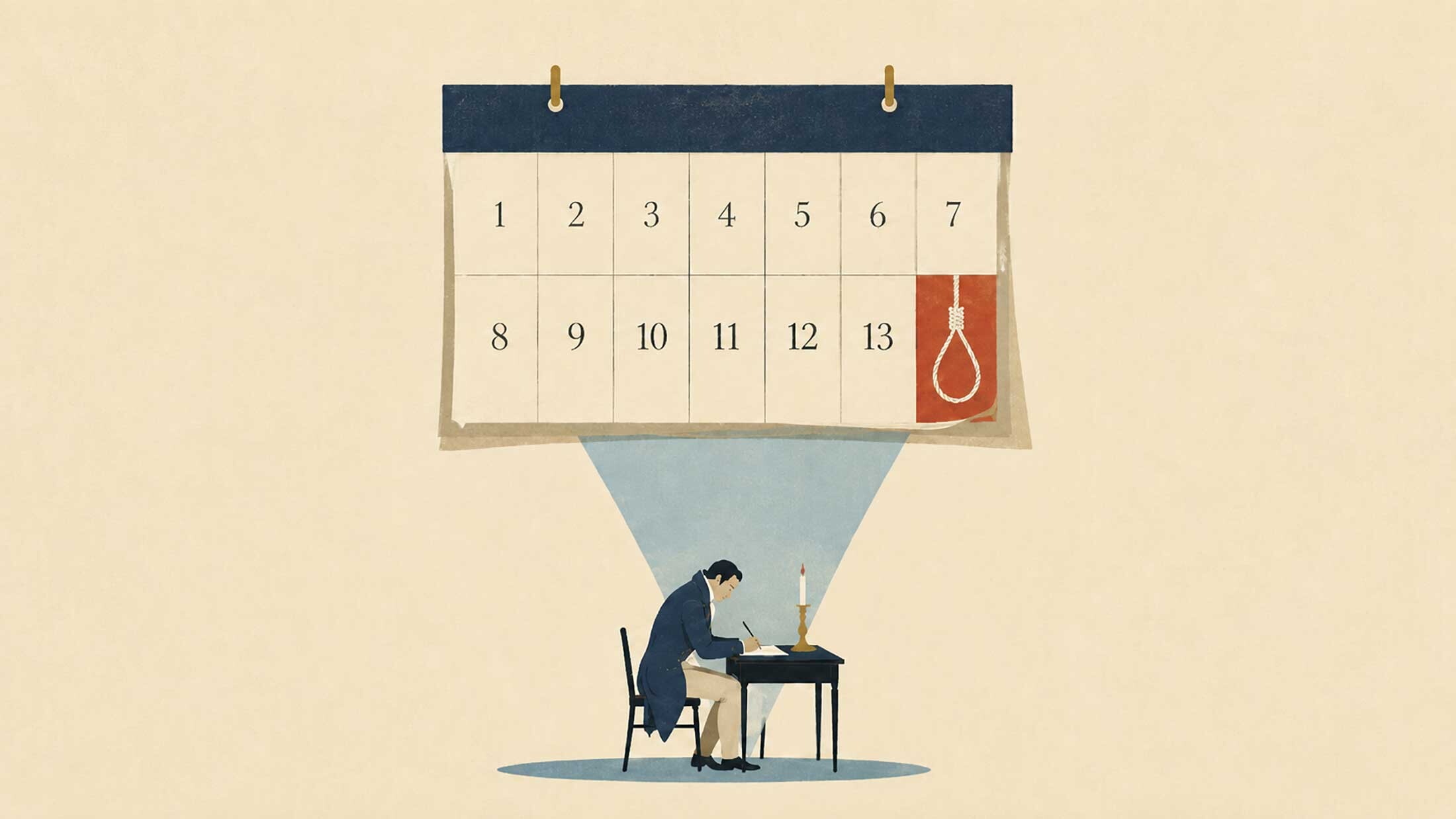
Perhaps the problem is not that life is short, but that we treat it as a trial version for too long. The full version has been running for quite a while now.
Sometimes a person needs to know the date of his own death before he finally realizes he has already won the lottery simply by being alive. Until then, if we're being fair, we tend to behave as though existence were merely a waiting room where we sit until someone calls our name. Real life will begin after this project. Once the debt is paid off. When the children are grown, when work eases up, when that quiet season we have been promising ourselves for decades finally arrives. Email, unlike us, apparently enjoys immortality.
Death is a terrible editor, but an extraordinarily efficient one. It suddenly strikes every pointless meeting, old resentment, and other people's opinions that we have spent years allowing to masquerade as destiny. It does not necessarily make a person wiser. It simply takes away the luxury of self-deception. The future is no longer an enormous warehouse where we can store everything we lacked the courage to live today.
One of the sharpest sentences ever spoken about that kind of clarity came from Samuel Johnson, the English writer and lexicographer, in 1777. When you hear it, I suspect it will feel a little like a discreet blow from a sledgehammer directly to the soul.
Ready?
"When a man knows he is to be hanged in a fortnight, it concentrates his mind wonderfully."
Feel it?
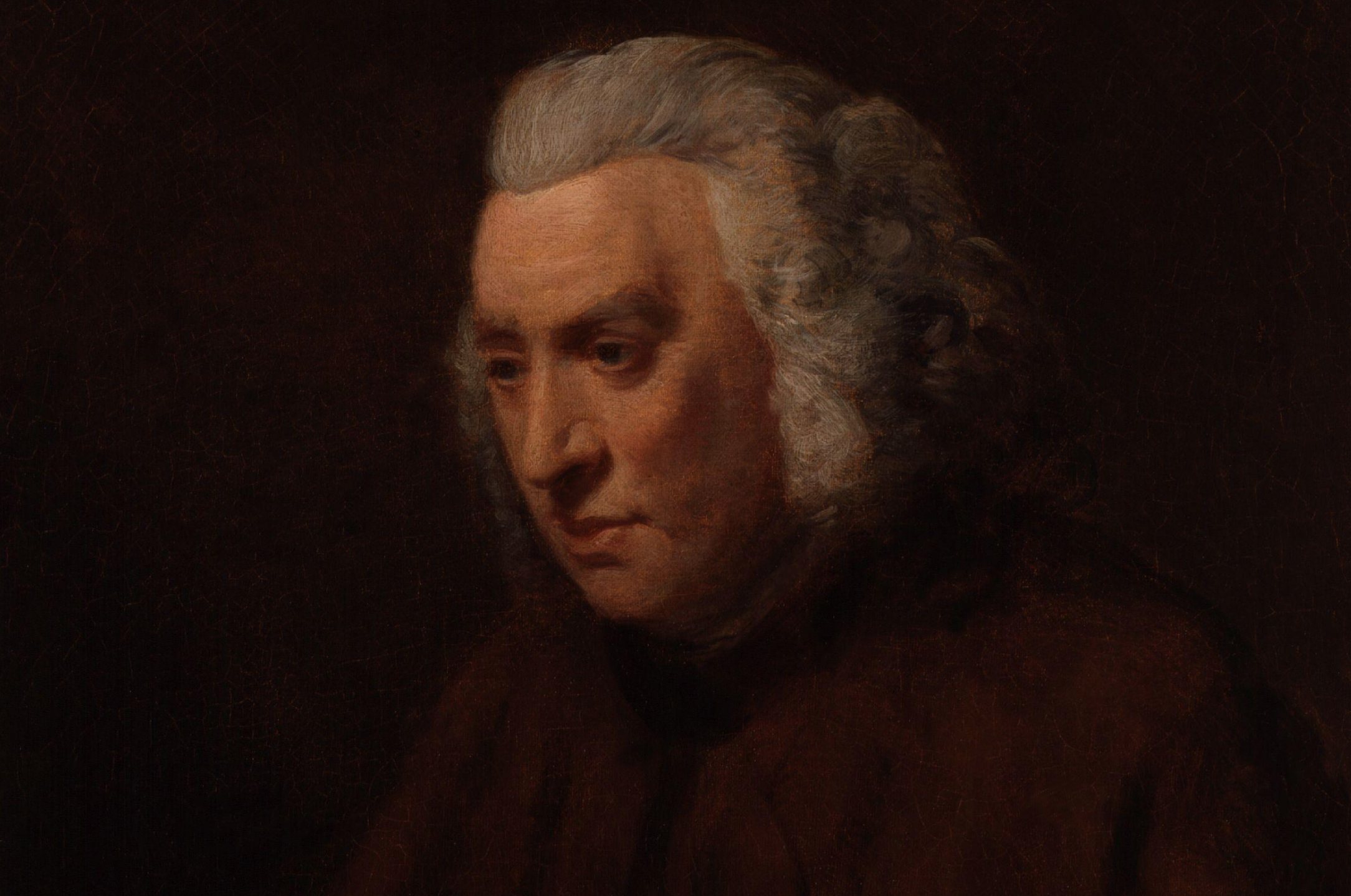
The quotation, as it happens, emerged from a curiously human mixture of mercy and minor deception. An Anglican clergyman named William Dodd had been sentenced to death for forgery. Johnson tried to help him by secretly writing several powerful "prison texts" on his behalf, in the hope that these appeals — some of which were sent all the way to the king — might save his life.
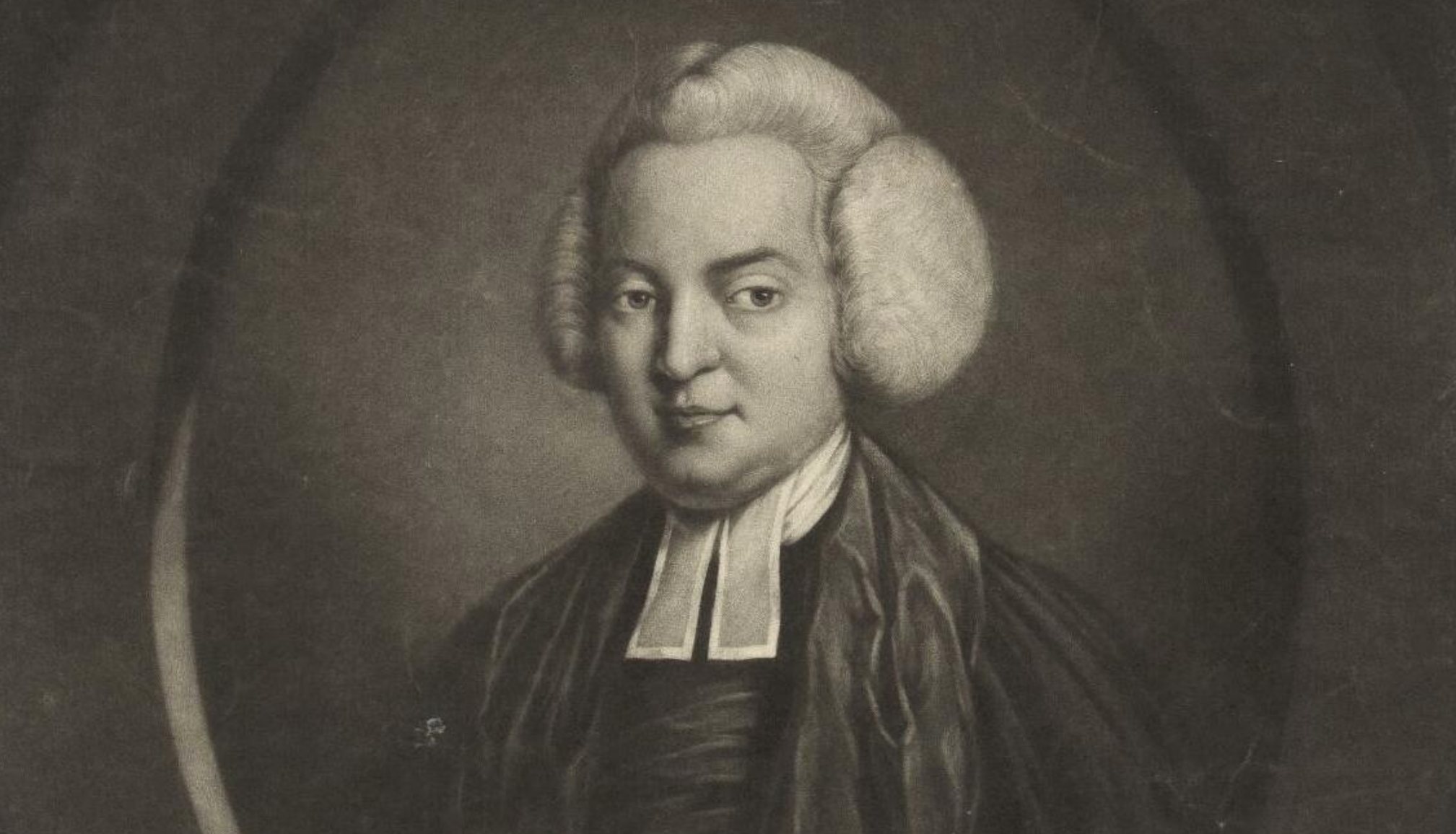
When someone nevertheless began to suspect that Dodd had suddenly become a far better writer than he had ever been before, Johnson offered the gallows as a literary explanation. Only after the execution did he admit that he himself had been the secret author. One of history's most famous observations about the clarity brought by death was therefore also an elegant alibi for a ghostwriter. That does nothing, however, to diminish the force or precision of the line.
William Dodd - a little more context
William Dodd was not some anonymous petty criminal who happened to cross Samuel Johnson's path. He was a well-known Anglican clergyman, a popular London preacher, a writer and, at one point, a royal chaplain. He did, however, suffer from a problem that has proved remarkably democratic across the centuries: he lived beyond his means. His fashionable clothes and extravagant lifestyle earned him the mocking nickname "the Macaroni Parson" — essentially, the fashionable dandy-priest. His career had already been badly damaged by a scandal in 1774, when his wife anonymously offered thousands of pounds in an attempt to secure Dodd one of London's more lucrative church livings through political patronage. The attempt to purchase ecclesiastical office — simony — was exposed, Dodd lost his position as royal chaplain, and he became an object of public ridicule. Then came the other debts.In February 1777, Dodd made the decision that would cost him his life. He forged a bond for £4,200 in the name of his former pupil, the Earl of Chesterfield. At the time, this was an enormous sum. He appears to have assumed that he would repay the money later and that the fraud would never be discovered. Instead, it was uncovered almost immediately. In eighteenth-century Britain, forging financial instruments was regarded as an especially dangerous crime because it struck at the very trust on which the commercial economy depended. Dodd was sentenced to death. Appeals for clemency poured in from every direction, and one petition reportedly gathered around twenty thousand signatures. None of it was enough.
And not just a little. He wrote Dodd's speech to the court before sentence was passed, petitions to the king and queen, letters to influential statesmen, newspaper pieces and portions of his final statement. The most famous was "The Convict's Address to His Unhappy Brethren," a sermon Dodd delivered to fellow prisoners in the chapel at Newgate on June 6. Dodd added a few sentences and notes of his own, but Johnson wrote the bulk of it. The text was then published under Dodd's name and became enormously popular, appearing in numerous editions during 1777.
And this is where the famous line finally appears. William Seward, a man in Johnson's circle, began to suspect that the sermon was not really Dodd's. Put simply, it was too good. It showed a power of thought far beyond anything for which Dodd had previously been known. Johnson did not want to expose him. As long as there remained even the slightest chance that the text might help save the condemned man, he believed the secret had to be kept. So he dismissed Seward's suspicion with a magnificent bluff:
"When a man knows he is to be hanged in a fortnight, it concentrates his mind wonderfully."
In other words: perhaps Dodd had never written this well before, but then again he had never had a noose for an editor.
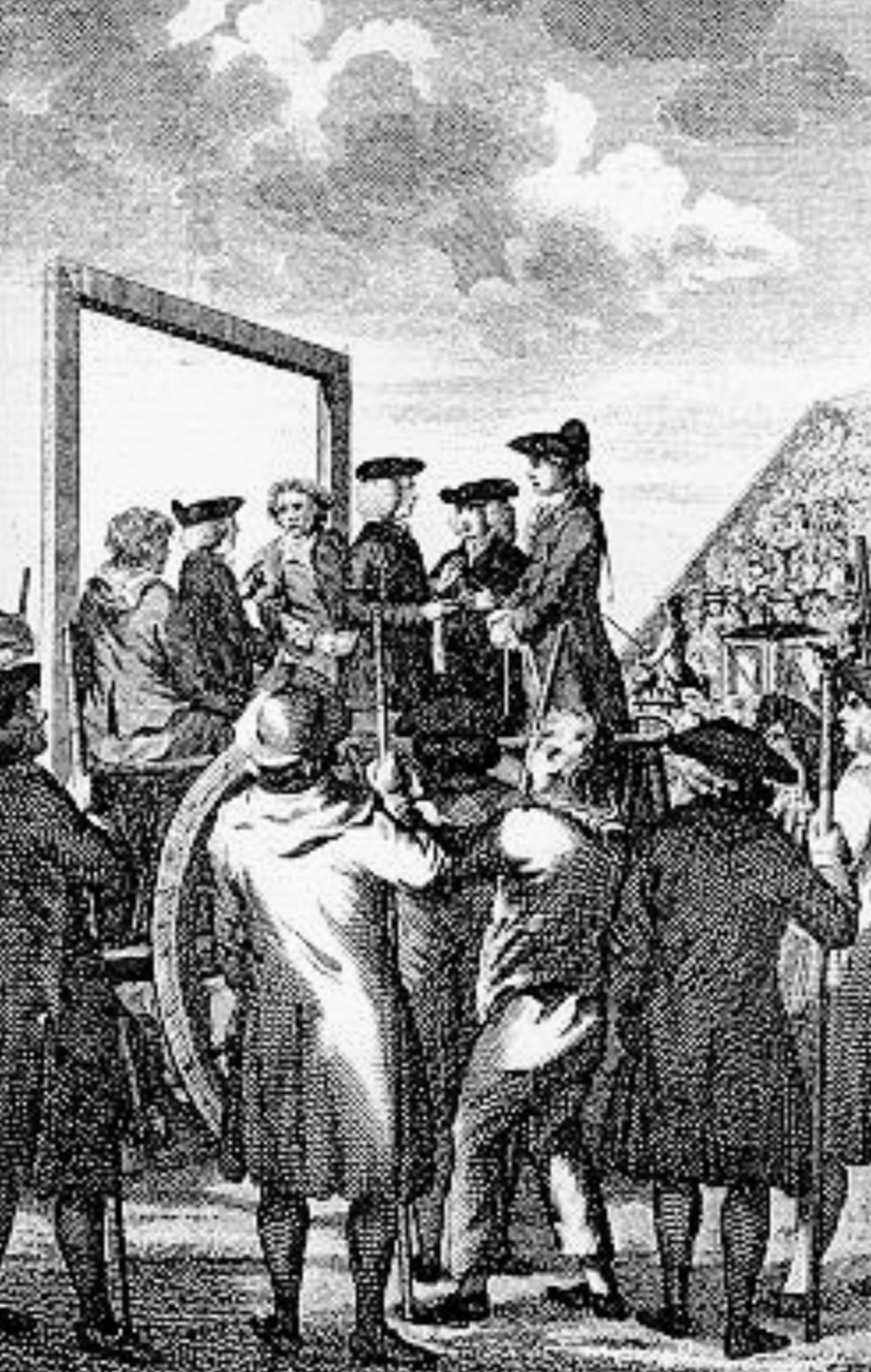
Only after the execution did Johnson admit what had happened. Dodd was hanged at Tyburn on June 27, 1777, and Johnson later explained that revealing his authorship earlier would have violated an implicit promise to the man whose life he had been trying to save.
There is one important nuance, however. Dodd really did write while in prison. His "Thoughts in Prison," a five-part poem composed between his conviction and execution, was genuinely his own work. Johnson had not invented a prisoner who suddenly became an author. The story nevertheless contains an almost perfect irony: one of the most famous lines ever written about how the approach of death sharpens the human mind was originally coined as an excuse to conceal the fact that the mind in question was actually Johnson's.
There is another detail that is even more moving. When Dodd's devout friends tried to comfort him by saying that he was leaving behind a "wretched world," he refused the consolation. The world, he said, had been very pleasant to him. Johnson respected that honesty. A man standing before the gallows did not try to devalue life simply because it was being taken from him. Perhaps only then, when he could no longer keep it, did he see most clearly how much he had enjoyed having it.
That is the real power of the idea behind "memento mori" — remember that you are mortal. It is not an invitation to wander through life gloomy and obsessed with skulls and our own inevitable end. It is a corrective to our almost professional talent for postponement. Seneca, the Roman Stoic philosopher (about whom much has been written here, see: One of the greatest Stoics did not live by his own principles), argued that we are not given too little time, we simply waste too much of it. The problem, in other words, is not merely that we will die. It is that we live as though life can be collected later, like a package that will wait indefinitely for us at the post office.
Of course, modern productivity culture could ruin this idea too. It would turn the final two weeks of life into a goals spreadsheet, a morning routine, and an app measuring whether we were living intensely enough before the living finally stopped. But the point is not to make every minute useful. A sunset, to be appropriately banal, does not have to be useful. A conversation that goes nowhere may turn out to be one of the best parts of the day. Joy is most certainly not another task to be completed before death.
Starting today does not necessarily mean quitting your job, flying to the other side of the world, or delivering some grand declaration in the rain. Sometimes it simply means no longer waiting for permission to be ordinarily happy. Drinking the coffee while it is still hot. Going for a walk without turning every step into a statistic. Calling someone whose voice you love before the call acquires the weight of a final opportunity. Great changes are sometimes necessary, but life is more often lost through small postponements than through great tragedies.
Living as though every day were your last sounds dramatic and, realistically, would probably become exhausting fairly quickly. It is enough to live with the knowledge that the number of ordinary Tuesdays we have left is not infinite. We do not need a gallows, a diagnosis, or an official notice to understand that. Death will concentrate our minds eventually anyway. Until then, we might spare it some of the work.
Not because we may be gone tomorrow, although that is also true. But because we are here today, and that is news delivered to us every morning that we almost never bother to read to the end. That is the gentler version of memento mori: do not merely remember that you will die. Remember, while there is still time, that you are alive.
Comments