
There is one interesting irony of our time. Perhaps you have already noticed it while scrolling through social media. Everything is full of AI photographs, illustrations, videos... And yes, they are getting better; realistically, it is becoming harder and harder to tell what is AI and what is not. But this immediately creates a new reaction we did not even know would exist a year ago. The more artificial images become perfect, fast and accessible, the more weight old images gain, provided we know they were made by a human being. And the proof is easy: everything created before the "AI revolution". Not only because they are better, but because they are proof. Someone had to make them. Really. With hands, eyes, patience and limits that could not be bypassed.
Today it is possible to create a visually stunning image in a few seconds. Without knowledge, without experience, without memory. The image renders instantly, but the trace is missing. And it is precisely in that emptiness that something we might call "slow art" begins to appear, a kind of resistance that is not against technology, but against infinite replaceability.
Slow art does not mean rejecting new tools. Like "slow living", it does not celebrate sluggishness. It celebrates intention. It values both invested time and limitation. And perhaps most importantly, authorship that is concrete and known.
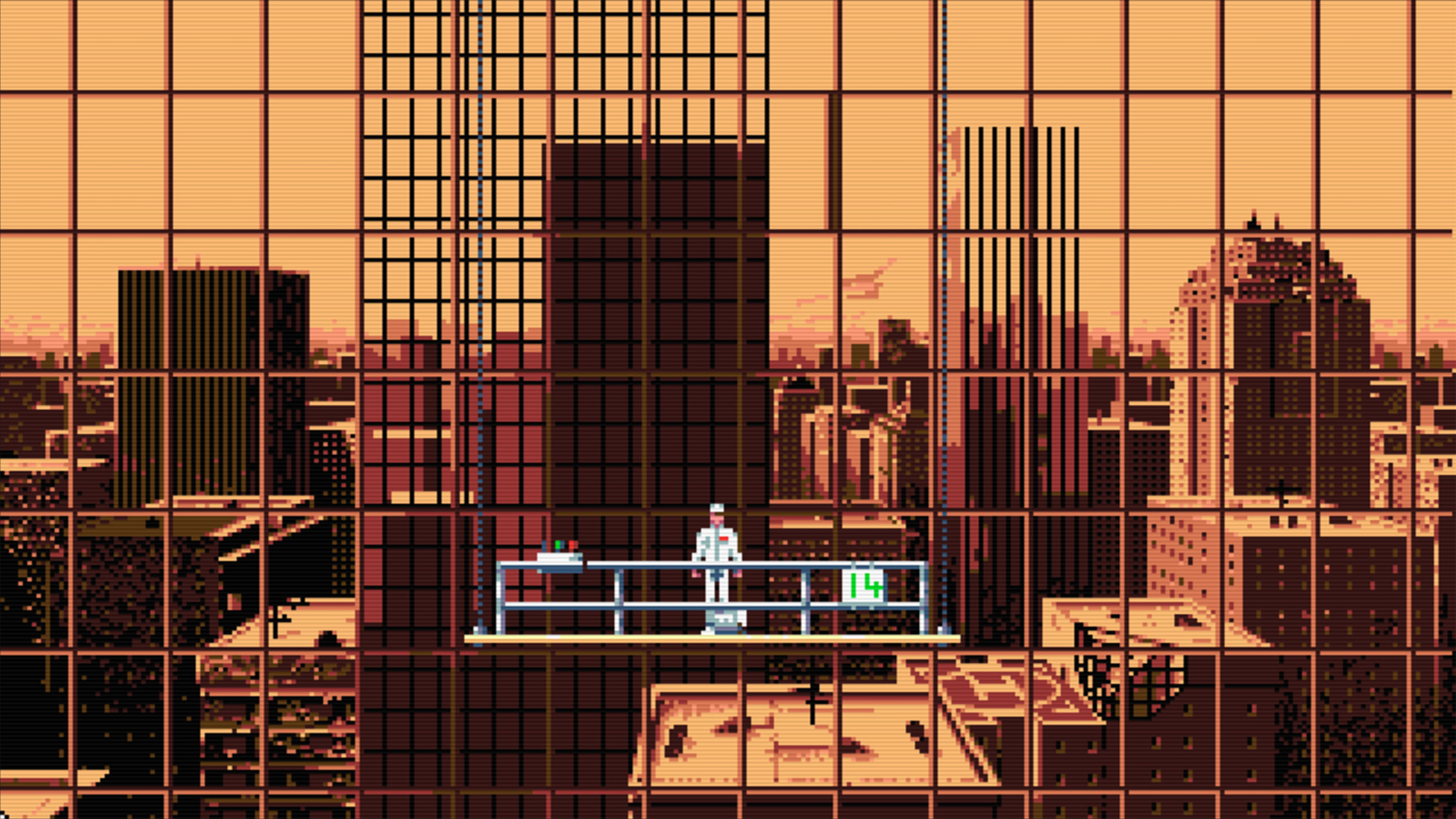
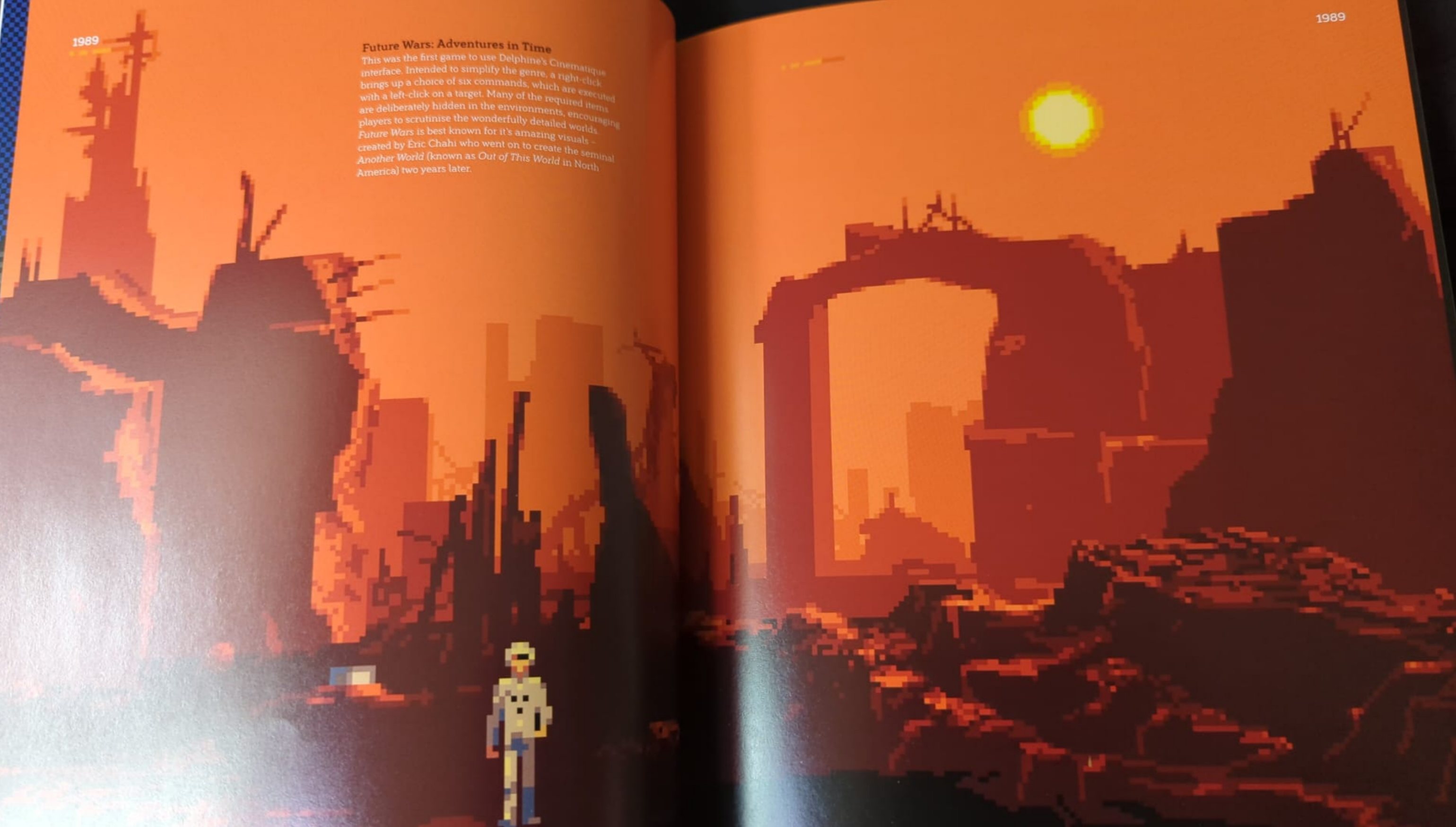
I have been thinking about this topic for some time, and somehow it came together while I was leafing through the book "The Art of Point and Click Adventure Games", which celebrates a now almost vanished genre of computer games, above all from an artistic perspective. Suddenly, across an entire page, something still unknown to me opened up... and I could not stop looking at it. A forgotten jewel: "Future Wars" (an ironically perfect title for this theme), a French point-and-click adventure from the late 1980s, created in an age when the Amiga was a dream and literally every pixel on the screen was part of the story. Its backgrounds today feel like artifacts from another time.
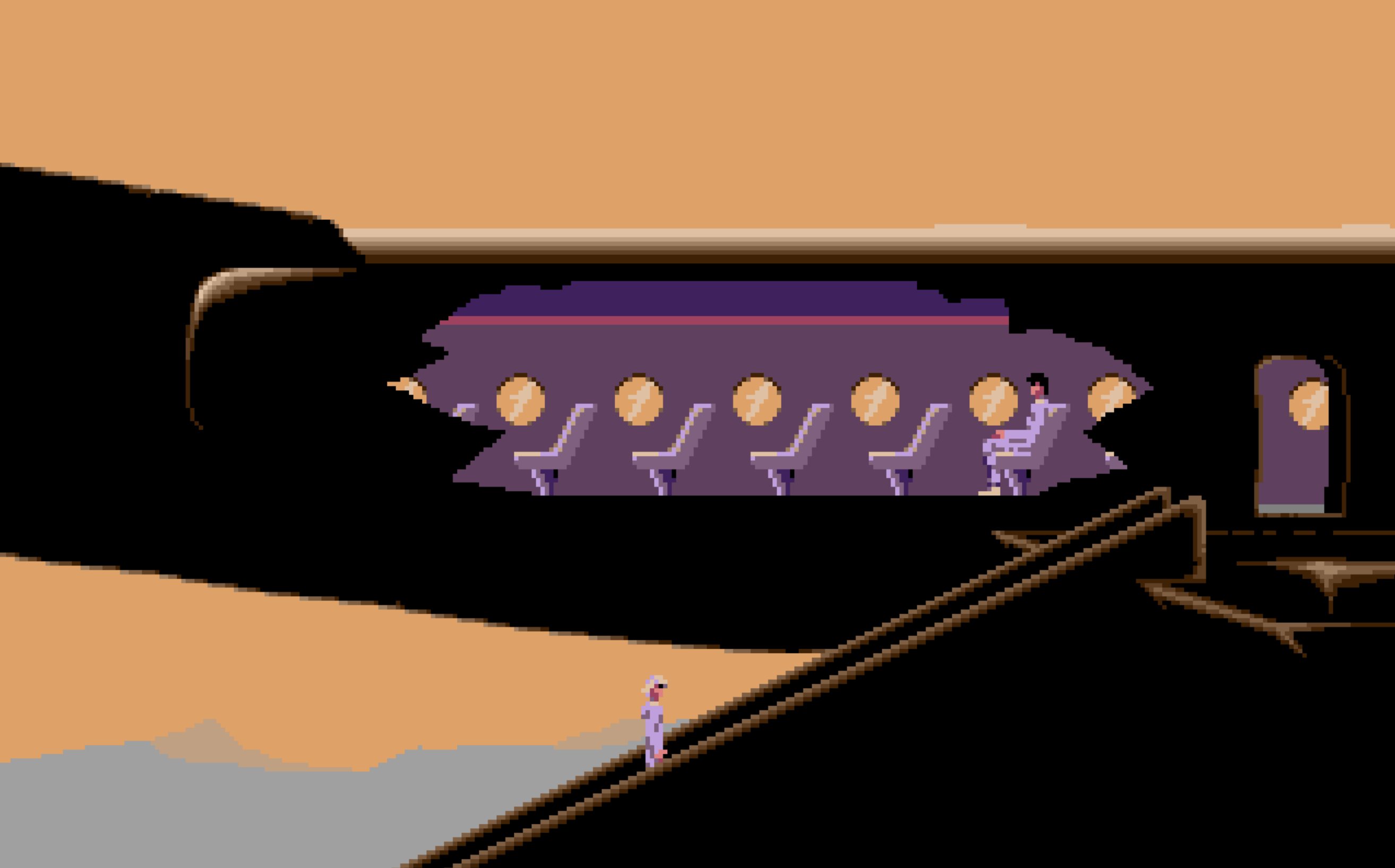
It is hard to explain, but that opening scene, showing skyscrapers at dusk, created in the rudimentary but, for its time, fascinating program Deluxe Paint on the Amiga, simply took hold of me. As if I were looking at a work of art of a high order. But why? The internet today is full of this kind of "pixel art"; in fact, thanks to the fact that this whole retro style is back in fashion, it is used everywhere. So what exactly caused this sense of elation? Why does one image provoke such a reaction while another leaves me increasingly indifferent, even though, objectively speaking, it looks so similar? I have been looking at that image for several days now, and I think the answer is beginning to assemble itself. I think it is because every frame carries the silence of decisions that could no longer be undone. I feel that I can "see" the person behind the image. I see him working painstakingly and endlessly questioning which shade of brown to choose for this scene. How to create emotion out of such a limited digital "tapestry"?
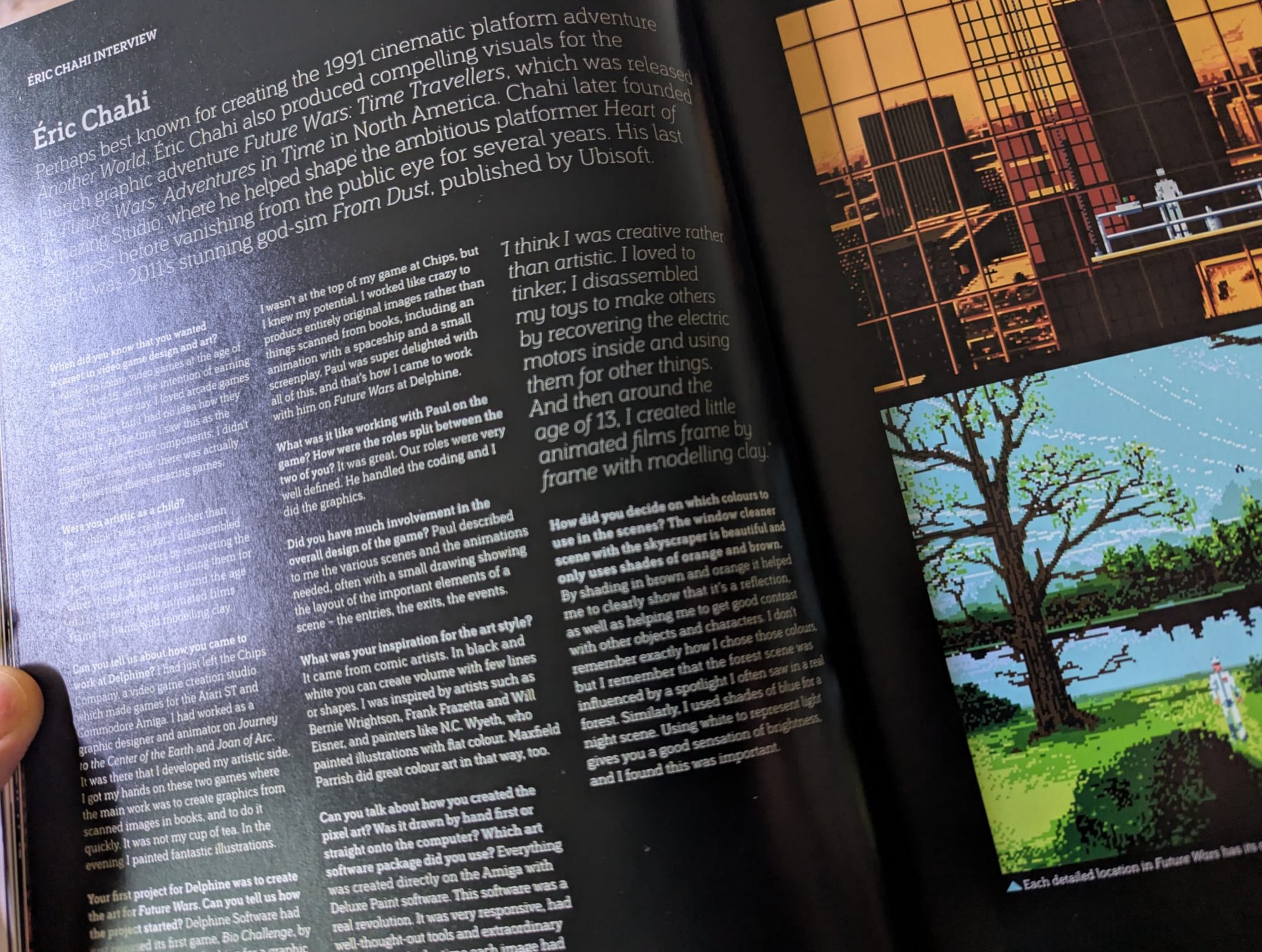
The producer probably gave him only a rough description of the scene. A window washer stands on his platform, high on a skyscraper, and before him is the reflection in the glass, an entire megalopolis in the background. To draw such a scene by hand, even to imagine it, would already be a concrete challenge. But to evoke it through a very limited color palette, in an era of "huge pixels" where no imperfection had anywhere to hide, was an enormous challenge.
But I do not see him merely working to get the job done, especially not in this case. I see him tormenting himself with endless revisions. The first version that looked "okay", and this new one that, according to his own self-critical judgment, was "very good", could have been sent off. Sent off? Nothing was being "sent" yet. He had to carry it to the producer’s home on a floppy disk. But he did not. How can art be something that is simply completed as a task? So he kept choosing, changing, drawing and erasing, until he finally created a pixelated reflection of a metropolis that takes the breath away.
Only after I had pulled myself a little away from the image itself did I notice that the book also contains an interview with him. His name is Éric Chahi, a French graphic designer and programmer who would later become famous for the far more popular game "Another World". As soon as I read the title, everything clicked. Yes, I had seen that somewhere before. "Another World" was, to put it mildly, a miracle for its time, from its atmosphere and scenes to its unprecedented fluidity of movement.
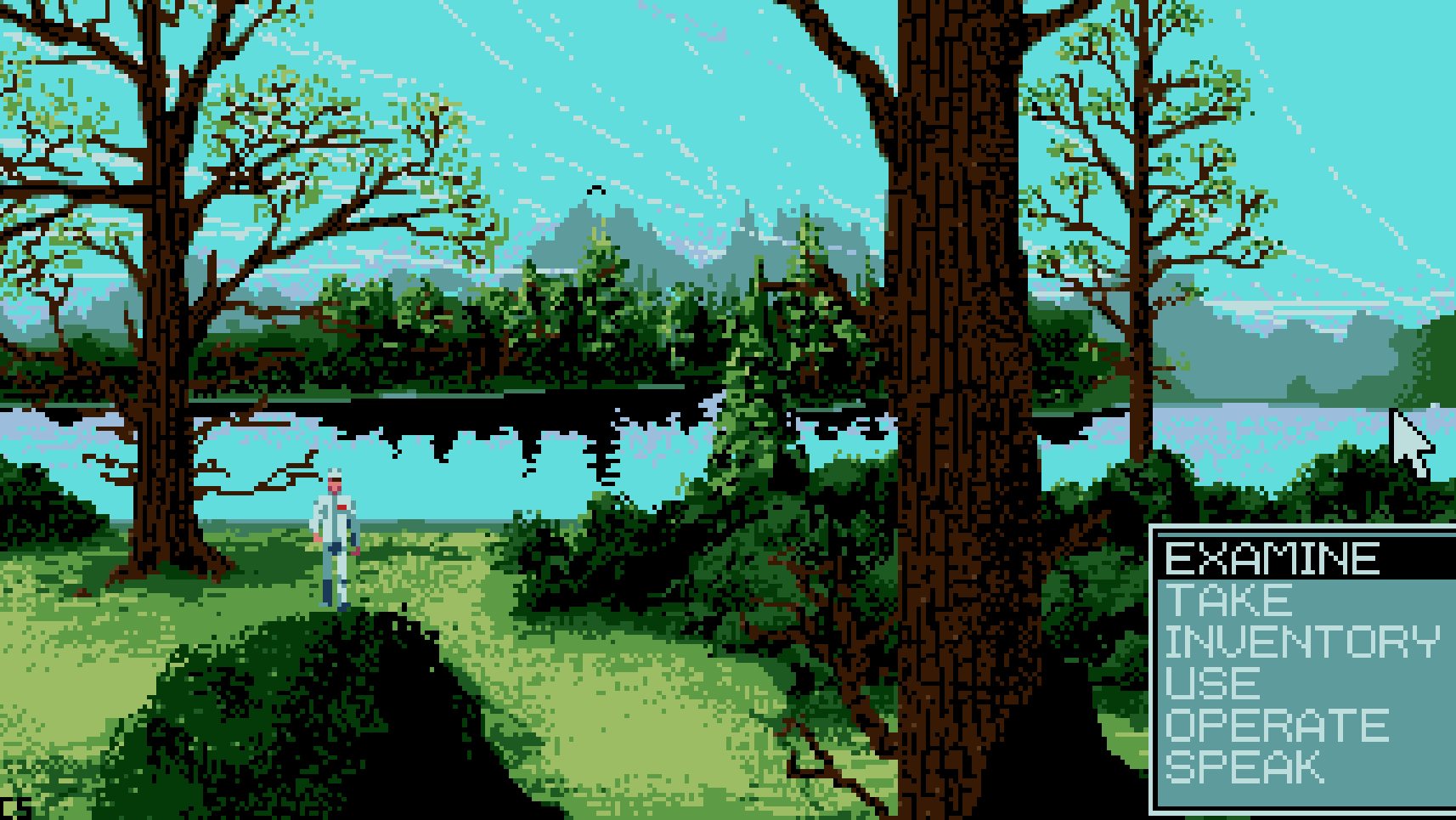
But many people have heard of "Another World", and many still play it today, because Android and who knows how many other modern conversions have been made. But what happened to that dusk from "Future Wars"? Why did those scenes fall into oblivion? Obviously not because of their artistic effect, because although that is only the opening frame, the following ones are just as strong. "Future Wars" was forgotten because, unfortunately, it is rather weak in the other key domain: playability itself. The time-travel story is interesting (the music is excellent!), but the interactive execution, it must be said, is very frustrating - and this comes from someone who deeply despises the modern approach of "holding the player’s hand". The problem, in short, is that you cannot simply click on an object if, for example, you want to pick it up and put it in your inventory. You first have to walk very close to it, sometimes to the exact "pixel zone", which quickly becomes a dreadful experience. Why did they mess it up to that extent? Who knows, perhaps someone had the "wise idea" that the world would feel more "real" that way... But those were also times of experimentation. Only later did Ron Gilbert brilliantly recognize that deficit and set a new standard with the masterpiece "Monkey Island", where interaction was far simpler, more precise and free of that kind of frustration.
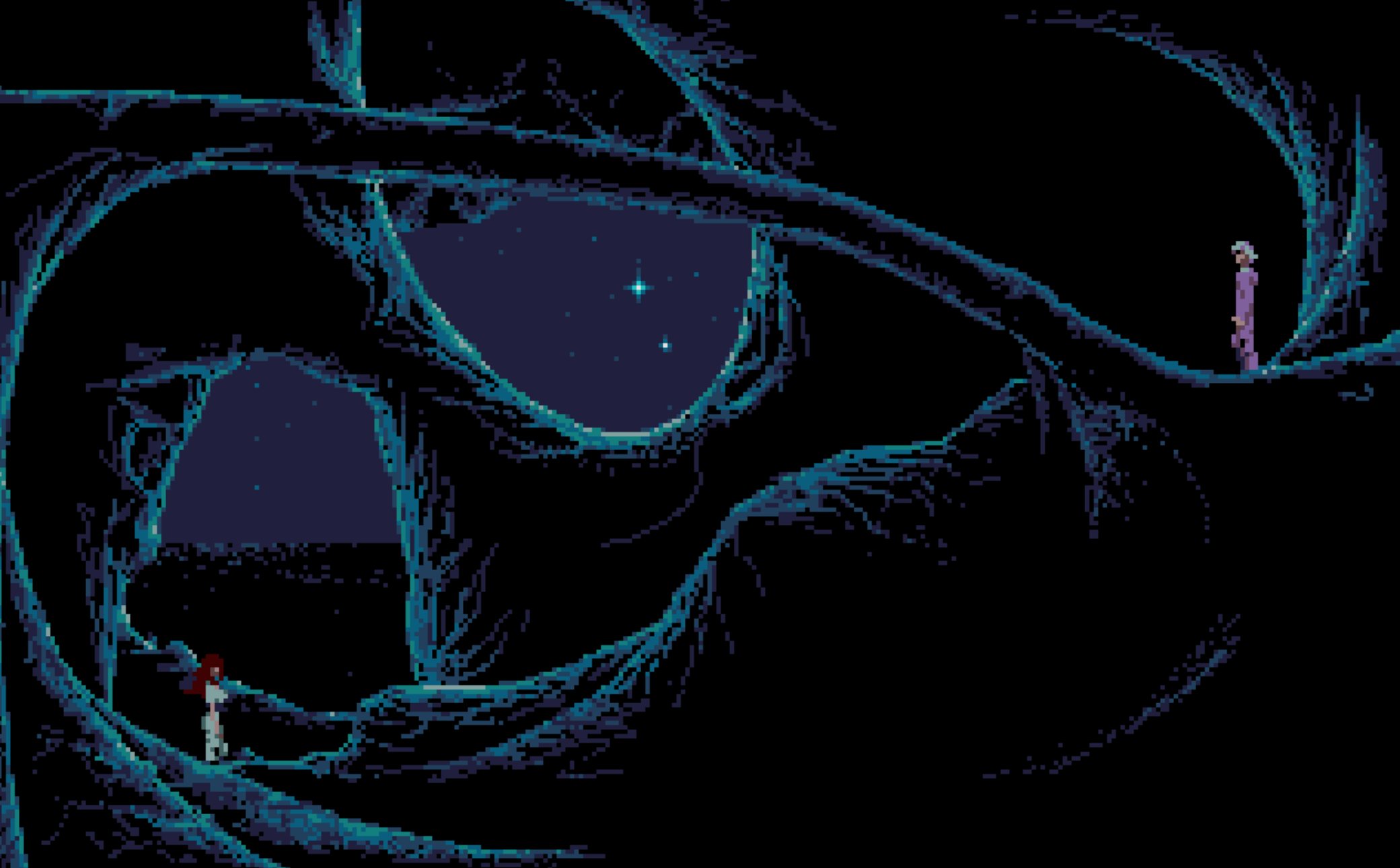
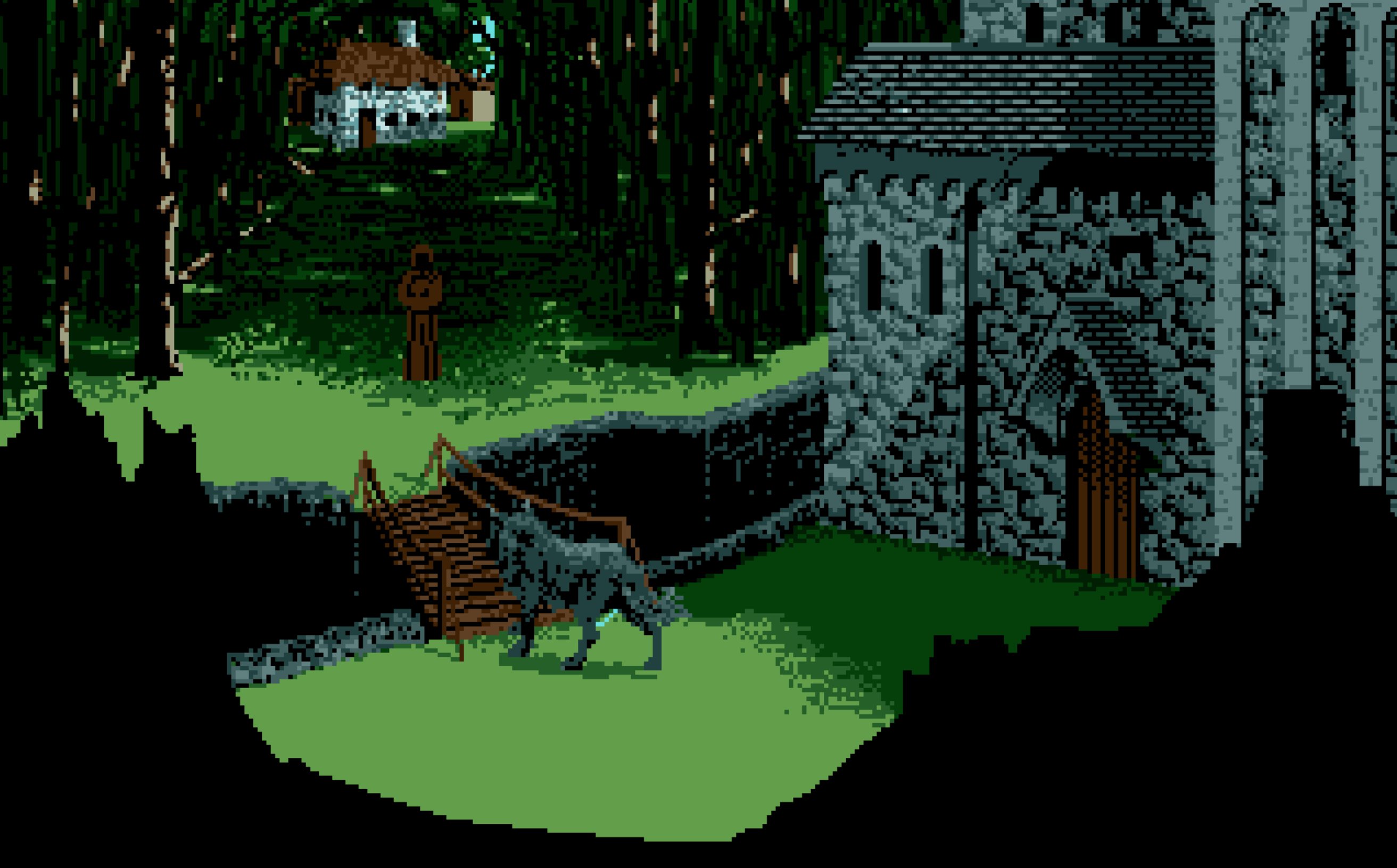
Because of that, unfortunately, I did not get past the first four scenes, admitting to myself that I no longer have the luxury of spending an entire afternoon hunting pixels. Once, perhaps. Today, not anymore. But I did examine in detail the other frames Chahi created - and they are all superb.
Clearly, today it is impossible to ask a graphic designer to "kill himself" day and night creating such images pixel by pixel, but what was created was created exactly that way. And I am convinced that the value of that work only grows in proportion to the progress of "artificial art". Who knows, perhaps without this, the functionally mediocre and visually beautiful "Future Wars" would have remained permanently forgotten, and now it is awakening again, in its original form, so that we can admire it for what it intrinsically possesses.
AI can produce a million variations, but there is no anecdote behind the generated image. There is no fatigue, no doubt, no moment when the author decides to leave the mistake because there is no time for another version. And precisely those mistakes are the places where art breathes.
In that sense, "slow art" is a side effect of saturation. When everything becomes available instantly, we begin to seek what was made slowly. It is the trace of time, and the one thing an algorithm can never convincingly fake.
Pixel art from the 1980s and 1990s carries within it that kind of resistance. Ironically, the style did not intend to be art. There was simply no other way; it had to be functional. Precisely because of that, it feels honest today.
Perhaps that is also the broader lesson of our moment. In a world that produces images faster than we can look at them, value moves into what cannot be accelerated. Into a work that has origin and context. And that is why it is entirely possible that, while AI images pile up and are forgotten, old Amiga backgrounds, hand-drawn frames and forgotten games such as "Future Wars" will slowly gain new life. The exact same story applies to many other arts as well, for instance the spontaneity and soul of "street photography".
Today, many creators find themselves in a difficult dilemma and were among the first to feel AI "stealing their work". Some have tried, unsuccessfully of course, to sue AI companies because the models were "trained" on their work. Unfortunately for them, this revolution is too large to be halted, but one can rise above it. A human being cannot identify with a machine. In art, the human must be recognizable, and the challenge for today’s artists is how to make that imprint visible and timeless. There is no illusion that it will be easy for them. Most will not find their way in that storm, but the path simply must exist. I have seen it, and it is real.
Comments