
Major powers like wars fought far from their homes. The problem starts when the opponent decides that distance will no longer be a protection.
Europe no longer appears in Iranian war planning as a distant continent that debates the conflict, imposes sanctions and sends political messages. On the military map, it is becoming far more tangible. It consists of runways, tankers, radars, depots and communications hubs from which American power can be projected toward the Middle East.
On that map, Bulgaria and Cyprus cease to be Europe's periphery and begin to look like a possible extension of the battlefield.
According to sources close to the Iranian authorities, Iranian forces have considered US and British military facilities in southeastern Europe as potential targets if Donald Trump once again expands attacks on Iran. This is not yet an officially published target list, but it shows just how far the geography of the war has spread. American pressure was supposed to contain Iran within its own borders and the surrounding seas. Instead, the potential line of retaliation has begun moving toward countries that provide Washington with strategic military depth.
The war began on February 28, when the US and Israel launched attacks on Iran. Washington justified the operation as "self-defense" and the "collective defense of Israel", citing decades of Iranian hostility and the specter of a nuclear threat. More than a hundred international-law experts rejected that justification as incompatible with the United Nations Charter. After months of strikes, fragile ceasefires and failed negotiations, Iran announced a shift to fully offensive military operations aimed at breaking the US naval blockade (as we wrote two days ago: The Guillotine over Iran: Washington tightens the noose, leaving Tehran with only one option — strike). Europe is entering the equation just as Tehran searches for a way to make Washington pay a higher price.
The first ring of Iran's response has already included Israel and American infrastructure in the Gulf states, Jordan and Oman. These countries provide US forces with bases, airspace, radar coverage and logistics while insisting to Iran that they are "not participating in the war". That formula works only for as long as the adversary accepts it. Tehran clearly does not. Its logic is simple: territory that materially enables attacks becomes part of the system carrying them out.
Bulgaria is the clearest European example of this dilemma. Its parliament approved the temporary deployment of up to eight US KC-135 tanker aircraft and 250 personnel at Bezmer Air Base. Sofia's response is that there are "no offensive weapons" there and that Bulgaria therefore "is not entering the war". Yet aerial refueling tankers extend the range, endurance and striking power of combat aircraft. The deployment itself does not prove that Bezmer will be used against Iran, but its military value lies precisely in its ability to support operations that would otherwise become significantly more expensive and complicated for the United States.
Cyprus has already discovered what happens when a great power places a base on an island while leaving the consequences to the local population. In March, an Iranian Shahed drone, believed to have been launched from Lebanon by Hezbollah, struck the runway at the British base at Akrotiri. Damage was limited and there were no casualties, but the drone shattered the assumption that distance still guaranteed safety. Akrotiri is British sovereign territory and an important hub for operations in the Middle East. The Cypriot government likewise insists that it "is not participating in the war", even though its citizens live only a few kilometers from military infrastructure whose use Nicosia does not control.
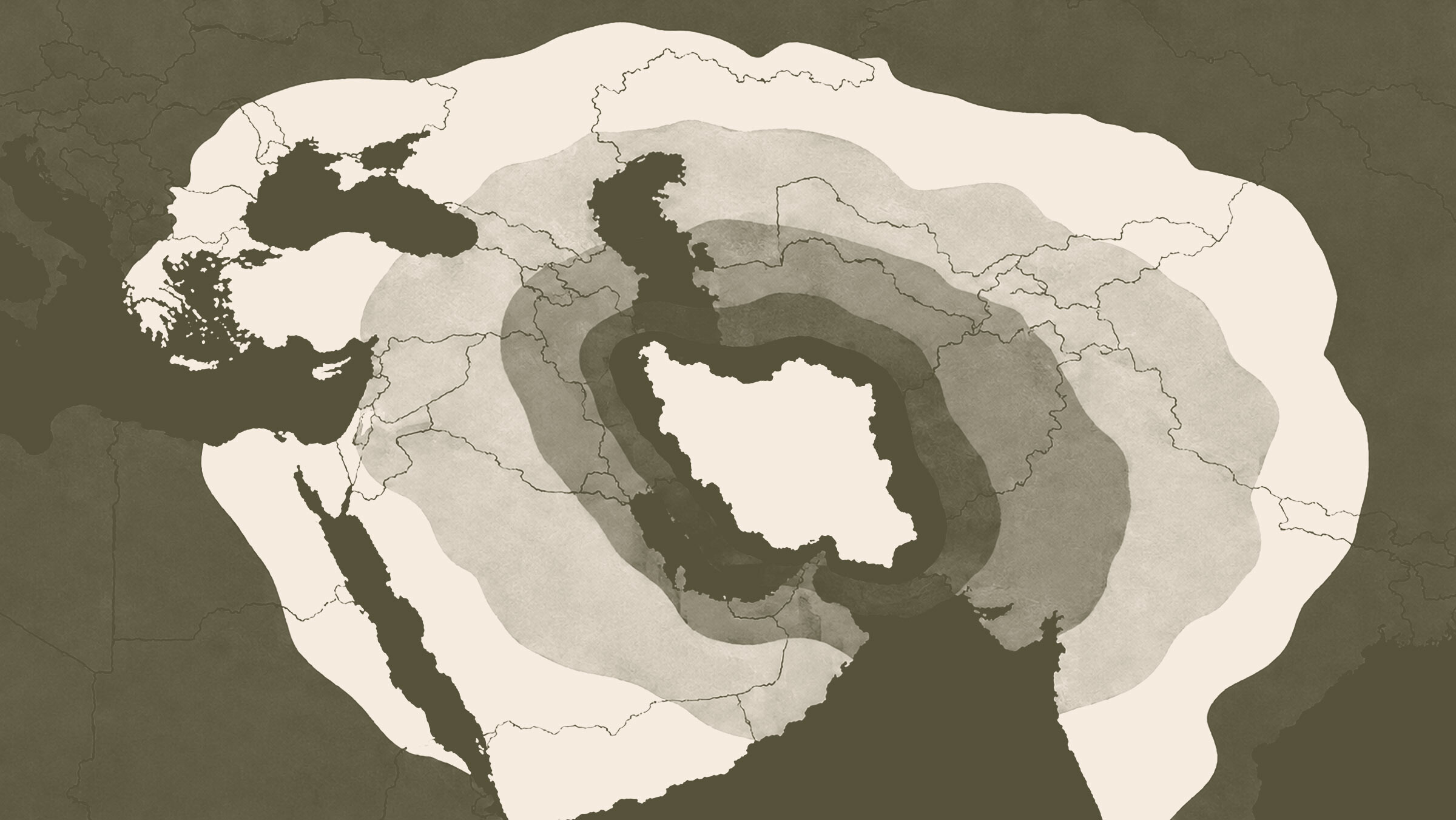
Technically, the threat is real but still limited. Most of Iran's known ballistic-missile arsenal has been built around ranges of up to roughly 2,000 kilometers. Cyprus falls comfortably within that radius from western Iran. Bulgaria lies closer to its outer edge, depending on the launch site and the missile used. In March, Iran attempted to strike the US-British base at Diego Garcia in the Indian Ocean with missiles of significantly greater range, but the base was not hit. One missile reportedly failed in flight, while the United States launched an interceptor against the other. Tehran is clearly trying to break through its previous range ceiling, although the reliability and accuracy of such weapons remain uncertain.
Iran imposed a 2,000-kilometer limit on its own missiles — so why, and what happens if that limit is now disappearing?
For years, the 2,000-kilometer limit was treated in assessments of Iranian military power almost as a technological fact. It was not. To a large extent, Iran imposed the limit on itself. Back in 2017, then-Revolutionary Guard commander Mohammad Ali Jafari explained that it was a policy set by Supreme Leader Ali Khamenei: greater range was unnecessary because Israel and nearly every important US base in the Middle East were already inside that circle. Iran also maintained that it was technically capable of going farther. In other words, 2,000 kilometers was not a wall Iranian engineers did not know how to cross. It was a strategic decision about where, for the time being, that wall should stand.That decision had begun to crack even before the current war. In November 2024, Kamal Kharrazi, an adviser to Iran's supreme leadership, warned that the range could be increased if the security environment changed. In October 2025, General Mohammadjafar Asadi went a step further, saying Iranian missiles would be given whatever range was necessary. The reason was highly practical: after Israeli strikes on launch sites in western Iran, missiles increasingly had to be fired from deeper inside the country. War was beginning to turn a political restriction into a military handicap.
Then came Diego Garcia. According to US officials and a subsequent British confirmation, Iran launched two ballistic missiles toward the US-British base in the Indian Ocean in March 2026. Tehran denied it, but if the Western account is accurate, the distance alone — roughly 3,800 to 4,000 kilometers from Iran — means the old 2,000-kilometer limit has already been breached in practice. SIPRI expert Markus Schiller has pointed out that such a range would hardly constitute a technological surprise. Iran's Khorramshahr missile and technologies developed through its space program have shown for years that the country could move relatively quickly into a significantly longer-range missile category. For now, the tradeoff would likely be a smaller warhead, poorer accuracy and lower reliability.
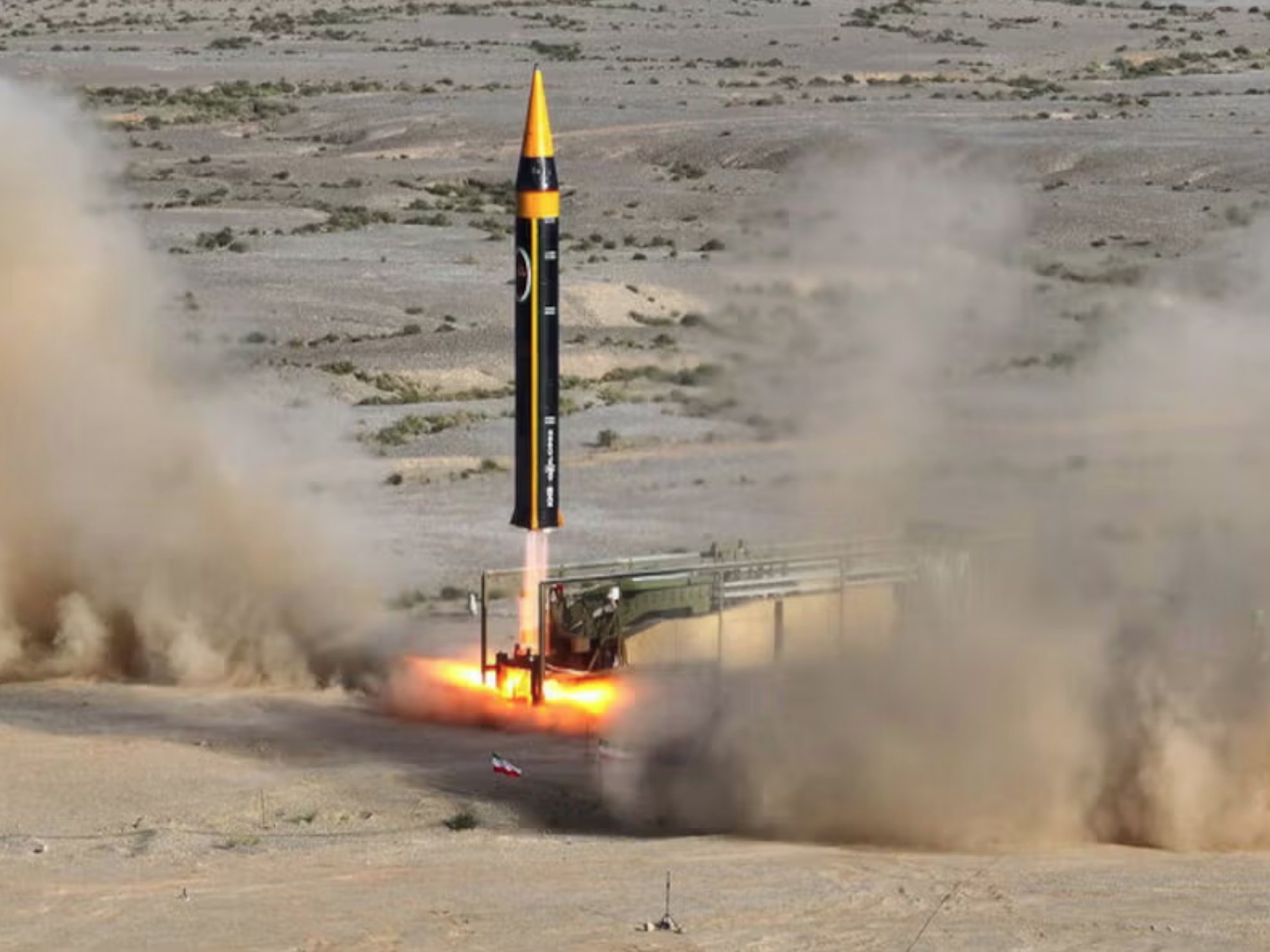
NATO possesses an extensive missile-defense architecture, but the word "shield" creates a misleading image. The radar at Kürecik in Turkey, Aegis Ashore installations in Deveselu, Romania, and Poland, US warships based at Rota in Spain, and national Patriot and SAMP/T batteries together form a layered defense. But no system guarantees the destruction of every incoming weapon. Ballistic missiles, cruise missiles and drones require different responses, while defenses can be strained by combined attacks and large numbers of inexpensive aircraft. Akrotiri has already shown how troublesome a single low-flying drone can be.
An Iranian strike on Bulgaria would raise the question of NATO's Article 5, but even then there is no automatic button that launches a general war. Bulgaria could invoke collective defense, and the allies would decide whether the attack fell within the scope of the treaty. Each member would then take whatever action it deemed necessary, including the use of armed force. The political pressure for a forceful response would be enormous. An attack on British facilities in Cyprus would trigger a more complicated debate because of the sovereign status of the bases and the geographic provisions of the NATO treaty. In either case, a single miscalculation could transform European logistical support into direct conflict with Iran.
International law gives Iran the right to self-defense following an armed attack, but not the right to use any means it chooses. If we are going to be legalistic about it, every strike must be directed at a military objective, meet the requirements of necessity and proportionality, and protect civilians. A military facility can constitute a lawful target when its use makes an effective contribution to military action and its destruction offers a concrete military advantage. A base from which aircraft take off to directly support attacks on Iran could, many would agree, meet that test. Political support for Washington or membership in NATO does not, by itself, turn an entire country into a legitimate target.
The line is clear, but so is the ease with which Iran could cross it. A deliberate attack on civilians or facilities that do not serve a military function would be unlawful regardless of who started the war. At the same time, the fact that the aggressors — the US and Israel — have shown little restraint toward civilian infrastructure inevitably raises the question of how credible it is to single out Iran for condemnation in such a war.
For Washington, its network of overseas bases is one of its greatest strategic advantages. The American homeland remains far away, while risk is distributed among allies. Iran has no realistic ability to impose a comparable military cost on the continental United States. It therefore directs pressure toward aircraft carriers, bases, tankers, ports and partners that lie within its reach.
The logic is clear: the tighter the ring around Iran becomes, the stronger the incentive to widen the target map. The Gulf monarchies form the first belt, the eastern Mediterranean the second, and southeastern Europe is now emerging as the third.
European governments cannot solve this problem with bureaucratic language. Europe's most dangerous illusion is the belief that a war can be supported safely from the sidelines. The experience of Ukraine may have taught them that perhaps it can — but the question is, for how long?
A government can explain to its citizens why it wants to help Washington and accept the consequences of that decision. It can refuse the use of its territory and pressure both sides toward an agreement. What it cannot do is provide a base, fuel and logistics to one belligerent and then invoke geographical innocence when the other side begins looking at the same map.
By attacking Europe, Iran would risk catastrophic escalation and might even unite NATO at the very moment the alliance is politically divided over Iran. Tehran is therefore likely to use the threat first as a deterrent, searching for a target valuable enough to hurt Washington but limited enough not to trigger an all-out war. Such finely calibrated balances rarely last. A runway that extends the reach of an American bomber also extends the reach of the war in the opposite direction.
Sources
- Financial Times Iran eyes military targets in Europe if Donald Trump escalates war, insiders say https://www.ft.com/content/9ea0cde8-129e-4d88-976f-e367b7dd4d2c
- Reuters Bulgaria approves stationing of US tanker aircraft despite Iran warning https://www.reuters.com/business/aerospace-defense/bulgaria-plays-down-iran-warning-over-us-tanker-aircraft-2026-07-22/
- Missilethreat.csis.org Missiles of Iran | Missile Threat https://missilethreat.csis.org/country/iran/
- Ihl-databases.icrc.org Definition of Military Objectives https://ihl-databases.icrc.org/en/customary-ihl/v1/rule8
- Nato.int Ballistic missile defence https://www.nato.int/en/what-we-do/deterrence-and-defence/ballistic-missile-defence
- Gov.uk Prime Minister's Oral Statement on Iran: 2 March 2026 https://www.gov.uk/government/speeches/prime-ministers-oral-statement-on-iran-2-march-2026
- Un.org United Nations Charter (full text) https://www.un.org/en/about-us/un-charter/full-text
- Rusi.org Can Iranian missiles reach the UK and could our defences stop them? https://www.rusi.org/news-and-comment/in-the-news/can-iranian-missiles-reach-uk-and-could-our-defences-stop-them
Comments