
Ukrainian drones as a burden for the allies - old-school jamming has merged with information tactics into a new strategy.
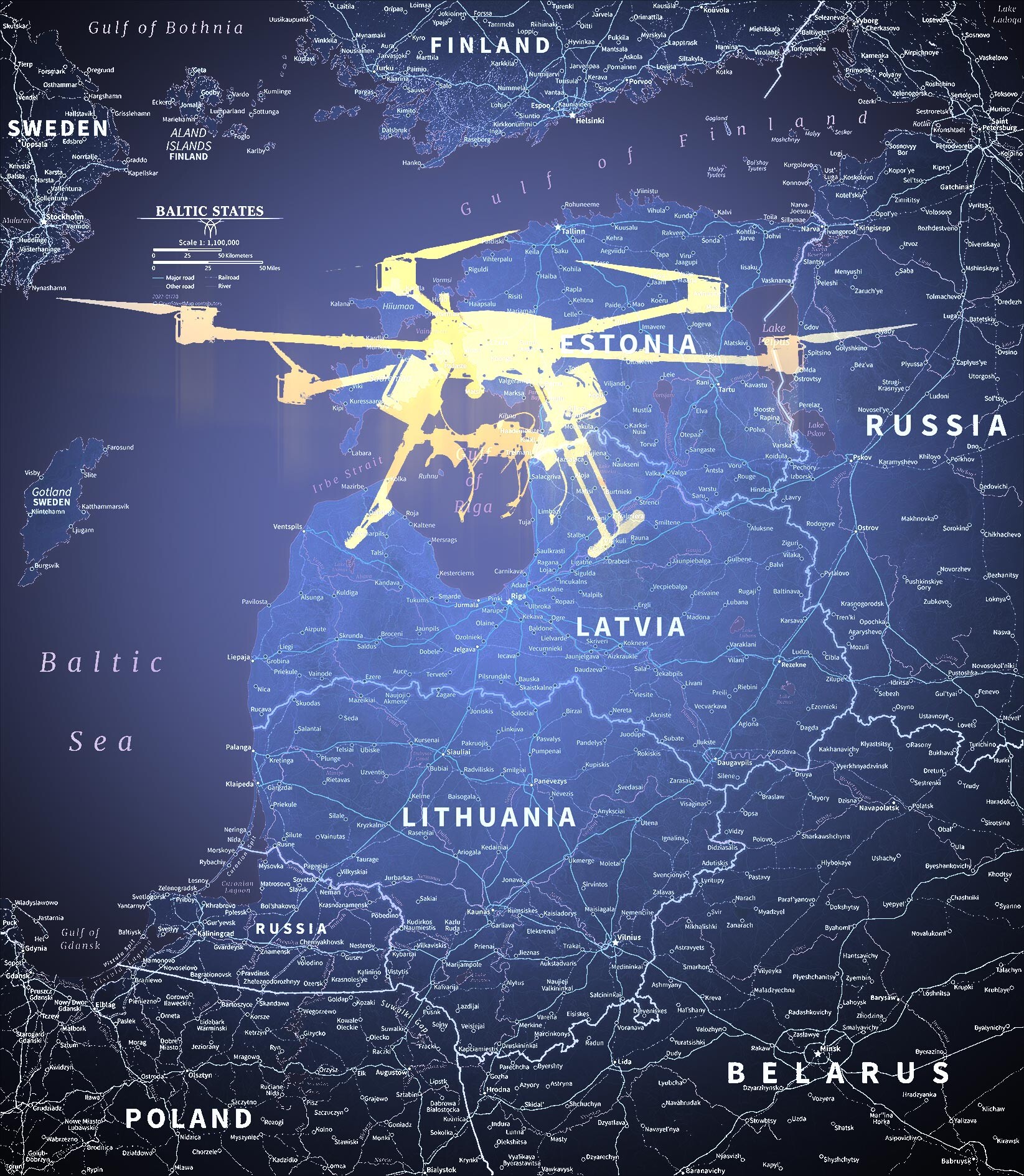
A Romanian F-16 flying a NATO mission yesterday shot down a Ukrainian drone over southern Estonia. The aircraft had entered from Russian airspace, moved toward Estonian territory, and crossed into an area where the safety of the civilian population was already at issue. This was not just another incident. It marks an entirely new phase of the war, a technological race so important that it could end up shaping the outcome of the war itself.
The assumptions matter, and if they are correct, Russia has found, through war planning and in cooperation with its own "school of jamming", a new weak point in the entire united system it is fighting through Ukraine, and now increasingly along Ukraine’s edges. This race is now escalating, breaking politics apart, and the central actor will be the confused drone.
From Jarun to the Baltic
Croatia received Europe’s first hint of what is now unfolding in the Baltic back in March 2022, although that story has remained extremely unclear. Let us recall: a Soviet Tu-141 Strizh flew over Romania and Hungary, entered Croatian airspace at an altitude of around 1,300 meters and at a speed of roughly 700 kilometers per hour, spent seven minutes over Croatia, and crashed in Zagreb’s Jarun district, not far from a student dormitory. The case was almost surreal because it happened at the very beginning of the war, while Europe’s security architecture was still trying to understand the scale of the new conflict. The aircraft belonged to another era, the Cold War, but it fell into the urban center of a NATO member state during a war that had only just begun producing its new forms.
It would be an understatement to say that the incident remains filed away under "mysterious" even today, while a full clarification of the story suits many political actors rather poorly.
Romania then became a frequent point of contact between the war and NATO territory. Russian strikes on Ukrainian Danube ports led to a series of incidents involving drones and fragments on the Romanian side of the border. Plauru, Tulcea, Periprava, and the wider Danube area began living with a war visible across the river and occasionally crossing the border physically. There, the dominant pattern was Russian: Gerans and Shaheds attacking Ukrainian infrastructure, with their fragments, or sometimes entire aircraft, ending up inside NATO space.
But what has been happening in Romania can at least be explained rather easily. It is obvious that Russian drones are not entering NATO airspace there intentionally, at least not intentionally in an offensive sense. The point is that Ukrainian targets are in very close proximity. NATO itself tacitly accepts this fact, which is why there has been no major escalation.
The Baltic, however, brings a different political configuration. In March this year, a Ukrainian drone crashed in Lithuania near Lake Lavysas, and then drones entered Latvia and Estonia. One hit the chimney of the Auvere power plant, only two kilometers from the Russian border, while another ended up in Latvia’s Kraslava region. In May, two drones entered Latvia from Russia and struck an oil depot in Rezekne, around 40 kilometers from the border. Four empty storage tanks were damaged, residents were warned to stay indoors, schools in border municipalities were closed, and French aircraft from NATO’s Baltic Air Policing mission were scrambled toward the area of the incident. A few days later, the Latvian government fell. Defense Minister Andris Spruds was the first to go, after which Prime Minister Evika Silina lost her coalition and resigned.
Drones have thus proved small enough to slip through gaps in the system, but large enough to bring down an entire political structure. That matters, and it marks a new moment.
Clearly, we also have a useful comparison here: a Baltic government falls, while ours was not even scratched, even though the Jarun incident could have been a far greater tragedy.
How a Drone’s Reality Is Changed
The technological foundation of this story always begins with navigation. Most long-range drones rely on a combination of satellite navigation and pre-programmed routes. A GNSS signal, whether from the American GPS, Europe’s Galileo, Russia’s GLONASS, or China’s BeiDou, is extremely weak by the time it reaches the receiver. That makes it vulnerable. A sufficiently strong signal from the ground can suppress it, drown it out, or replace it with a false picture. In older military language, jamming meant interrupting communication. In today’s war, jamming can mean changing the "reality" in which a machine calculates its own position.
"Jamming" is the cruder form. It drowns the signal, creates noise, and forces the aircraft to continue according to a backup algorithm. The drone can then rely on inertial navigation (a system that estimates the aircraft’s position without GPS by using sensors to measure its acceleration, direction, and rotation), but over time that method accumulates errors. On long flights, an error of several kilometers can become large enough for the aircraft to cross a border. "Spoofing" is the subtler method. It sends the drone a "convincing" false signal, allowing the system to believe it is in one place while it is actually somewhere else. Full "cyber hijacking", meaning the real takeover of the system, remains the most demanding scenario. In the Baltic incidents, publicly available information points to a combination of jamming, navigation spoofing, and route disruption, not some cinematic idea of taking over the aircraft like a remote-controlled toy.
Russia has a deep school of electronic warfare. Systems such as Pole-21 and numerous other tactical jammers were developed precisely for a world in which drones, missiles, aircraft, and civilian traffic depend on a satellite-generated picture of space. The Baltic and Black Sea regions have already been zones of massive GNSS interference for months. Civil aviation has recorded an increasing number of interference cases, while Lithuania has reported even hundreds of incidents per week. When the same kind of pressure is applied to military drones flying long routes toward Russian ports, refineries, or depots, the result can be a new kind of battlefield: drones ending up in the wrong places.
The Russian School of Jamming
Russian electronic warfare did not begin with drones, nor with the war in Ukraine. Its roots reach back to the Soviet understanding of modern conflict as a struggle for the opponent’s "eyes, ears, and nervous system". The Soviet military understood early on that a technologically superior enemy could be slowed down if its communications were disrupted, its radar blinded, and its picture of the battlefield distorted.Even during the Cold War decades, systems were developed to disrupt Western radars, early-warning aircraft, and communications networks.
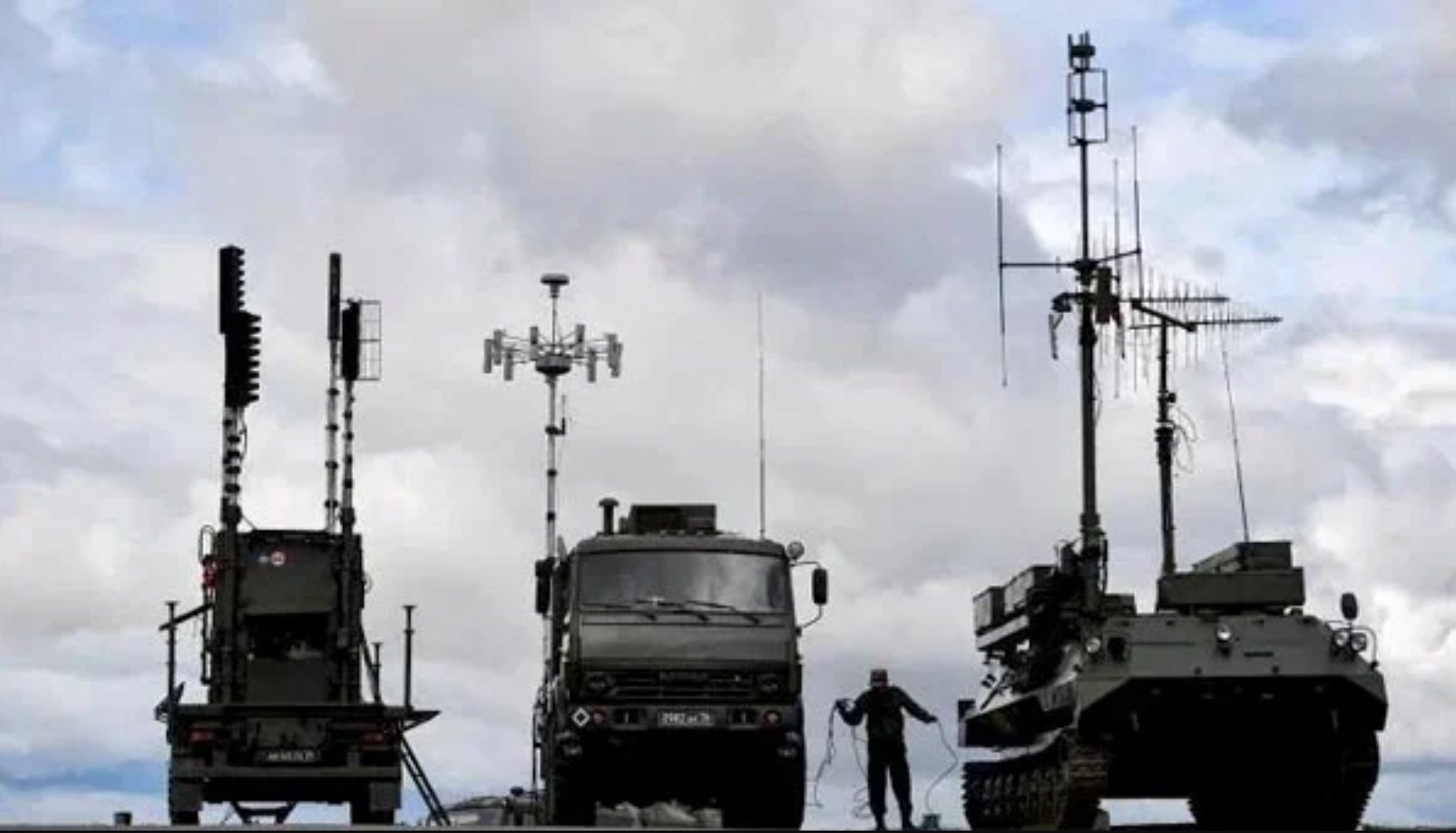
Especially interesting is the Russian tendency to combine jamming with deception. In Western military culture, there has long been a fascination with the precision strike, the satellite, the sensor, and the network that links everything into an almost perfect picture. The Russian school developed the opposite instinct. If the opponent depends on the picture, ruin the picture. If the opponent depends on the network, break the network. Here, the old Soviet method of maskirovka merged with the modern frequency spectrum. In other words, deception is no longer just a fake tank under a tarp.
The war in Ukraine, however, has also exposed the weaknesses of that school. Russian systems have sometimes jammed their own communications, have sometimes been too slow for the pace of small drones, and Ukrainian improvisation has often found ways around them. Still, Russia’s advantage lies in treating electronic warfare as a mass, constant function of the battlefield. It is present at brigade level, alongside artillery and aviation, around strategic facilities, and in the rear. That is why the war in Ukraine has turned into a battlefield on which both sides are constantly changing frequencies, antennas, software, and tactics. Russia does not always win in that space, but it understands it well enough to turn it into an expensive problem for the opponent.
Russia’s Information Maneuver
The Russian information space quickly turned the Baltic incidents into an indictment of Latvia, Estonia, and Lithuania. In wartime Telegram circles and Russian media, the claim appeared that Ukraine is "using Baltic space as a platform for attacks on Russia". That narrative has a clear function. A stray Ukrainian aircraft is transformed into an argument that the Baltic states are behaving as wartime accomplices. Clearly, if Ukrainian drones are falling across the Baltic, it is very likely the result of Russian involvement, but it is equally clear that Russia will not present it that way.
If electronic warfare succeeds in turning part of Ukraine’s campaign into a security burden for NATO, the Russian side gains a political counterweight to Ukrainian military innovation.Moscow has now raised that line to the diplomatic level as well. Russia’s ambassador to the UN, Vasily Nebenzya, said Ukraine was planning to launch military drones from Latvia and other Baltic states, and warned that "NATO membership will not protect Latvia from retaliation". Russia’s foreign intelligence service has made similar claims. The Baltic states rejected them as fabrications and provocations, but Russia’s goal has already been partly achieved. The issue has been moved out of the technical domain and into the domain of a possible expansion of the war.
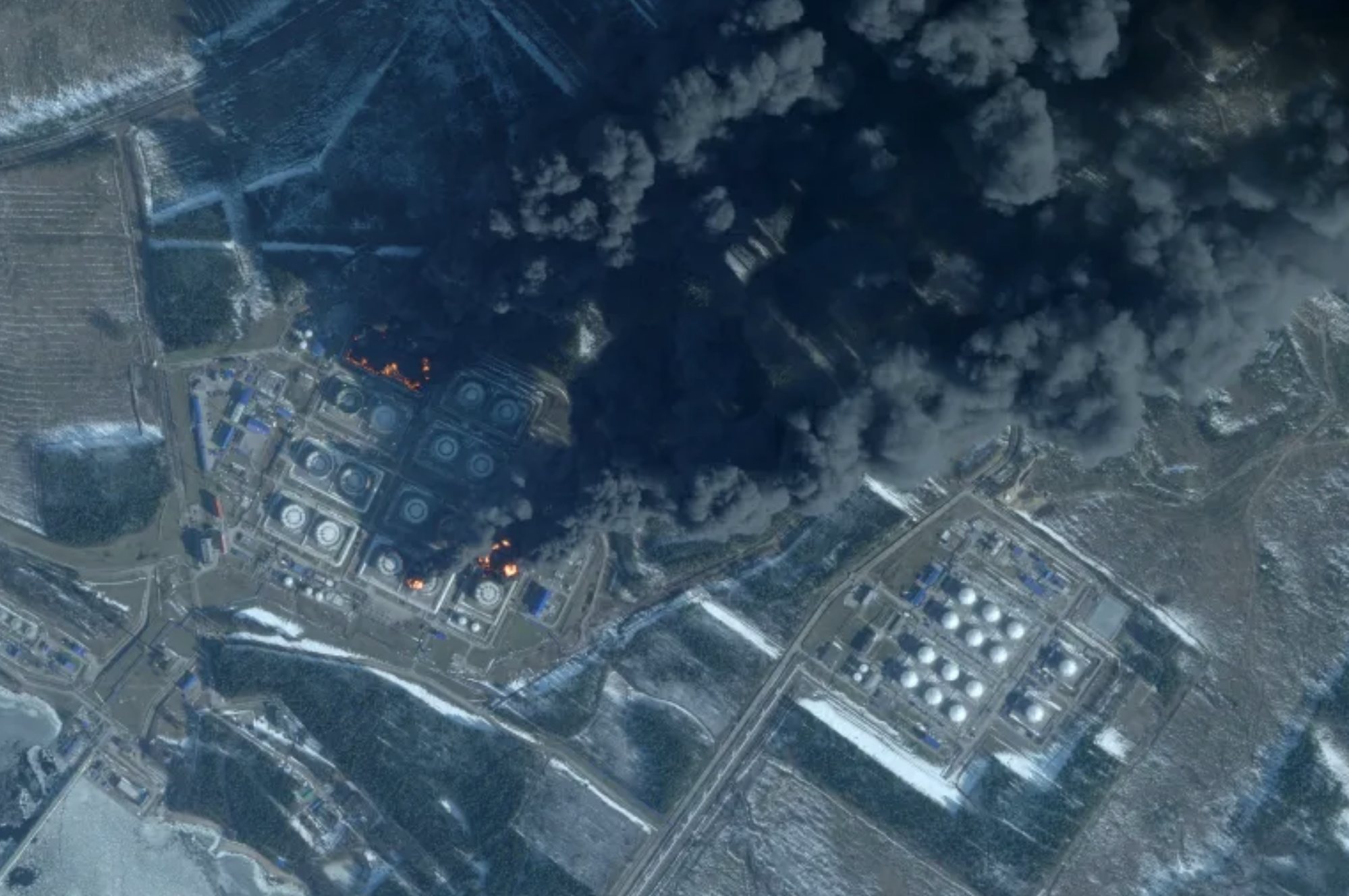
For Moscow, this situation is useful on several levels. Ukrainian attacks on Russian oil infrastructure have become a serious problem because they strike at the economic foundation of the war. Ust-Luga, Primorsk, refineries, pumping stations, and logistics hubs have become targets Russia cannot fully protect. If electronic warfare succeeds in turning part of that campaign into a security burden for NATO, the Russian side gains a political counterweight to Ukrainian military innovation. Every drone that veers toward the Baltic reinforces the message that Ukrainian deep strikes carry a price for the allies. That message is also aimed at Western governments, at Baltic voters, where the effect is already highly visible, and at Russia’s domestic audience.
Ukraine’s Deep-Strike Problem
Ukraine’s logic of deep strikes is militarily understandable. Russia is waging war from its energy, industrial, and logistical depth. Ukrainian drones have become a means by which the still weaker side tries to carry the war onto the territory of the stronger side, disrupt oil revenues, and show the Russian public that distance no longer means safety.
The problem for Ukraine begins when this deep war approaches NATO borders. After the Estonian incident, Kyiv apologized to its Baltic allies and stressed that it targets sites in Russia using Russian airspace. Ukraine’s claim that Russia is redirecting drones through electronic warfare has military logic. Still, the apology does not remove the new obligation. Ukraine must adapt its routes, software, and safety protocols to the fact that every stray drone in the Baltic can trigger a NATO interception, a Russian threat, and a domestic crisis in a country that has been among Kyiv’s most consistent supporters.
This will likely accelerate the development of more resilient navigation solutions. Ukrainian drones will have to combine inertial systems, optical terrain recognition, and perhaps even self-destruction or safe-crash procedures in the event of navigational loss more effectively. There is already talk of sending Ukrainian specialists to Latvia to help protect its airspace.
NATO Faces a Low-Threshold, High-Impact Crisis
The military lesson for NATO is deeply uncomfortable. Expensive fighter jets, complex command procedures, and a politically sensitive system of collective defense are now being activated because of aircraft that can be far cheaper than the missile fired to bring them down. A single drone can paralyze an area, scramble allied fighters, and bring down a government. The cost-to-effect ratio is becoming a central feature of the new security reality.
Technical jamming sends drones back toward NATO, but political jamming creates the confusion Russia now needs.The Baltic states have the additional problem of geography. They are small, exposed, directly adjacent to Russia and Belarus, with Kaliningrad serving as a permanent Russian military center in the region. Reaction time is measured in minutes.
Russia sees in this a space for pressure without openly crossing the threshold into a major war. Electronic warfare, an information campaign, and threats of retaliation now form a new whole that tests NATO. A drone that strays, or is "deceived" and steered toward the Baltic, can perform political work even without major destruction.
As expected, in the coming period we will witness the continuation of the race in technological innovation on both sides. For Russia, doing something about Ukrainian drones is an absolute priority. "Redirecting" at least a few of them toward NATO members could become a very concrete strategy, especially once it is clear that it produces results. The question now is how far Russia can escalate its "school of jamming" - can Russian specialists stay one step ahead of the navigation systems used by current drones? Or will the Ukrainian, and by extension Western, side develop new versions that are more resistant? This race is being fought painstakingly every day, even if it is not always visible, and in the end it is so important that it may determine the outcome of the war itself.
The "hidden frequency" in this context is political. Technical jamming sends drones back toward NATO, but political jamming creates the confusion Russia now needs. The Russian argument that Ukraine is preparing a drone strike from the Baltic very likely has no basis in reality, but it will strongly increase pressure at precisely the moment when Europe fears that Trump will not help in the event of escalation.
Comments