
For some time now, Ukraine has understood that a purely defensive war is not a viable long-term solution. Even while losing territory, it needs at least some workable idea not only of how to survive the war, but of how to win it.
One such strategy has taken shape, and it has a logic of its own. It is extraordinarily risky—as risky as it gets—but the outcome Ukraine envisions is so potentially favorable that Kyiv can no longer stop "seeing" it. It means dancing on the very edge of its own destruction, but by now Ukraine seems almost hypnotized by the possibility.
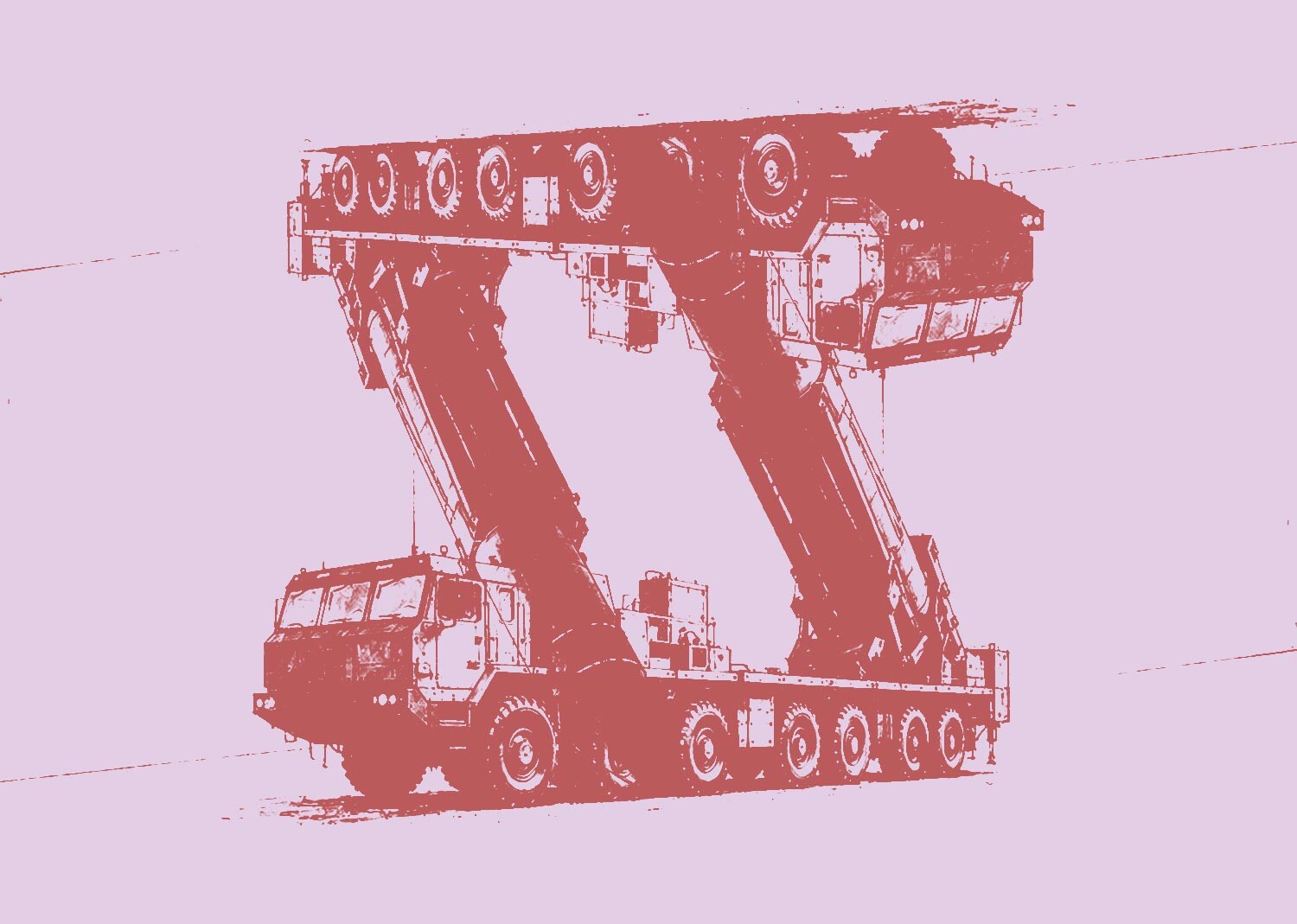
To understand what this means, we need only go back a few days. Russia carried out one of its heaviest missile-and-drone attacks on Kyiv and the wider Kyiv region—perhaps its heaviest yet—with particular attention drawn to the use of the Oreshnik ballistic missile. The strike followed a Ukrainian attack on a building in Starobilsk, in the Luhansk region, which Russia says was a student dormitory, while Ukraine claimed it housed an operations center linked to the Russian Rubicon group. Moscow presented that attack as the reason for its powerful response, but the scale of the strike on Kyiv suggests the operation was probably not something that could have been prepared in just a few days.
Russia’s Defense Ministry said the attack hit Ukrainian defense-industry facilities, military infrastructure and command posts, including sites connected to Ukraine’s ground forces and military-intelligence apparatus. One detail is especially important: the Russian side referred to Oreshnik missiles in the plural, leaving open the possibility that more than one was used. Ukraine, for its part, says Russia used one Oreshnik, two Kinzhal missiles, three Zircon missiles, around 30 ballistic missiles, 54 cruise missiles and roughly 600 drones.
Ukrainian authorities say they shot down a large share of the incoming weapons, including hundreds of drones and a significant number of cruise missiles. Even so, photographs and footage from Kyiv show extremely heavy destruction, especially at industrial facilities. Judging by those images, this was an attack whose consequences far exceeded those of Ukrainian drone strikes on Russian cities and infrastructure. Those Ukrainian attacks can damage individual sites, but Russian strikes of this kind have a much broader effect, and Ukraine faces far greater difficulty repairing the damage.
One of the key unknowns in the latest attack remains the Oreshnik’s actual target. The confirmed strike was not directly on Kyiv itself, but on an area south of the city, toward Bila Tserkva, described as an industrial satellite zone. Numerous production and industrial facilities are located there, but it is also possible that Ukrainian command structures, because of the constant threat of strikes on Kyiv, have been partly relocated to precisely such areas. If that is true, the Oreshnik was not used merely as a show of force, but as a way to hit important command or specialized military targets.
Previous Oreshnik strikes remain shrouded in deep uncertainty. After the attack on the Yuzhmash plant in November 2024, as well as later strikes on military facilities, the Ukrainian side did not allow any broader assessment of the scale of the damage. As a result, there is still no clear picture of the missile’s real effect. Even so, the reactions of Western officials, including French President Emmanuel Macron, who spoke by telephone with Belarusian President Alexander Lukashenko for the first time since 2022, suggest that this is a weapon that has caused serious concern inside NATO.
Dmitry Medvedev presented the attack "as a necessary response to Ukrainian provocations." In doing so, he acknowledged that such strikes may, in the short term, help the Ukrainian authorities mobilize support in the West and consolidate domestic backing, but he argued that Russia has no choice but to continue and intensify the pressure.
Analysis: the path to victory through absolute risk
This is the key point: Ukrainian drone strikes on distant Russian energy infrastructure continued immediately, at the same pace and with the same "message." And for some time now, the message has been just as important as the destructive effect: the aim is to reinforce the image of Russia slowly losing control over the war it started, of the "war coming home."
There is no doubt that both the message and the strategy are effective. This can be seen very clearly in the broader mood across Europe, where, to put it plainly, there is already a kind of quiet euphoria around the idea of Russia’s "final weakening." For Ukraine, that immediately translates into stronger support in every category: military, financial and political. For Ukraine, this effect is enormously important because it is the engine that keeps support flowing and prevents the kind of unrest within European ranks that has surfaced several times before.
But that tactic is clearly becoming more dangerous by the day. Consider its ultimate goal—not merely the temporary goal of securing support. The final aim of Ukrainian strikes deep inside Russian territory is not to defeat Russia physically, since even now those attacks cause far less damage than Russian attacks on Ukraine. Rather, it is to portray Russia as an aggressor under attack, no longer capable of controlling events. That message is aimed straight at the top of the Kremlin.
In that sense, this is a strategy with a very high potential "yield." Indeed, if we set aside the possibility of Western forces directly entering the war on Ukraine’s side, this may be Ukraine’s only path to victory—real victory. If the erosion of internal Russian confidence continues long enough, it could produce panic within the system itself. And if a system no longer believes in itself, it is one step away from ceasing to exist. In the most radical comparison, one could say that something similar happened to the USSR, when the authorities themselves concluded that what they were presiding over was no longer sustainable.
So, if we assume that this is Ukraine’s strategy, what about Russia’s response? Here we arrive at the most dangerous scenario. Russia has used the Oreshnik three times, undoubtedly the most powerful weapon it has brought to bear. In the latest strike, perhaps more than once. And what was the result, in terms of stopping Ukrainian attacks? Almost nothing. If anything, it is in Ukraine’s interest after such an attack to retaliate against Russia immediately, without the slightest delay, in order to reclaim the psychological narrative at once. The message to its allies is clear: Russia is attacking us with its most powerful weapon; we are striking back immediately; Russia is finished; now help us to the maximum.
And what will Russia conclude? The Oreshnik destroys, but not enough. Yet the Oreshnik can be fitted with a nuclear payload. What does that suggest about its potential 4th use? In a sense, this episode pushes Russia toward precisely that consideration, and perhaps it has already been close to such a fateful decision for some time.
Is Ukraine aware that the 4th Oreshnik could be nuclear? Of course it is. But that is precisely where it sees its great opportunity. How so? Not, of course, in the sense that it wants a nuclear attack on itself, but in the sense that it wants to bring Russia to the very brink of the act itself—literally to the decision point, to a situation in which Russia appears to have almost no further means of response except that one—and then to show, hoping it proves true, that Russia will not do it.
It must be said: for all the immense risk, this is a strategy in which at least the possibility of Ukrainian victory in the war can be seen. Set aside the fact that it is probably insane for anyone to accept such a level of risk. If we assume the will exists, the strategy is clear. If this is indeed Ukraine’s plan, it will try to carry out increasingly provocative drone attacks, targeting prominent and important sites, from refineries to Moscow itself.
Because all of Europe is already buzzing with the idea that Russia is "just about to launch a nuclear strike." That idea is being powerfully circulated, even encouraged. And by emphasizing it, the aim is to further undermine the perception of Russian power. If everyone suddenly expects such a Russian reaction and it does not come, what impression does that leave of Russia?
Clearly, this is a classic trap, because the other side knows that Russia does not want to go that far, does not want to be the one that turns the world upside down. Moreover, a nuclear strike, however terrible for Ukraine, would be interpreted in the West even more forcefully as proof of Russia’s general weakness. The war would probably end, because after that there would no longer be any point to it, but the pressure on the Kremlin would be so great that chaos would follow—quite possibly an internal overthrow. For let us not forget: this is not an ideological Russia but, in the end, a "business Russia," living off calculations about energy exports and matters of that sort, not off a desire for a complete remaking of the world in the spirit of: "Let us start everything from scratch."
That is why the trap, and the tactic, are so effective.
Can Russia avoid the trap? It can, perhaps—but only perhaps. It would have to be capable of delivering conventional strikes so severe that they would stop Ukraine without the use of nuclear weapons. Clearly, if Russia were capable of doing that, the logic of war suggests it would have done so already. If it could carry out such enormous attacks on Kyiv every day until the authorities there said, "All right, this no longer makes sense; let us end it," that would secure victory for Moscow. But again: if it could. Perhaps, in time, it will be able to. Perhaps it will not. That remains to be seen.
In the meantime, Ukraine will continue with its tactic because it senses that it is producing results, provided it can ignore—or recover relatively quickly from—massive strikes involving the combined use of the Oreshnik, Kinzhal and Zircon.
War is a contest of psychological force that rises above every physical reality. Interpretation is often the most powerful weapon.
Comments