
Drones can still be hunted cheaply. But when a missile pierces the sky and demands a perfect defence, the entire war comes down to a matter of seconds.
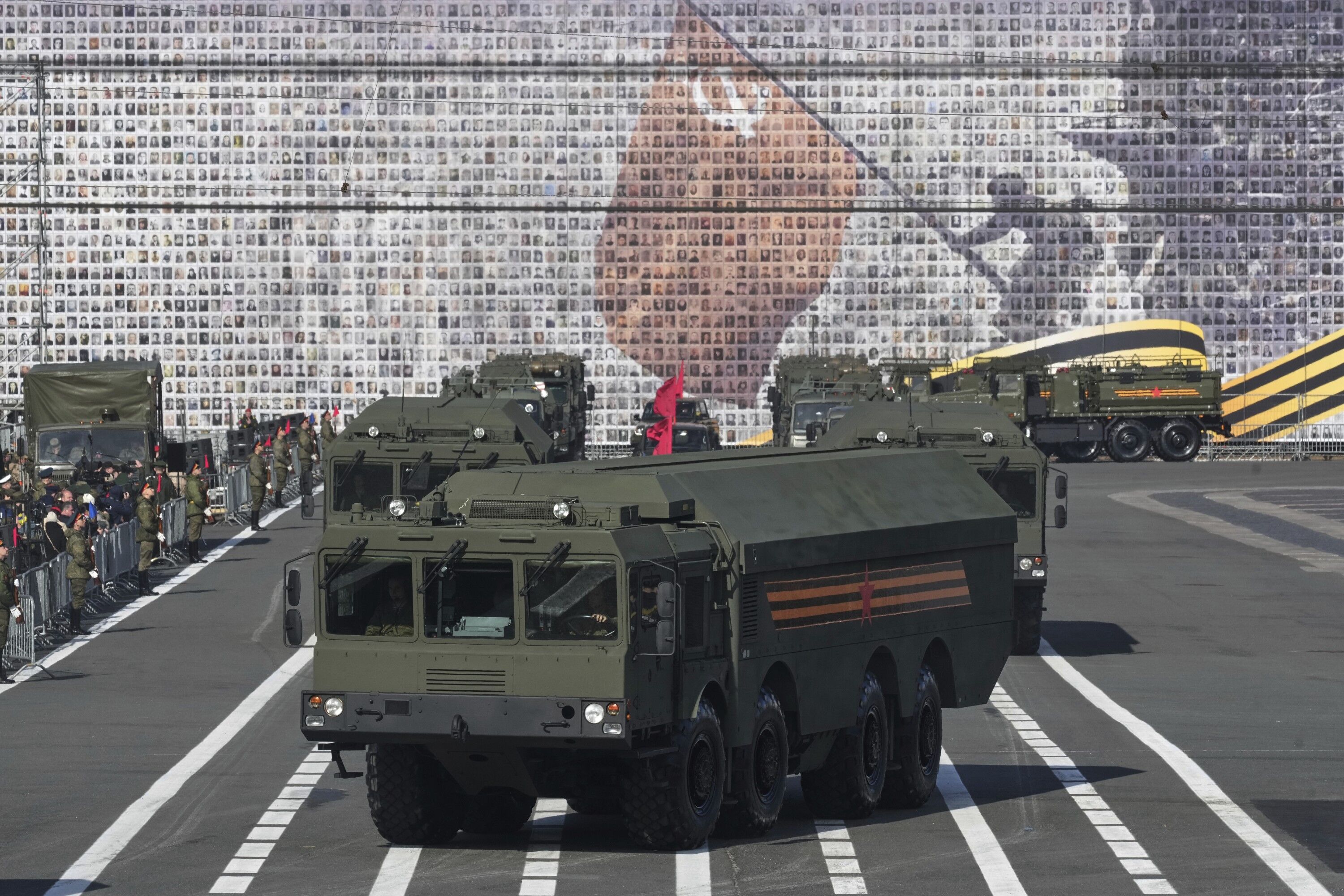
Two technologically distinct wars were fought over Ukraine on the same night. In the first, Ukrainian air defences brought down 98 of 115 Russian drones—relatively inexpensive aircraft now manufactured in large numbers and intercepted with a wide range of weapons. In the second, 24 ballistic projectiles passed through that same defensive airspace—Iskander-M missiles and missiles from S-400 systems repurposed for attacks on ground targets—along with four Zircons.
According to the Ukrainian report, not one of those missiles was intercepted. At least 17 people were killed, while warehouses and industrial facilities around Kyiv were hit. The ratio of 98 to zero may be the most concise description of this new phase of the war. But the larger question is what Russia intends to do with this “ballistic window.” Like every form of military superiority, it will not remain open forever.
Ukraine has learned to build drones, improvise cruise missiles and strike targets more than a thousand kilometres away with relatively inexpensive weapons. Defending against a Russian Iskander during the final seconds of its flight, however, still depends on a factory in the United States and a political decision in Washington. According to Volodymyr Zelensky, allied deliveries of air-defence missiles in the first half of 2026 fell to roughly one-third of their level the previous year, while the US-Israeli war against Iran consumed a large share of the available interceptors. The consequences of America’s war in the Middle East are now materialising in Ukrainian warehouses, above which Russian missiles pass unanswered. In other words, Moscow has acquired a ballistic window.
The term ballistic missile does not simply mean an exceptionally fast missile. Its engine does most of the work during the initial phase, accelerating the projectile forcefully before inertia and gravity carry it through most of its trajectory. A cruise missile remains within the atmosphere and flies like a small unmanned aircraft, propelled continuously by an engine and supported by wings that generate lift. A ballistic trajectory produces tremendous speed during the terminal dive, leaving defenders only minutes—and sometimes mere tens of seconds—to detect the projectile, calculate where it will be and launch something fast enough to hit it.
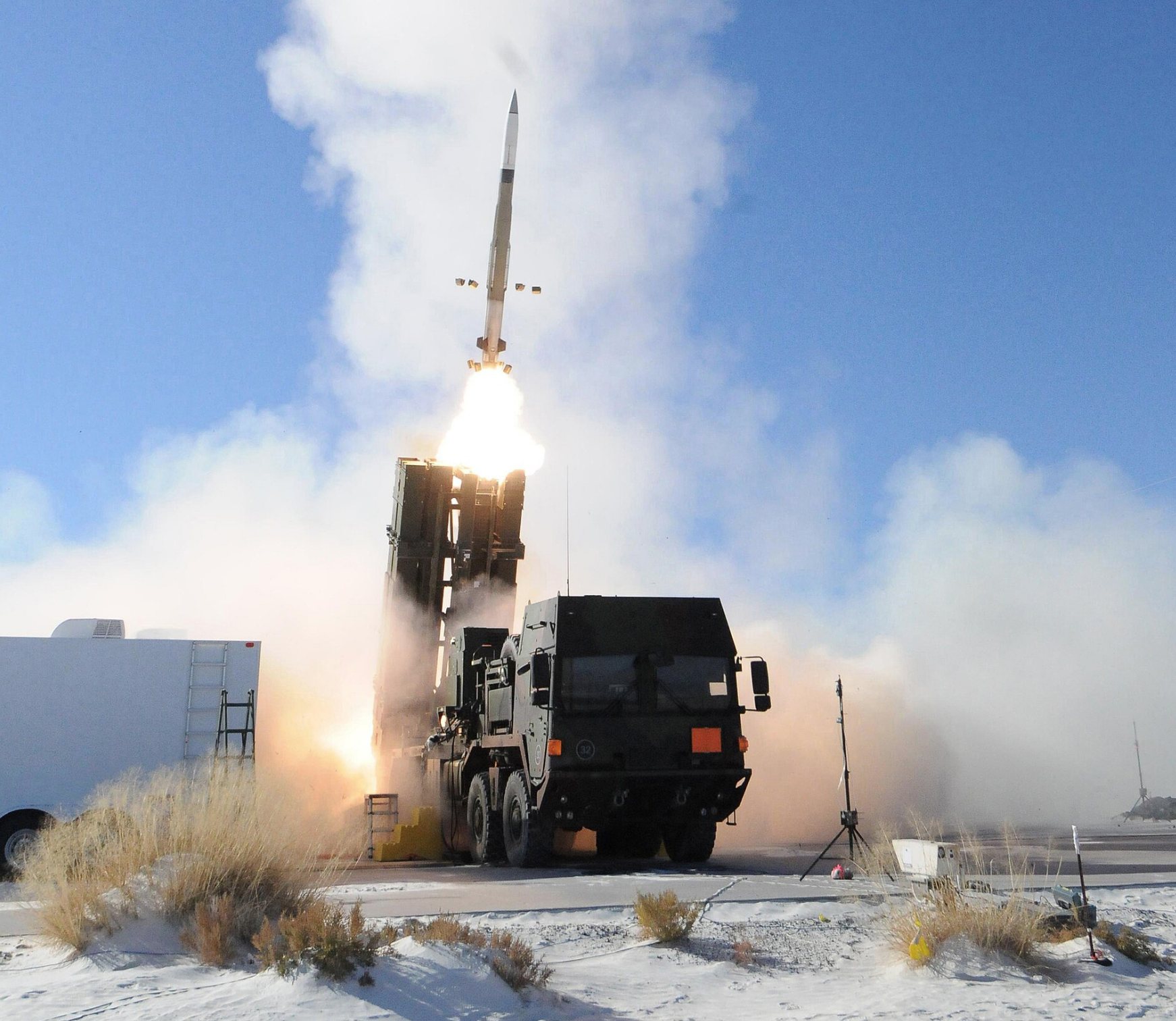
Modern ballistic missiles are not cannonballs blindly following a predetermined arc. The Iskander-M travels along a so-called quasi-ballistic trajectory, can manoeuvre and can release decoys designed to confuse radar systems. The Patriot system’s PAC-3 interceptor attempts to strike its target directly using the “hit-to-kill” principle. Two objects travelling at several times the speed of sound must meet within an extremely small patch of sky. The battery must be positioned correctly, the radar must detect the target in time and the launcher must carry the appropriate interceptors. The fact that no missiles were intercepted does not prove that they possess some miraculous invulnerability. There is no such thing as an unstoppable missile, but there are missiles that, at a particular moment, simply cannot be stopped because nothing capable of doing so is available.
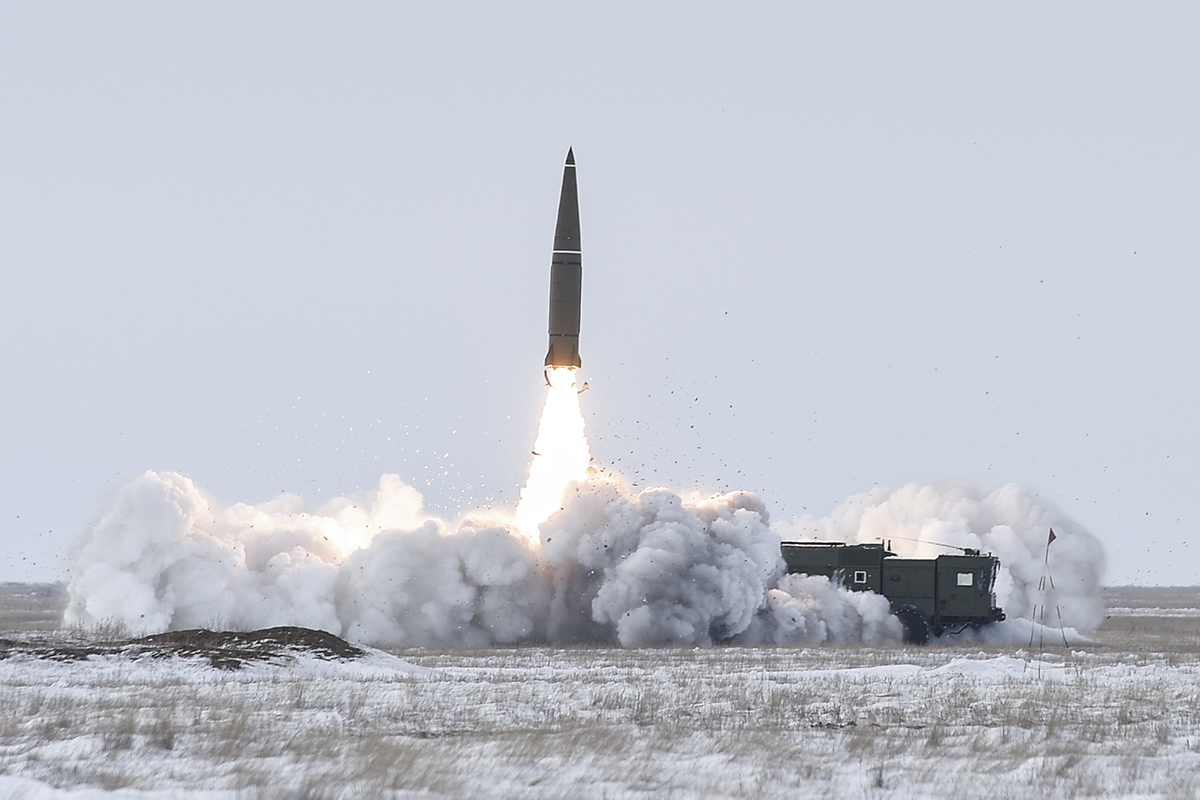
Nor are all the projectiles grouped together in military reports the same. The Iskander-M, a ground-launched missile with a range of roughly 500 kilometres, is probably Russia’s most important weapon in the current campaign. Its launcher is mobile, can fire quickly and can disappear before the enemy locates it. The Kinzhal, by contrast, is launched from an aircraft and begins its flight at high altitude and speed, making it an exceptionally difficult target, but Russia possesses fewer of them. The Zircon is technically a hypersonic cruise missile originally designed for use against ships. S-300 and S-400 missiles were initially developed to shoot down aircraft, but Moscow also uses them against ground targets. The fastest missile is therefore not necessarily the most strategically important. In a prolonged war, the advantage belongs to the weapon that is dangerous enough but can still be manufactured in the hundreds.
How many such missiles Russia possesses remains a secret. Public figures come from Ukrainian intelligence agencies, Western estimates and conclusions drawn from the pace of attacks, so they should be treated as an approximate picture rather than a precise inventory. The monthly flow is more revealing. Ukrainian military intelligence estimates that Russia intends to manufacture as many as 700 Iskander-M missiles during 2026, or approximately 55 to 60 per month. It is also expected to produce more than 480 missiles for S-300 and S-400 systems intended for attacks on ground targets, as well as up to 60 Kinzhals over the course of the year. According to the same estimate, Moscow can launch around one hundred ballistic and similar missiles each month without seriously depleting its reserves.
July demonstrated that Russia is also prepared to expend weapons it had previously stockpiled. According to an analysis of Ukrainian data, 107 ballistic projectiles and another 20 Zircons were launched during the first 19 days of the month—more than the estimated monthly production rate. Part of that intensified tempo must therefore have come from existing reserves. North Korea could provide additional capacity: Ukrainian intelligence claims it may deploy a unit to western Russia equipped with six launchers and as many as 120 KN-23 and KN-24 missiles. Russia can therefore maintain a pace of roughly one hundred strikes per month for several months, and occasionally considerably more. A sustained increase to two or three hundred launches per month would be far more difficult, rapidly draining stockpiles and placing enormous pressure on a complex production chain.
The Final Ninety Seconds
Ninety seconds is not a universal figure that applies to every attack, but it captures the most critical part of the final phase—the moment when a warning ceases to be information and becomes a race against a projectile already diving towards its target. An Iskander launch can, in fact, be detected relatively quickly: its engine produces a powerful heat signature, after which radars attempt to acquire the object and calculate its trajectory. Knowing that a missile has been launched, however, is not the same as knowing precisely where it is going, which path it will take or whether a system capable of intercepting it is positioned in the right place.In the command centre, an entire chain must then be connected within seconds. Radar locates the target, a computer calculates its trajectory, the system estimates the impact zone, an operator checks whether a suitable interceptor is available and the command structure decides whether it is worth expending. At the same time, the defence network may be tracking dozens of drones, cruise missiles and decoys. Each demands attention, occupies part of the radar picture and forces human operators to make decisions under pressure that cannot be paused.
The Iskander makes the task even harder because it can manoeuvre during the terminal phase and deploy decoys, forcing the projected interception point to be recalculated continuously. An interceptor does not chase a missile in the way a fighter aircraft pursues an enemy plane. It must be launched towards the point where the target will be in the future and then collide with it almost directly at enormous relative speed. An error of a few moments or a few metres can mean a miss.
Ballistic defence is therefore not simply a duel between two missiles. It is an attempt to make a satellite, radar, computer, command structure and human operator function as a single perfectly coordinated organism during the final ninety seconds—because one mistake is enough to change everything.
The number of explosions alone, however, does not determine whether Ukraine will break. Ballistic missiles cannot capture cities, hold trenches or replace an army on the ground. Attacks on residential districts can cause fear, death and a new wave of refugees, but they can also harden resistance and increase the political cost of concessions. Russia could squander its advantage on an expensive campaign of intimidation with limited military effect. The far more serious scenario begins when the targets cease to be symbolic and become the systems that keep the state alive.
The latest attack struck distribution centres belonging to major retail chains, warehouses, a factory and railway infrastructure. Moscow claims some of these facilities were being used to transport dual-use goods and drone components, while the Ukrainian side emphasises the civilian casualties and economic damage. The operational logic is visible regardless of the competing descriptions. Strikes on warehouses, transport hubs and industrial facilities are intended to slow the circulation of food, spare parts, weapons and repair materials.
The threshold of endurance is measured by the relationship between the speed of destruction and the speed of repair. If a transformer can be replaced in five days but Russia strikes the same junction again on the third, the damage begins to accumulate. According to Ukrainian estimates, this is precisely why Moscow is increasing production ahead of winter and another campaign against the energy system. Success will also depend on the quality of Russian intelligence, because striking an abandoned warehouse or a decoy target means wasting an expensive missile.
On the other side stands a Western military-industrial system accustomed to decades of producing weapons slowly, at great expense and in quantities sufficient for short wars against weaker opponents. According to an Associated Press estimate, the US stockpile of Patriot interceptors fell by at least 65 percent during the war with Iran compared with its pre-war level. Lockheed Martin delivered slightly more than 600 PAC-3 MSE missiles to all customers combined in 2025 and does not expect to reach annual production of roughly 2,000 until the end of the decade. Demand from Ukraine, Israel, the Gulf monarchies, Europe and the US military already exceeds what the factories can supply.
Clearly, the same interceptor cannot simultaneously defend American bases in the Gulf, Israeli cities and Kyiv. When Donald Trump expends the arsenal in a war against Iran, Ukrainian air defence inevitably moves lower down the priority list. Announcements that Ukraine may one day manufacture Patriot systems do not close the present gap. Even with a licence, technology transfer, supplier certification and the establishment of production take years. Manufacturing certain components in Ukraine and carrying out final assembly in Germany are reportedly under consideration, but such a project is unlikely to protect Kyiv this winter.
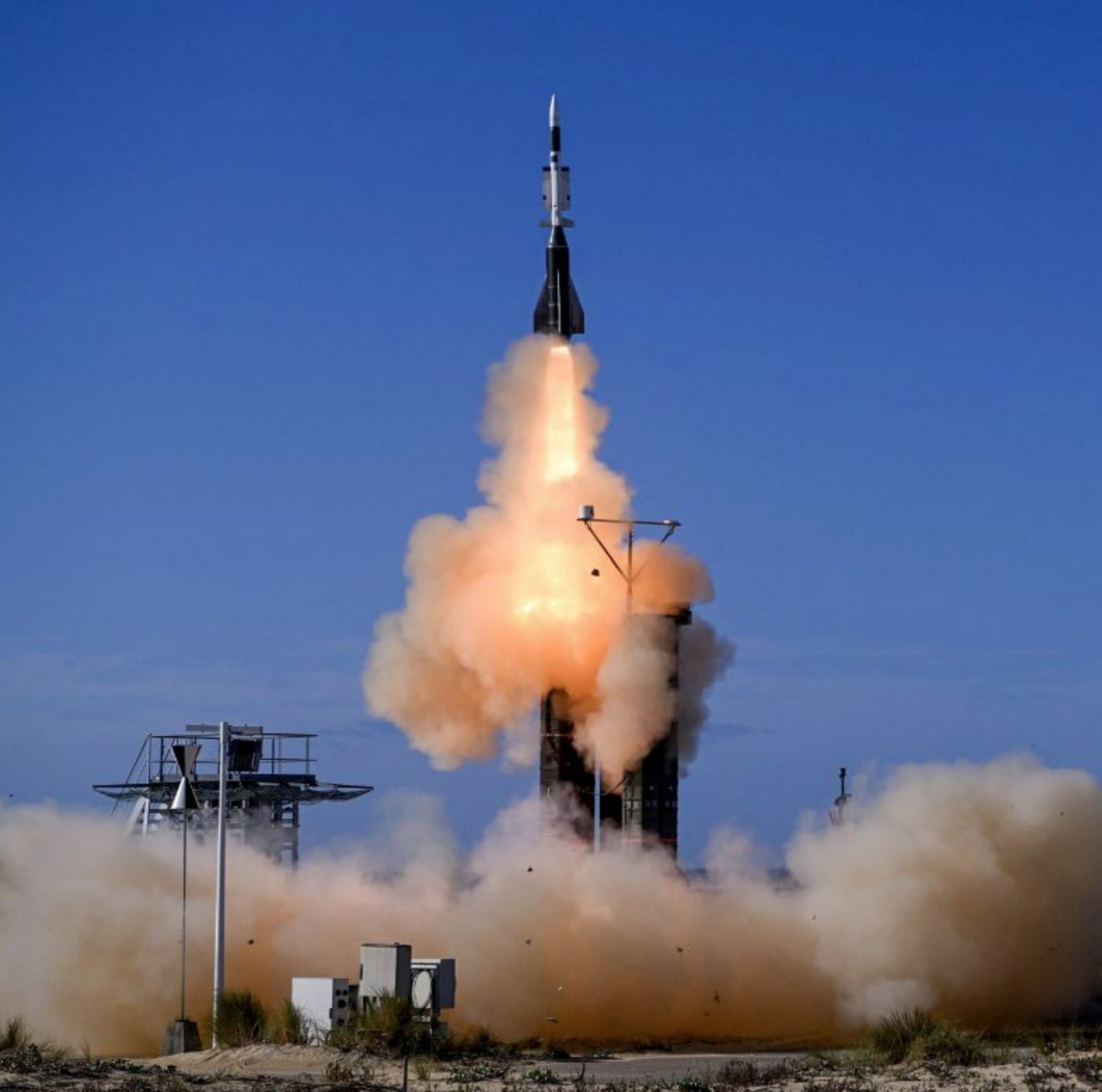
There is no easy substitute for the Patriot. Europe’s SAMP/T system, equipped with Aster missiles, has some capability against ballistic threats, but too few systems and missiles are available. NASAMS and IRIS-T are more useful against drones, aircraft and cruise missiles, allowing the rare Patriot interceptors to be reserved for Iskanders. Passive defence is also becoming increasingly important: dispersing production, moving facilities underground, using mobile warehouses and deploying decoys.
The second path follows an old rule of missile defence: it is cheaper to hit the archer than the arrow. Ukraine can hunt Iskander launchers, strike storage facilities before missiles reach them or sabotage the production chain deep inside Russia. A mobile launcher, however, can fire and leave its position within minutes, while hunting it requires constant surveillance, rapid data-sharing and long-range weapons. Kyiv currently lacks a reliable capability to systematically destroy Russia’s entire launch network. Europe, meanwhile, is initiating joint anti-ballistic projects with Ukraine, including Freya and Bliksem EXO, but their interceptors belong to the latter half of the decade. Russian missiles are arriving tonight.
Russia therefore possesses a serious but time-limited advantage. It can maintain a brutal tempo of approximately one hundred ballistic strikes per month, temporarily intensify it by drawing down reserves and attempt during the winter to destroy vital nodes faster than Ukraine can repair them. Such a campaign could weaken the economy, disrupt military logistics and make life in major cities considerably more difficult. But it does not guarantee capitulation.
The most important race, then, is not between the Iskander and the Patriot during the final seconds of flight. It is the race between Russian production and Ukraine’s capacity to survive; between American expenditure in the Middle East and European promises that do not yet have factories behind them. Ukraine can manufacture a weapon capable of travelling more than a thousand kilometres and striking a refinery deep inside Russia. But it still cannot manufacture a device capable of locating, within seconds, a warhead diving at several times the speed of sound and physically colliding with it. As long as that weapon remains tied to Washington and its wars, Russia’s most dangerous missile may not be its fastest, but the one Moscow can produce often enough.
Sources
- The Guardian Nato to ‘urgently’ get air defences for Ukraine, as Zelenskyy warns of surge in Russian missile production https://www.theguardian.com/world/2026/aug/06/ukraine-nato-air-defences-missiles-russia-zelenskyy-patriot
- Rusi.org Iskander: An Improved Russian Missile Tests Ukraine’s Air Defence https://www.rusi.org/explore-our-research/publications/commentary/iskander-improved-russian-missile-tests-ukraines-air-defence
- Lockheedmartin.com About PAC-3 https://www.lockheedmartin.com/en-us/products/pac-3-advanced-air-defense-missile/pac-3-media-kit.html
- Nato.int Ballistic missile defence https://www.nato.int/en/what-we-do/deterrence-and-defence/ballistic-missile-defence
- Associated Press Why Russia’s ballistic missiles are increasingly getting through Ukrainian defenses https://apnews.com/article/russia-ukraine-war-ballistic-interceptors-patriot-shortage-a633c337971e99d6f4496d2754b5aa5c
- Missilethreat.csis.org 9K720 Iskander (SS-26) | Missile Threat https://missilethreat.csis.org/missile/ss-26-2/
- President.gov.ua Russia Is Placing Its Wagers on Ballistic Missiles, and It Is Because of Them That Putin Still Believes in His War – Address by the President https://www.president.gov.ua/en/news/same-na-balistiku-rosiya-robit-stavku-i-zavdyaki-balistici-p-105517
- Mbda-systems.com ASTER https://www.mbda-systems.com/products/area-protection/aster-family/aster
- Reuters Ukraine says missile interceptor deliveries have fallen to third of 2025 level https://www.reuters.com/world/europe/ukraine-says-missile-interceptor-deliveries-have-fallen-third-2025-level-2026-08-05/
- The Guardian Nato to ‘urgently’ get air defences for Ukraine, as Zelenskyy warns of surge in Russian missile production https://www.theguardian.com/world/2026/aug/06/ukraine-nato-air-defences-missiles-russia-zelenskyy-patriot
Comments