
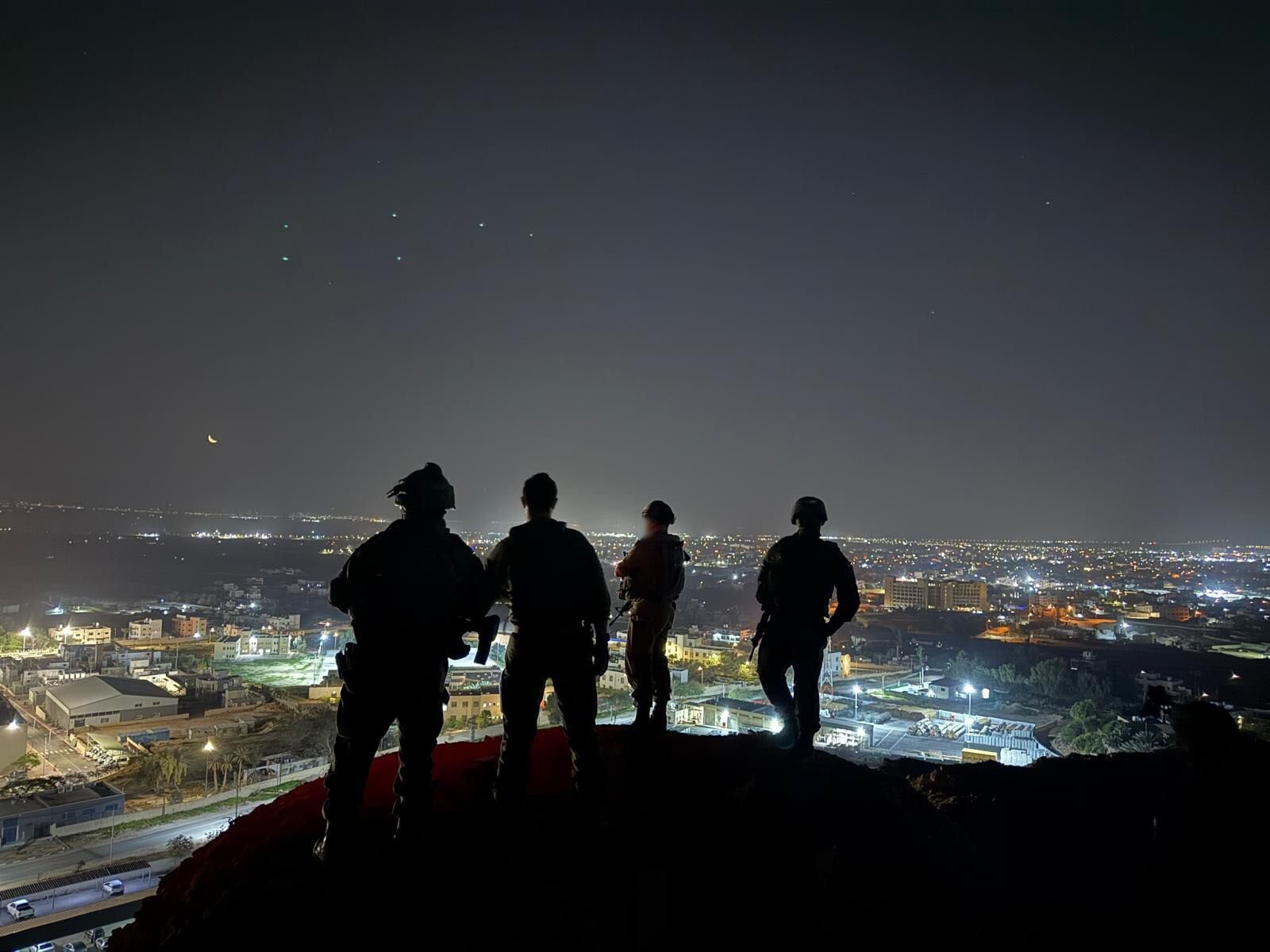
The Israeli army is pushing ever deeper into Lebanon, and this time it is in a hurry. When Trump says "it’s over", de facto borders may be in place.
Few are still counting how many times we have been told that the United States and Iran are "on the verge of a deal". The same atmosphere carried through the weekend. Perhaps they really are close. But one fact cannot be wished away. Iran will not simply drop its demands. The history of Hormuz has changed, and until Washington understands that, something Trump does not appear especially good at, real diplomacy will remain difficult. The uncertainty may of course drag on, perhaps through some memorandum that keeps the Persian Gulf away from a much larger war for another month or two. But while that file remains unresolved, another front, Lebanon, is escalating fast.
Israel’s deeper push into Lebanon comes at a moment when it is becoming clear that America cannot manage this situation for much longer. Trump is under pressure from the economy, from the coming congressional elections, and from the limits of his own improvisational diplomacy. That is why this move matters far beyond southern Lebanon. Netanyahu’s government understands that any serious agreement between Washington and Tehran, sooner or later, would also have to touch the Lebanese battlefield. Iran will not accept an end to the war that leaves Israel free to dismantle Hezbollah. That is why the IDF is now rushing toward Lebanon’s interior, and why a major escalation appears to be approaching.
Lebanon is becoming a race against time. Israel is trying to create facts on the ground that can later be treated as the new reality. If the Israeli army moves deeper in and captures strategic points, half the political work has already been done. Negotiations would then begin from a different map. Israel would simply say that the additional territory is necessary for its security.
War gives Netanyahu space in which accusations, crises, defeats, and responsibility can be postponed, diluted, or made to disappear.The capture of Beaufort Castle, the ancient Lebanese fortress confirmed this morning, carries both military and symbolic weight. The old Crusader stronghold above southern Lebanon overlooks much of the country’s south, as well as northern Israel. The Israeli army is returning there after more than a quarter of a century, and the message is unmistakable, to Hezbollah, to Lebanon, and to Washington. Israel wants to show that it can still redraw the boundaries of force, despite exhaustion after Gaza, international isolation, and the increasingly open contempt much of the world now feels toward the way it wages war. Yet Israel’s growing isolation may also be feeding further aggression, under the grim logic that there is no longer much left to lose, while there is still territory to gain.
Netanyahu, of course, does not have the luxury of waiting. His domestic political survival is tied to permanent escalation. War gives him space in which accusations, crises, defeats, and responsibility can be postponed, diluted, or made to disappear. Lebanon now gives him a stage on which to project strength, especially before a right wing that increasingly thinks in terms of permanent territorial control. When Israel’s defense minister speaks of holding Beaufort as part of a security zone, this is not just a temporary military measure. In Israeli political tradition, "temporary" often becomes permanent the moment enough strategic arguments can be built around it.
That argument is already waiting. Israel will claim that everything since October 7, the war in Gaza, rocket fire from southern Lebanon, Iranian support for Hezbollah, and the wider regional conflict, has proved that the old borders no longer provide security. From that claim comes the demand for buffer zones in Lebanon, Syria, and elsewhere. It will all be presented as a "defensive necessity". In practice, it means the expansion of Israeli control, and perhaps of Israel’s borders.
Gaza has inflicted enormous moral damage on Israel, but that damage can also produce a cynical effect.The political use of the Litani River is especially dangerous. From the Israeli perspective, particularly that of the current government, southern Lebanon is a space that should be cleared of any force capable of threatening northern Israel. Now there is talk of pushing toward the Zahrani River as well, which means the appetite grows the moment an opportunity appears.
Gaza has inflicted enormous moral damage on Israel, but that damage can also produce a cynical effect. A government that has already lost much of the world’s sympathy may conclude that further outrage no longer changes very much. In that calculation, the reputational cost has already been paid, while the territorial gain is still there to be secured. This is the most dangerous phase of any aggressive policy, the moment when a state convinces itself that the world is too paralyzed, too hypocritical, or too exhausted to stop it.
Europe’s role is ambiguous only on the surface. Some countries have genuinely raised their voices, especially Spain and Slovenia, but the broader European framework remains tied to American strategy, and therefore to a pro-Israeli strategy. Criticism often stops at moral language, while concrete pressure is absent. Sanctions, the suspension of military cooperation, the freezing of privileged relations, and diplomatic isolation remain beyond the reach of most European governments. Behind all the expressions of "concern" lies structural support for Israel’s freedom of action.
The American position matters even more. If Trump wants a way out of the conflict with Iran, he will have to face the fact that Tehran will not allow its allies to become collateral damage in an American-Israeli deal. Lebanon, in that sense, becomes the test of every de-escalation, just as we see each time another claim that "we are close to an agreement" falls apart. Washington may try to close the Iranian file, but it can hardly do so while Israel deepens its war against Iran’s most important ally in the Levant. That is why Netanyahu is hurrying. Every new line on the map raises the price of any future withdrawal. Then he will say that the territory will be held "temporarily". The history of the Middle East is full of temporary arrangements that last for generations.
In short, one version of the American-Israeli strategy now looks like this. Let Israel seize as much territory in Lebanon as it can hold with its current capacity, and then sign a deal with Iran that also includes an end to the conflict in Lebanon. In other words, end the war with a de facto Israeli occupation already in place. Iran can, of course, then say there will be no agreement until the Israeli army withdraws. But everyone knows that this will not happen easily, and so we sink deeper and deeper into the abyss.
Comments