
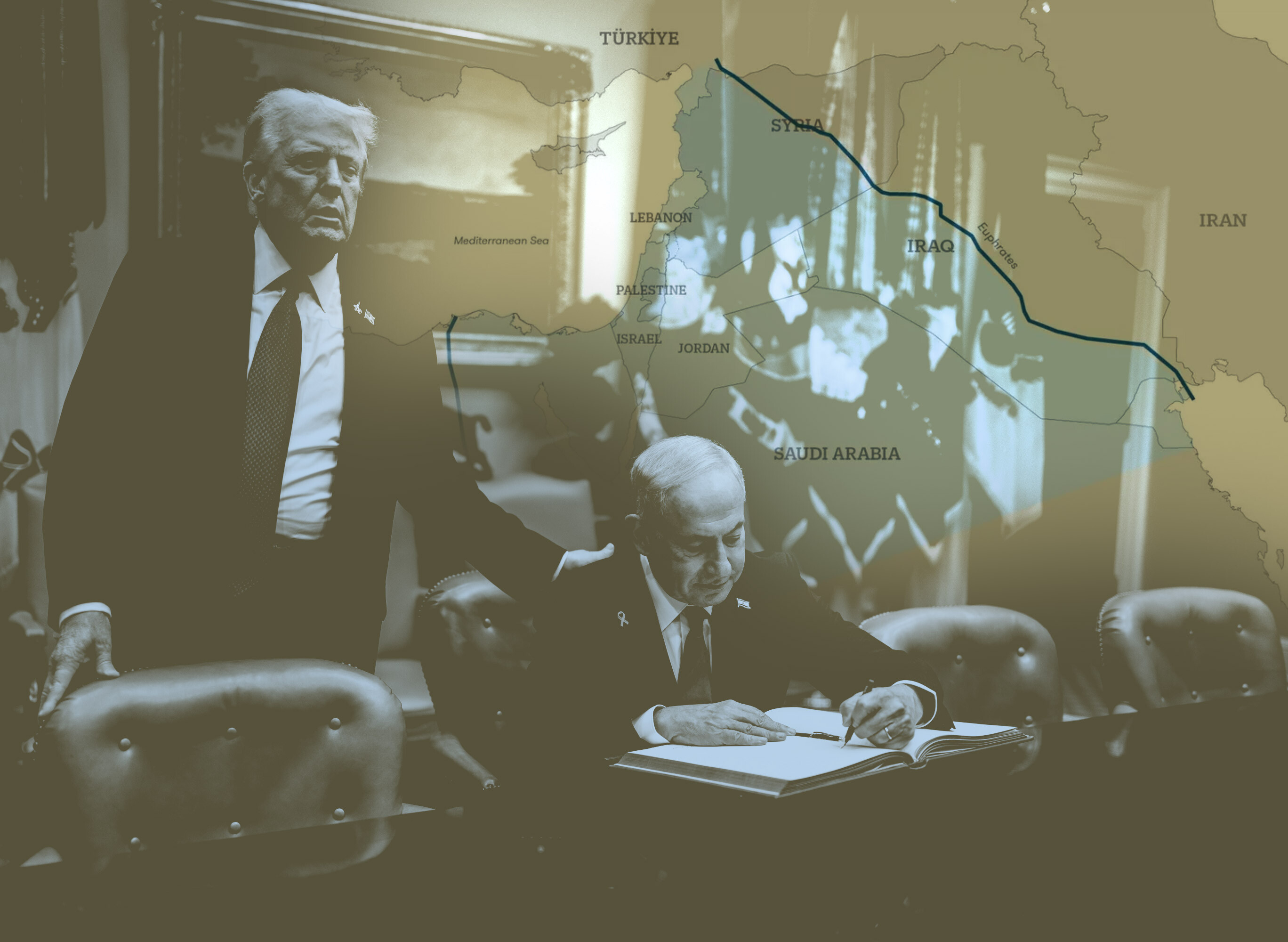
The thesis recently put forward by Joe Kent, former head of the U.S. National Counterterrorism Center, that America’s distancing from NATO could serve a future alignment with Israel in a possible confrontation with Turkey, quickly entered the wider debate because it coincided with Trump’s renewed threats against NATO and Turkish warnings that Europe "must prepare for reduced American involvement". That formulation connects three processes now merging into a single crisis: the war with Iran, the reordering of Syria after the fall of Assad’s government, and the growing suspicion that the next major fault line in the region could run precisely between Israel and Turkey. It should also be noted that a formal U.S. withdrawal from NATO cannot depend on the president alone, because a 2023 law requires the consent of the Senate or Congress. But the fact that such a debate is happening at all shows how far the strategic map of the region has shifted.
The real point of collision already exists, and it is called Syria. After the overthrow of Assad’s government, Ankara began building deep influence in the new Syrian state, including plans for a defense agreement and the use of the T4, Palmyra and Hama bases. Sources say Turkish teams inspected those facilities shortly before Israeli strikes destroyed the runway, tower and hangars at T4, while Israeli officials sent the message that any permanent Turkish military insertion into central Syria would be treated as a "red line". A few days later, the two sides opened technical talks in Azerbaijan to prevent a direct incident, which only confirms that the risk is real and that both command structures are fully aware of it.
For Israel, Turkey is a threat above all because it can limit Israeli freedom of action over Syrian airspace. In Israeli security debates, there is growing talk that a Turkish military presence in central and southern Syria, combined with air-defense systems, drones and logistical infrastructure, could seriously narrow the space in which Israel currently strikes targets in Syria, Lebanon and the broader Iranian chain. In addition, the Israeli think tank INSS notes in a recent analysis that Turkey is increasingly described as a "new long-term threat" because of its military presence in Syria, the role it wants in postwar Gaza, Turkey’s position that Hamas remains an important actor, and growing tensions in the eastern Mediterranean, where Ankara possesses serious naval power. Israel’s perception of Turkey therefore spans a whole series of fronts, driven by the fear that an organized, militarily powerful and politically at least somewhat hostile force is emerging along its northern and northeastern periphery.
All of this, of course, fits into the story of so-called "Greater Israel", an ambition some Israeli strategists seriously see as the ultimate goal. Naturally, we are speaking of a country increasingly practicing religious extremism and invoking the Bible and claims of "Israel from the Nile to the Euphrates" - on the modern map of the world, it looks roughly like this:
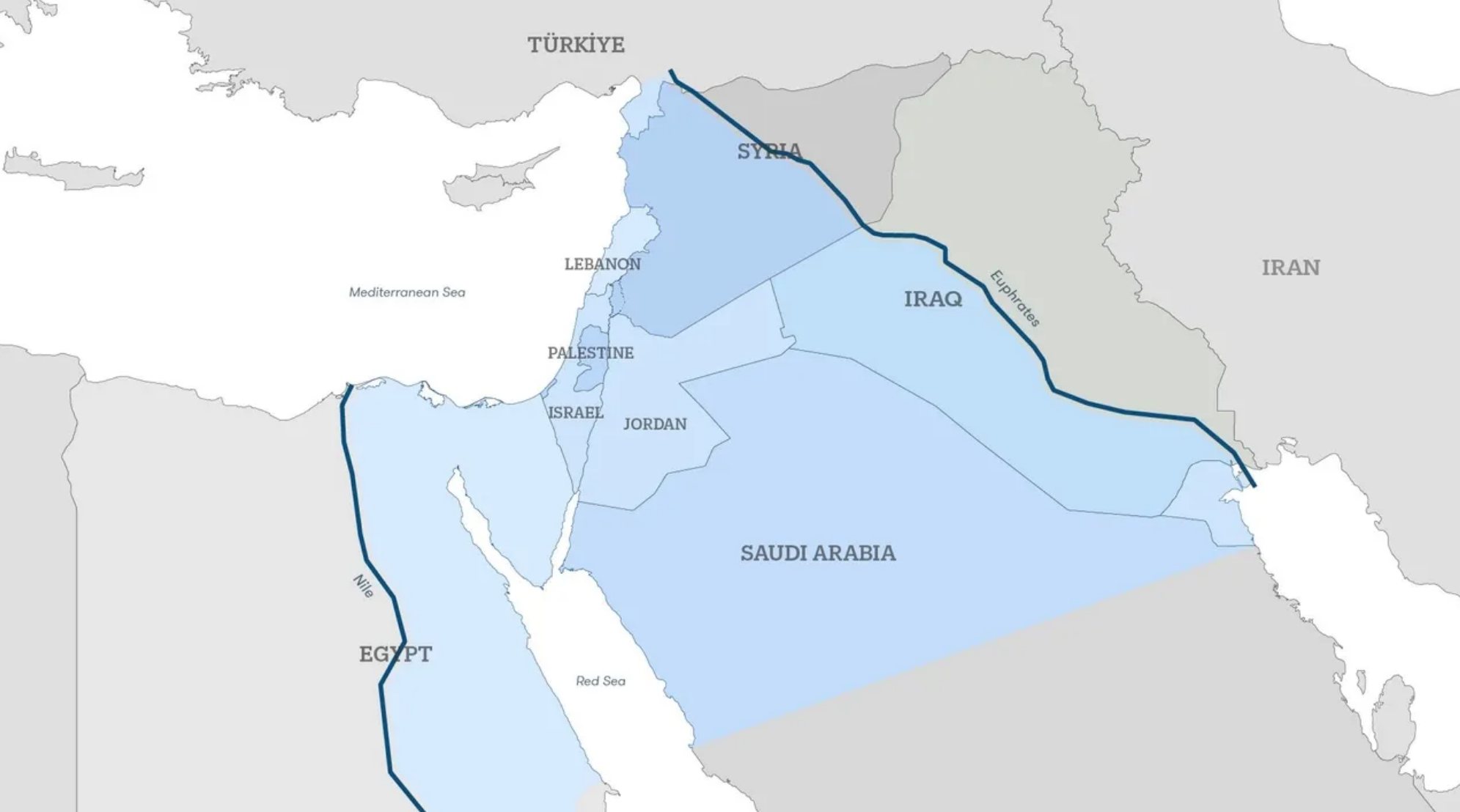
Some will sarcastically say that Israel already extends across much of this space, perhaps not formally, but through a series of more or less concealed alliances in which the binding tissue is a loyalist United States. In the realization of that plan, the greatest threat remains Iran, but it appears Israeli strategists are already thinking about "tomorrow", when, if their wishes come true, Iran could be brought down with American help. Bearing in mind that this is also a country that functions through the concept of an external enemy, in such a scenario the next threat is presented as Turkey, primarily because of Turkish influence in Syria, and to some extent elsewhere. And if we look consistently at the map above, you will notice that part of Turkey is also "drawn" into Greater Israel.
What does Ankara think about this? Foreign Minister Hakan Fidan said back in April 2025 that Turkey wanted to "avoid conflict with Israel in Syria", but that Israeli attacks were destroying the ability of the new Syrian authorities to deter threats. Already in July of the same year, he warned that Turkey would intervene directly against any attempt to fragment Syria. A similar line is drawn by Turkish presidential communications, which describe Israeli strikes as an attempt to push Syria back into instability and sectarian fractures, while analyses from Turkey’s security environment view Israeli policy in Syria as a systematic effort to keep the country weak and fragmented.
The differences, then, are very clear. Both actors worked to bring down Assad, and they succeeded, weakening both Iran and Russia in the process. But their visions for post-Assad Syria differ sharply. Turkey wants a vassal state and believes it has a right to one because "its" Islamists came to power. Israel, however, wants what suits it best: chaos, meaning a divided Syria that increasingly collapses from within, preferably along sectarian lines, and potentially even deeper.
As early as October 2024, Erdogan claimed that after Lebanon, "Israel’s gaze could fall on Turkey as well", while his ally Devlet Bahceli spoke of the possibility that chaos from the neighborhood could spill over to Turkey’s borders. In April 2026, Fidan went a step further and said that after Iran, Israel could try to declare Turkey the new enemy, emphasizing that this tendency was no longer limited only to Netanyahu’s government. At the same time, there is also a skeptical current within Turkey itself. CHP leader Ozgur Ozel publicly assessed that the idea of an open Israeli assault on a NATO member with a large army is exaggerated and politically useful to the ruling bloc.
Clearly, Israel does not have to "storm" Turkey in order to destabilize it. And if one day it really needs to, it will not go alone, just as it is not doing so now - the United States is always there. Hence the theory that the U.S. could leave NATO precisely for that reason, or partly for that reason: to be ready for the wars of the future, including against NATO members, beginning with Turkey.
Perhaps it sounds radical today, but the real extent of Israel’s control over America has only now been laid bare, and Joe Kent himself was in too high a position for this to be mere "theorizing".
When all of this is connected with the concept of Greater Israel, the most tangible trace can be seen in the political practice of the Israeli right. Israel recently approved 34 new settlements in the West Bank, while the far-right Smotrich openly speaks of burying the very idea of Palestinian statehood. He spoke even more openly in September 2025, when he stood before a map of a possible annexation of most of the West Bank and said he wanted maximum territory with as little Palestinian population as possible. In July 2025, the Knesset adopted, by 71 votes to 13, a symbolic but politically highly significant declaration supporting the imposition of Israeli sovereignty over the West Bank. It is precisely at this point that Turkish officials, including Fidan, begin speaking of Greater Israel as an ambition that connects Gaza, the West Bank, Syria and Lebanon into the same pattern of expansion.
There is also the official new Israeli military doctrine, which describes a system of "security belts and buffer zones" in Gaza, Syria and Lebanon, based on the logic of pushing the enemy kilometers away from the border and striking preventively as soon as a threat is judged to be growing. At the end of March, Netanyahu spoke of security belts deep beyond the borders, while Smotrich in the same period called for moving Israel’s border to the Litani River and settling Gaza. In such a configuration, the pattern looks less like defense and more like regional hegemony being built campaign by campaign, against every neighbor capable of threatening Israeli military superiority, all with the aim of ultimate maximum expansion.
A total war between Israel and Turkey would require a much wider regional collapse, but the process of strategic movement toward confrontation is already under way. It is developing through attacks in Syria, where Israel is already de facto expanding its occupation beyond the Golan Heights, and through increasingly open statements that the other side represents the next great threat. For Israel to achieve all of this, it will need an American loyalty of this intensity over the long term, but perhaps that is already what it is counting on. With Trump, of course, everything would be easier. He, meanwhile, is flirting with the idea of a "third term", which would amount to the demolition of the American system. One thing is certain: the hegemony Israel is developing will not end without maximum catharsis and deep change within Israel itself. Since nothing of the sort is anywhere in sight, and polls among Israeli citizens unfortunately confirm a certain fusion between militaristic government and the public, even the most radical scenarios can no longer be dismissed.
Comments