
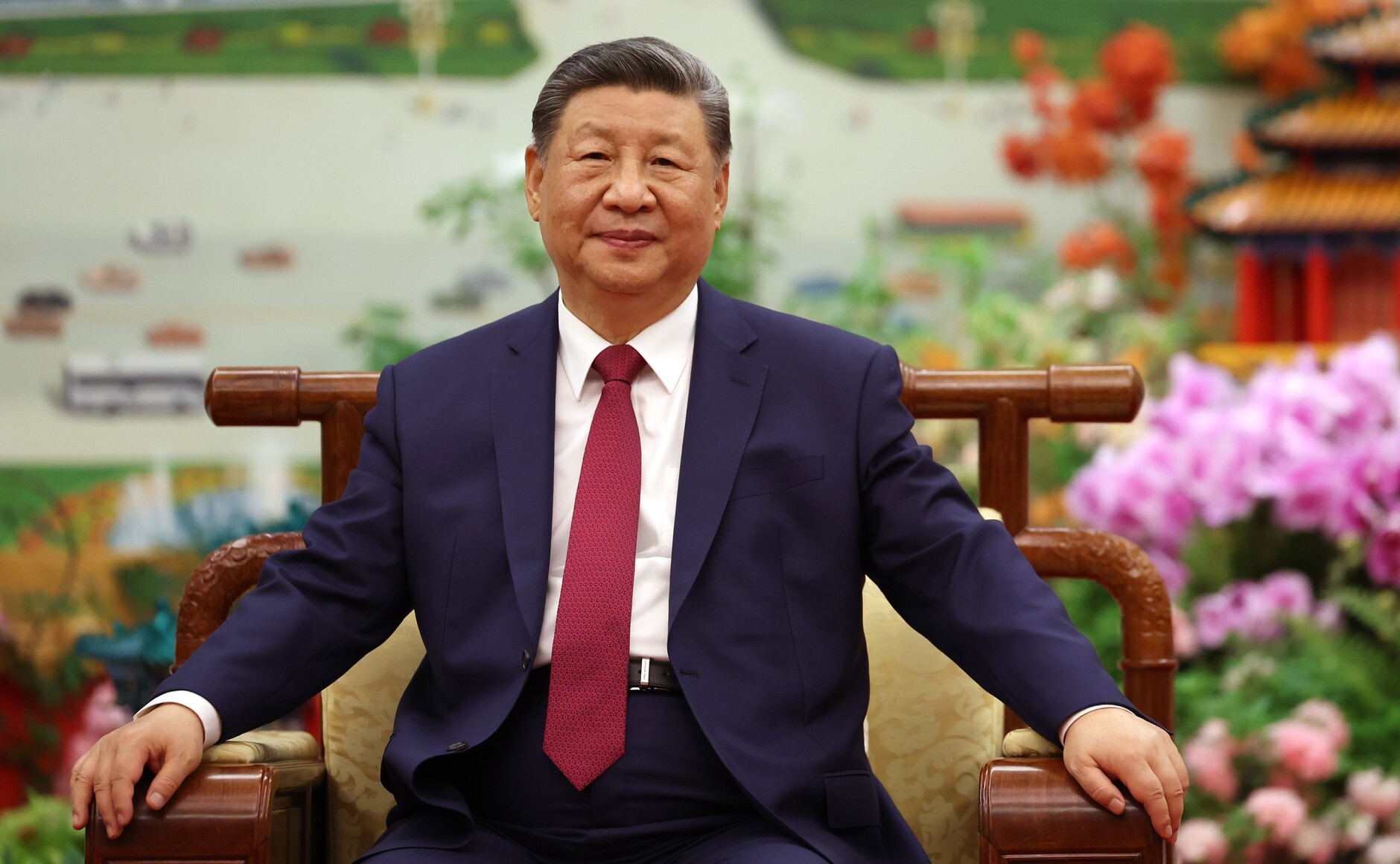
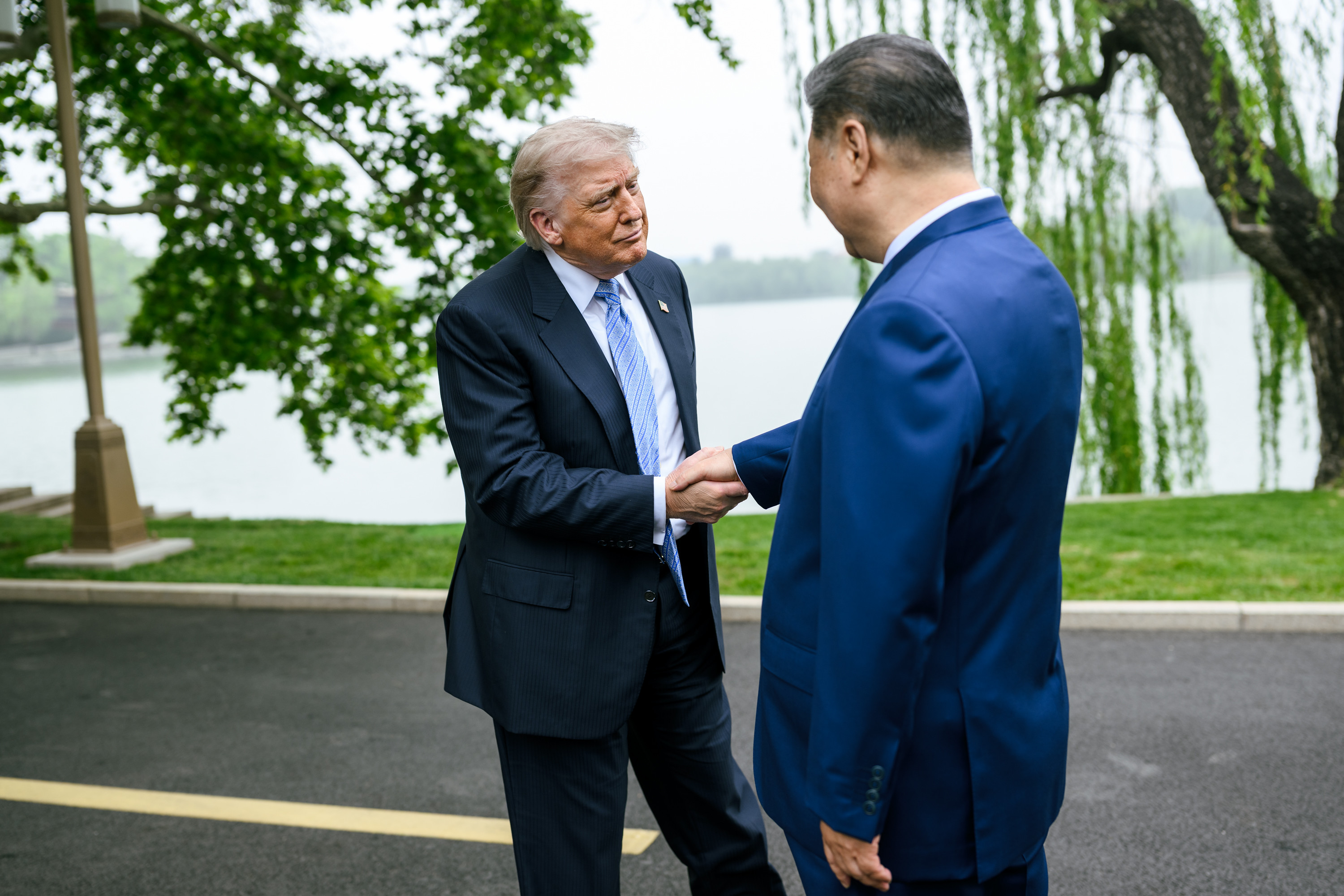
Putin’s stay in Beijing was another episode in China’s grand staging of world politics. Within just a few days, Chinese President Xi Jinping hosted both Donald Trump and Vladimir Putin, and in both cases it looked as if the visitors were simply glad to receive an audience with what is increasingly beginning to look like the world’s new most powerful actor.
Trump was looking for a stabilization of relations and room for a trade deal. Putin was looking for confirmation that Russia’s strategic turn toward the East is not merely a necessity created by the war in Ukraine, but a new pillar of Russian state policy. Beijing gave both men ceremony, while reserving somewhat more friendly political rhetoric for Putin. But behind the scenes, neither guest came to Beijing for ceremony or rhetoric. Both need something concrete from China, and China is in no hurry.
What did Putin get? Above all, he got a demonstration of continuity. Xi described China-Russia relations as being at "the highest level in history", while the two leaders oversaw the signing of more than 40 agreements covering trade, technology, media and broader cooperation. The "spirit" of the 2001 treaty of friendship was also extended, which matters to Moscow because it sends the message that Western sanctions have not pushed Russia into isolation, but into a new international circle.
Political closeness has still not turned into a contract that would give Gazprom and the Russian budget a new long-term source of revenue after the loss of the European market.He also received what may be most important on the symbolic level: a shared, let us call it, "anti-hegemonic framework". Xi warned that the world faces the danger of a return to the "law of the jungle", while Russian-Chinese documents sharply criticized American unilateralism, Trump’s "Golden Dome" missile shield project and U.S. irresponsibility over the future of nuclear arms control. In that respect, everything was expected. Both Moscow and Beijing want to portray the United States as a power that imposes the shifting rules of its own dominance instead of international law. For Russian diplomacy, which has for years repeated the thesis that the war in Ukraine is the consequence of a broader collapse of the security order, that is certainly an important confirmation.
But what Putin did not get is just as important as what he did get. He did not get a final agreement on the Power of Siberia 2 pipeline, the project that could move around 50 billion cubic meters of Russian gas per year to China through Mongolia. The Kremlin says there is a "general understanding" on the route and construction model, but the price, timeline and key commercial details remain unresolved. In other words, political closeness has still not turned into a contract that would give Gazprom and the Russian budget a new long-term source of revenue after the loss of the European market.
Here we see the basic asymmetry in the Russian-Chinese relationship, or rather, we have been seeing it for some time, and now it is even more pronounced. Russia needs China more than China needs Russia, at least in the immediate economic sense. China is the largest buyer of Russian energy, and Moscow says Russian oil exports to China rose by 35% in the first quarter of 2026. But Beijing does not want to replace dependence on the Middle East with dependence on a single land supplier. China buys, but it refuses to be trapped, which is perfectly understandable from its perspective. That is exactly why the pipeline remains a matter of hard bargaining, not "brotherly automatism".
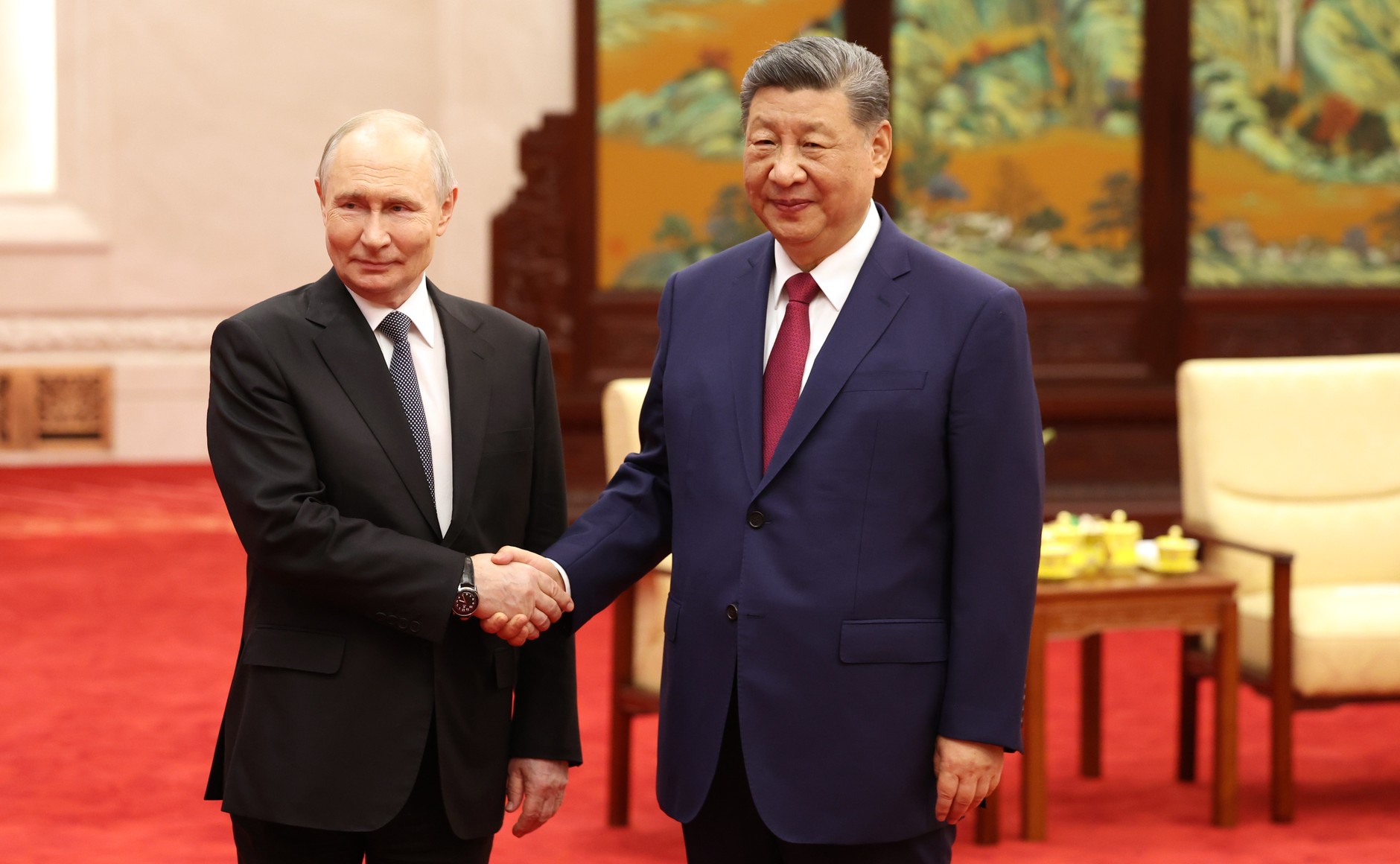
The economic picture is therefore two-layered. On the surface, cooperation is strengthening, trade is hovering around 230 to 240 billion dollars a year, payments are increasingly made in yuan and rubles, and the Beijing documents covered technological, energy, media, agricultural and scientific cooperation. Russia gets a larger market, equipment and financial channels. China gets energy, a discounted raw-material base and a partner that absorbs a significant share of American and European attention. Beneath the surface, however, remains the fact that Russia offers what China can choose from, while China offers Russia what Moscow can hardly refuse.
That is why the differences between Russian and Chinese analysts are revealing. The Russian view, especially among energy experts close to Gazprom, emphasizes that negotiations are moving forward and that a deal could come by the end of the year because China’s energy situation is becoming more demanding. The Chinese view, at least the one coming from academic circles such as Renmin University, is more grounded: China trusts Russia precisely because it knows Russia has no equally strong alternative. In translation, trust exists, but the price of that trust is set in Beijing.
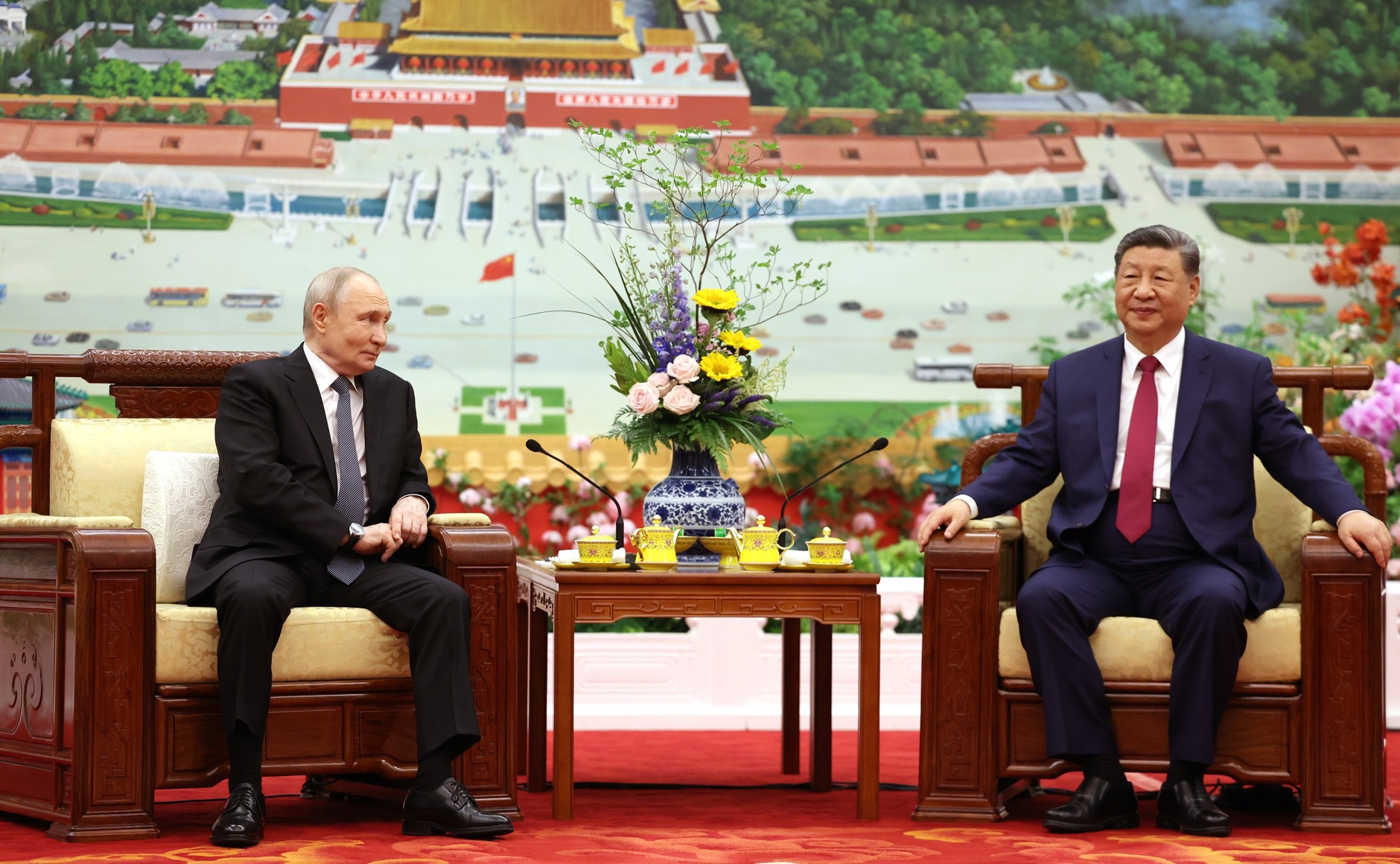
Even the Russian market quickly registered disappointment. Gazprom shares fell after there was no clear progress on Power of Siberia 2 and after the decision not to pay a dividend for 2025. That does not mean the visit was a failure. The political stage was successful, but the energy calculation remains unfinished. Putin left Beijing with support, but not with the cheque that would close the biggest hole in Gazprom’s future.
Power of Siberia 2: The Pipeline That Reveals the Limits of Russian-Chinese Friendship?
Power of Siberia 2 is supposed to be the great energy line of the new Eurasian order: a pipeline that would carry gas from Russia’s gas system in western Siberia, through Mongolia, to China. The project’s planned capacity is around 50 billion cubic meters of gas per year, making it almost comparable to the volume Nord Stream 1 once could send toward Germany. For Moscow, this is not just an infrastructure project, but an attempt to open a new eastern artery for Gazprom after the loss of a large part of the European market. For China, however, it is not a question of survival, but of price, timing and negotiating advantage.The idea is much older than the war in Ukraine. As early as 2006, Gazprom and China’s CNPC signed a memorandum on Russian gas supplies to China, then under the concept known as the Altai pipeline. That route was delayed for years, first because of the gas price, then because of competition from other sources on the Chinese market, and later because of technical and political issues surrounding the route itself. After 2020, there was increasing talk of the Mongolian route, which would connect Russian sources and the Chinese market through Mongolian territory.
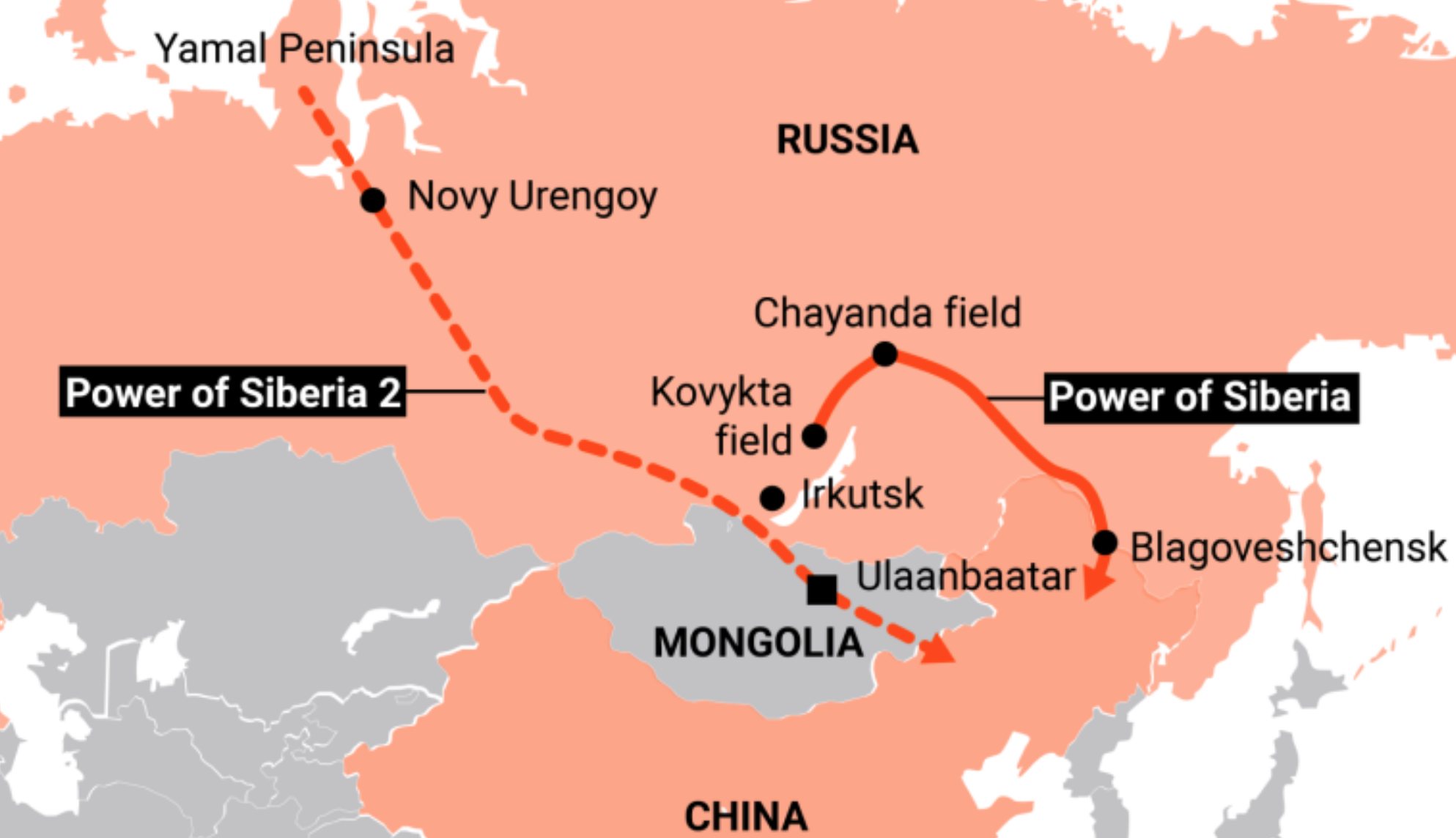
It is important to stress that the war in Ukraine did not "create" this project, but it did turn it into an almost existential issue for Moscow.
That is where the dispute begins. Russia wants a quick decision, a long-term contract and a price that would at least partially compensate for the European loss. China wants Russian gas, but not according to Russia’s sense of urgency. Beijing has LNG, Central Asian suppliers, domestic production, renewables and enough patience to negotiate from the position of a buyer who knows the seller is in a hurry. China’s logic is not hostile toward Russia, but it is coldly national: friendship does not cancel out a discount. If Moscow is under pressure, that pressure must be reflected in the price.
Power of Siberia 2 proves that the world’s energy gravity is shifting eastward and that Russia, despite Western sanctions, will not be left without major buyers. In the Chinese reading, the same project is a useful option, but not a necessity. That difference explains almost everything. Russia sees the pipeline as Gazprom’s lifeline and the symbol of its reorientation toward Asia. China sees it as one more instrument of diversification, useful if the price, terms and timing suit Chinese interests.
It is likely that the pipeline plan will eventually be signed, probably already this year, but the Chinese modus operandi has been clearly confirmed. There are no discounts in Beijing. Every situation is added up and subtracted. China knows that its success rests on precise calculation, not emotions. The pipeline will be useful to them, but they are leaving the Russians in uncertainty for a little longer because they know that this will secure better long-term terms. If Russia were one step away from a "return to Europe", the story would be different, but Beijing sees very clearly just how much pressure Russia is under.
Russia and China are both looking for ways to turn the current Gulf crisis to their advantage.On Iran and the Middle East, Xi spoke in a similar language: supply-chain stability, energy and trade. He called for a complete end to hostilities, stressing that a quick end to the conflict would reduce disruptions to energy supply and international trade. Putin, on the other hand, used the same crisis to portray Russia as a reliable supplier of resources. The interests are clear, but the question is how far they overlap. China does not want chaos in Hormuz and more expensive energy. Russia, at the same time, wants its land energy route to China to be presented as a safer alternative to maritime routes that are still under American supervision, although perhaps not for much longer.
If for a moment we set aside the declarations of friendship and the ceremonies, which Xi stages with ease for very different powers, one could say that both Russia and China are looking for ways to turn the current crisis to their advantage, even though no one yet knows exactly how it will end. China can already clearly see a "better future" in the Persian Gulf: a weaker United States and a stronger Iran, but through stronger relations with China. That would be a much safer energy source than before, since Beijing has always known that the situation could be made to "boil over" in exactly this way.
Russia, on the other hand, although it has close relations with Iran, may prefer this crisis to last a while longer, ideally long enough for China to feel the energy shortage more sharply. Then Russia’s offers become more valuable, understandably, but even that has a limit. Russia’s turn to the East is a matter of geopolitical survival for Moscow, but the new dependence on China is enormous. It will be felt at every step.
So the partnership is strengthening, but it is strengthening in the Chinese way. Russia is not powerless, but it no longer comes to Beijing as a strong Soviet heir. It comes as a continental power for which the Chinese market is of existential importance. Xi knows this, and that is why he is not in a hurry. The multipolar world taking shape is acquiring its own new hierarchies. In that order, Moscow and Beijing stand on the same side against American dominance, but at the negotiating table the Chinese sit in the higher chair.
Sources
- Reuters Nuclear energy, Taiwan and Trump's 'Golden Dome': key points from the Xi-Putin talks https://www.reuters.com/business/finance/nuclear-energy-taiwan-trumps-golden-dome-key-points-xi-putin-talks-2026-05-20/
- Associated Press The differences — and similarities — in the Trump and Putin visits to China https://apnews.com/article/d344badcd75d5aa2a5cda4aa146785ca
- Timesofindia.indiatimes.com Xi and Putin unite in criticism of US, but fail to clinch gas deal https://timesofindia.indiatimes.com/world/rest-of-world/xi-and-putin-unite-in-criticism-of-us-but-fail-to-clinch-gas-deal/articleshow/131237956.cms
- Financial Times Iran war opens ‘golden window’ for China’s renminbi https://www.ft.com/content/8d3f89fa-c39b-44c3-b22c-607e22b62e29
- Le Monde Xi, at center of global affairs, keeps Putin waiting on Power of Siberia 2 pipeline https://www.lemonde.fr/en/international/article/2026/05/21/at-the-center-of-global-affairs-xi-keeps-putin-waiting-on-the-power-of-siberia-2-pipeline_6753674_4.html
- The Guardian Xi and Putin condemn ‘irresponsible’ US foreign policy at Beijing summit https://www.theguardian.com/world/2026/may/20/china-russia-xi-jinping-vladimir-putin-meet-beijing-after-trump-visit
- Reuters Gazprom shares fall on lack of dividend and pipeline to China https://www.reuters.com/world/china/gazprom-shares-fall-lack-dividend-pipeline-china-2026-05-21/
- English.news.cn Xinhua Headlines: Xi, Putin hail "new stage" of ties in Beijing meeting https://english.news.cn/20260520/a0a61f2e0151475aa19b8b2320ff5b20/c.html
Comments