
For decades, the United States waged war under one almost invisible condition: danger had to remain far from American bodies. Targets could burn and states could collapse, but the pilot returned to base, the ship remained beyond the enemy’s reach, and the domestic political cost of war was reduced to footage of a night sky and a few sentences from the president.
Donald Trump went to war with Iran convinced that the same geometry of power would hold once again. Five months later, Washington can still destroy, but it is no longer certain that it can do so in the old way — from a safe distance, at little risk, and without having to choose between Tehran and some future war on the other side of the world. The empire has begun consuming what it could not afford to expend. The central question now is how Iran — and other actors — will exploit this historic opportunity, because there is little room for error. Judging by what we have seen so far, Tehran has a clear plan and knows exactly what it must not give America.
Reuters has now revealed the scale of the problem. According to sources familiar with internal figures, the US military has used nearly all of its ATACMS missiles and their newer replacement, the PrSM, while also firing slightly less than half of America’s total stockpile of Tomahawk cruise missiles.
CENTCOM has therefore all but emptied the prewar stocks of ground-launched long-range missiles at its disposal and has been forced to replenish them by drawing weapons from other parts of the world. At the same time, roughly 65 percent of Patriot interceptors were expended between February and July, while the stockpile of THAAD interceptors is at least 38 percent smaller than it was at the beginning of the war. The exact figures have not been disclosed, while the White House and the Pentagon insist that the United States still has "everything it needs."
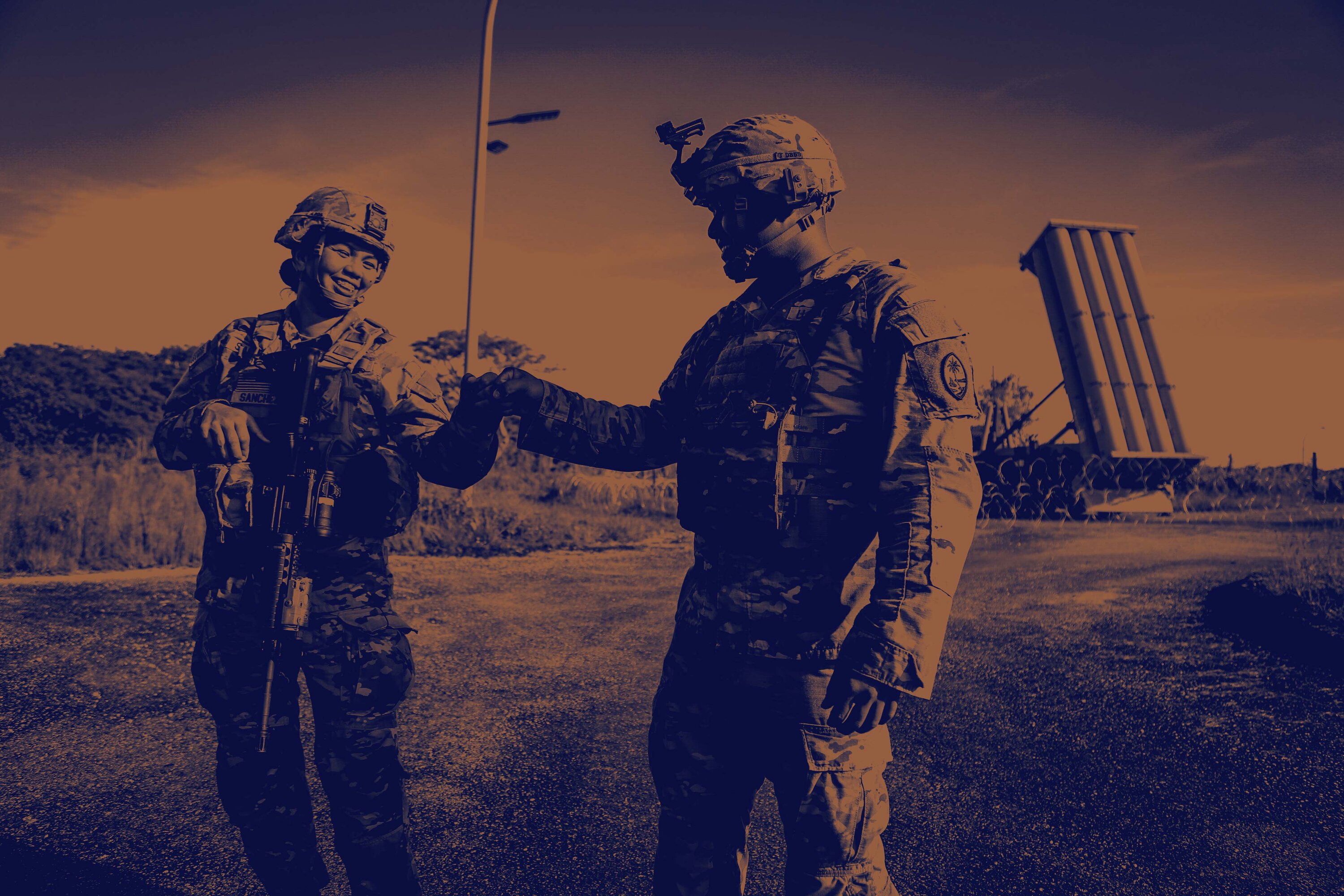
ATACMS and PrSM enable precise, long-range strikes from land. The Tomahawk performs the same political and military function from the sea, launched from destroyers or submarines. Patriot and THAAD belong to the other half of the same structure: they protect American bases and allies from missiles travelling in the opposite direction. Together, they form the architecture of safe war — a system in which Washington can attack from beyond its opponent’s reach and then intercept the retaliation.
America, of course, has not been disarmed. It still possesses an enormous air force and navy, shorter-range munitions, submarines and a nuclear arsenal. But the depletion of its most important long-range weapons changes the price of every future attack. Reuters’ sources warn that if Trump decides to resume a large-scale offensive, he will have to rely more heavily on bombing missions flown by crewed aircraft. War would then cease to be merely a matter of pressing a button and once again become a question of downed aircraft, killed or captured pilots, and political accountability in Washington.
This is precisely where Iranian strategy has dealt its deepest blow to American power. Iran did not need to match the United States carrier for carrier, bomber for bomber or satellite for satellite. It only had to survive the initial assault and do what Trump never expected — prolong the war until America’s technological advantage began turning into a logistical burden.
Iran has now forced American firepower to begin consuming itself.
America’s global empire rests on the assumption that it can simultaneously maintain pressure in Europe, the Middle East and the western Pacific. But stockpiles do not exist on the maps of military strategists. A missile expended against Iran cannot also be deployed near China, supplied to Ukraine or held in reserve for the defence of American allies in Asia. Some in Washington appear to be discovering only now that three potential battlefields draw from the same warehouse. American assessments openly warn that a window of vulnerability has emerged in the western Pacific, where long-range weapons and missile-defence systems would be consumed even faster in a conflict than they have been against Iran.
It should also be emphasised that PrSM is a new system, meaning its initial stockpile was relatively small, while ATACMS is gradually being retired and replaced by the newer generation. The transition between the old and new systems had already created a vulnerable gap, which the war against Iran has suddenly widened. Trump can boast about record production and the Pentagon can sign multiyear contracts and expand manufacturing plants, but rocket motors, guidance systems, electronics and skilled workers cannot be summoned into existence by presidential decree. Estimates for rebuilding the stockpiles range from several months for certain newer systems to three years or more for Tomahawk, Patriot and THAAD.
It also matters that this war never received formal congressional authorisation. There was no declaration of war and no specific authorisation for the use of military force. Why does that matter here? Because in such a system, the long-range missile acts as a political anaesthetic: it allows a president to wage war without mobilising society, without large numbers of American casualties and without images that might force the public to ask who made the decision and by what right. Once those missiles begin to run out, war returns from technological abstraction to politics. The state of the arsenal may therefore become a greater constraint on Trump than every speech delivered in Congress.
For Iran, this is not a moment to exchange for yet another vague American promise. A pause would allow Washington to halt the drain, rebuild its stockpiles, reinforce its bases and, after some time, return to negotiations — or destruction — from a position of strength. Tehran already knows how long an agreement with America lasts when the president changes or the establishment’s interests shift. Negotiations are not in themselves a form of surrender, but negotiations without pressure can easily become time gifted to the stronger side so that it can repair what has broken.
But what kind of pressure? It need not mean uncontrolled attacks on American bases. Such an escalation could give Trump exactly what he currently lacks — a united domestic audience, a broader mandate for war and a justification for using far more destructive weapons. More serious pressure would be political and regional: a demand for the withdrawal of American combat forces; a refusal to allow Gulf states’ territory, airspace and ports to be used for attacks; the lifting of sanctions as a condition of any lasting agreement; and the creation of a security mechanism in which no external power has the right to decide who in the region is permitted to feel secure. All of this, of course, must be accompanied by absolute firmness over the Strait of Hormuz. Hormuz is the card that changes everything.
This is already the position Iran is advocating. The Iranian Foreign Ministry argues that the American military presence in the Persian Gulf and the Gulf of Oman is itself a source of insecurity, and has called on neighbouring states to prevent their territory and infrastructure from being used for further attacks. Despite the fact that Iran has struck its neighbours, those states understand why — and it is not too late for them to embrace a radically different paradigm, if only out of their own hard interests.
Driving America out of the Middle East need not take the form of a single spectacular attack. It would have to be achieved through a series of sovereign decisions: an Iraq that no longer accepts a permanent foreign military presence; Gulf monarchies that refuse to serve as launch pads; ports closed to offensive operations; regional states beginning to negotiate security directly among themselves. Without access to territory, fuel, maintenance, intelligence infrastructure and political protection, America would have to wage its wars from the other side of the world.
A wounded empire, of course, is not a harmless one. The United States can still inflict catastrophic damage on Iran, while Israel will try to prevent any regional order that diminishes its military supremacy. Tehran would therefore be making a grave mistake if it interpreted its opponent’s present logistical weakness as impotence. Its greatest strategic success now would be to deny Washington a new Pearl Harbor — to refuse it the spectacle of victimhood through which it could transform its failures into renewed enthusiasm for war.
Trump set out to disarm Iran, change its government and restore the fear on which the American order in the Middle East had rested for decades. Instead, Iran has shown the world that the American arsenal has a bottom — and that it can be reached far sooner than the Pentagon was prepared to admit.
This is a historic opportunity for the entire Middle East to free itself from a hegemony now entangled in its own aggressive ambitions. If this brief window of opportunity is not used, there is no telling when another will appear — or whether one will appear at all. American foreign policy is often reckless, perhaps now more than ever, but that does not mean it learns absolutely nothing from its own mistakes.
Comments