
For as long as human beings have told stories, they have been drawn to the mystical, the supernatural, and the unknown. Over the centuries, myths have formed around these forces, and our appetite for them has never disappeared. Yet even within that realm, something occasionally emerges that is so singular and so penetrating that it reshapes our entire perception of what we now call science fiction.
Not so long ago, in the early 20th century, horror stories were still populated by figures drawn from centuries of mythology. Fiction often returned to vampires, ghosts, and other familiar beings. These were, and still are, cultural archetypes shaped by a kind of externalized guilt rooted in the religious idea of sin. Yet all of these creatures were still built around the human being — or the fallen human being. Humanity remained at the center of the narrative, and would remain there until a very different writer appeared: one whose imagination did not merely break the frame, but moved beyond time and space itself — not only beyond our understanding, but toward distances of cosmic proportions.
Much of what we now associate with modern horror, from the cult classic "Alien" to the avant-garde style of a film like "Beyond the Black Rainbow" — and so much in between — owes a direct debt to one person: Howard Phillips Lovecraft.
A Dramatic Childhood and the Curiosity That Saved Him
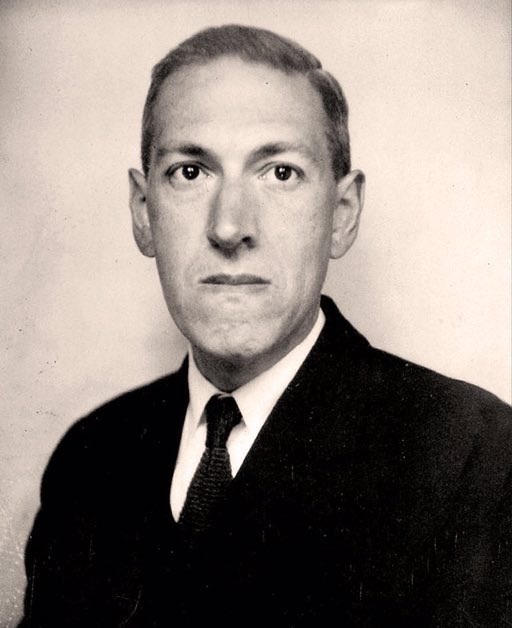 H.P. Lovecraft in 1936 H.P. Lovecraft was born on August 20, 1890, in Providence, the capital of the U.S. state of Rhode Island. He spent almost his entire life in New England (northeastern region of the United States). His life was, to put it mildly, unusual, and that strangeness can certainly be felt in his writing.
In 1893, his father was admitted to a psychiatric hospital. For a time after that, the family continued to live comfortably, but eventually the money ran out. Lovecraft then lived with his mother in fairly modest circumstances, until she, too, was admitted to a psychiatric hospital in 1919.
Lovecraft almost seems to embody the original version of what we might today recognize as the stereotype of a withdrawn young man living "in his own world".
He was an only child, and his mother was very protective — probably excessively so, as he himself would later suggest. She lived in constant fear that something might happen to him, while also carrying deep guilt over what had happened to his father.
After his father’s institutionalization, they initially lived with her parents. Her father, Lovecraft’s grandfather, Whipple, was wealthy, having made his fortune in business. He became something of a father figure to the young boy and encouraged his love of literature. By the age of three, Lovecraft could read and write fluently, and the two exchanged numerous letters while Whipple was away on business trips.
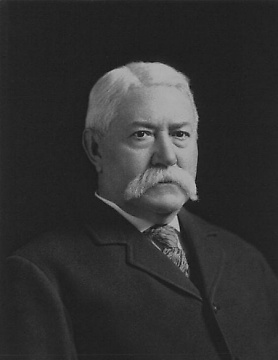 Lovecraft’s grandfather, Whipple Van Buren Phillips At the beginning of the 20th century, Whipple’s once-successful business ventures began to decline. The money disappeared quickly. A family that had once lived grandly, with servants, suddenly found itself in serious financial trouble, and Whipple died of a heart attack at the age of 70.
Lovecraft’s mother, Susie, could no longer afford to keep the large house, so she and her son moved into a small apartment.
Lovecraft would later write, in a 1934 letter, that this was the most difficult period of his life, and that he had even considered suicide. What saved him, he said, was his own curiosity: the desire to learn more about the world and how it worked.
Because of financial difficulties and the family’s frequent moves, he changed schools several times, which placed additional emotional strain on him. In high school, however, he found a small circle of friends with whom he shared common interests. He was an excellent student, especially in chemistry and physics, and soon became fascinated by astronomy.
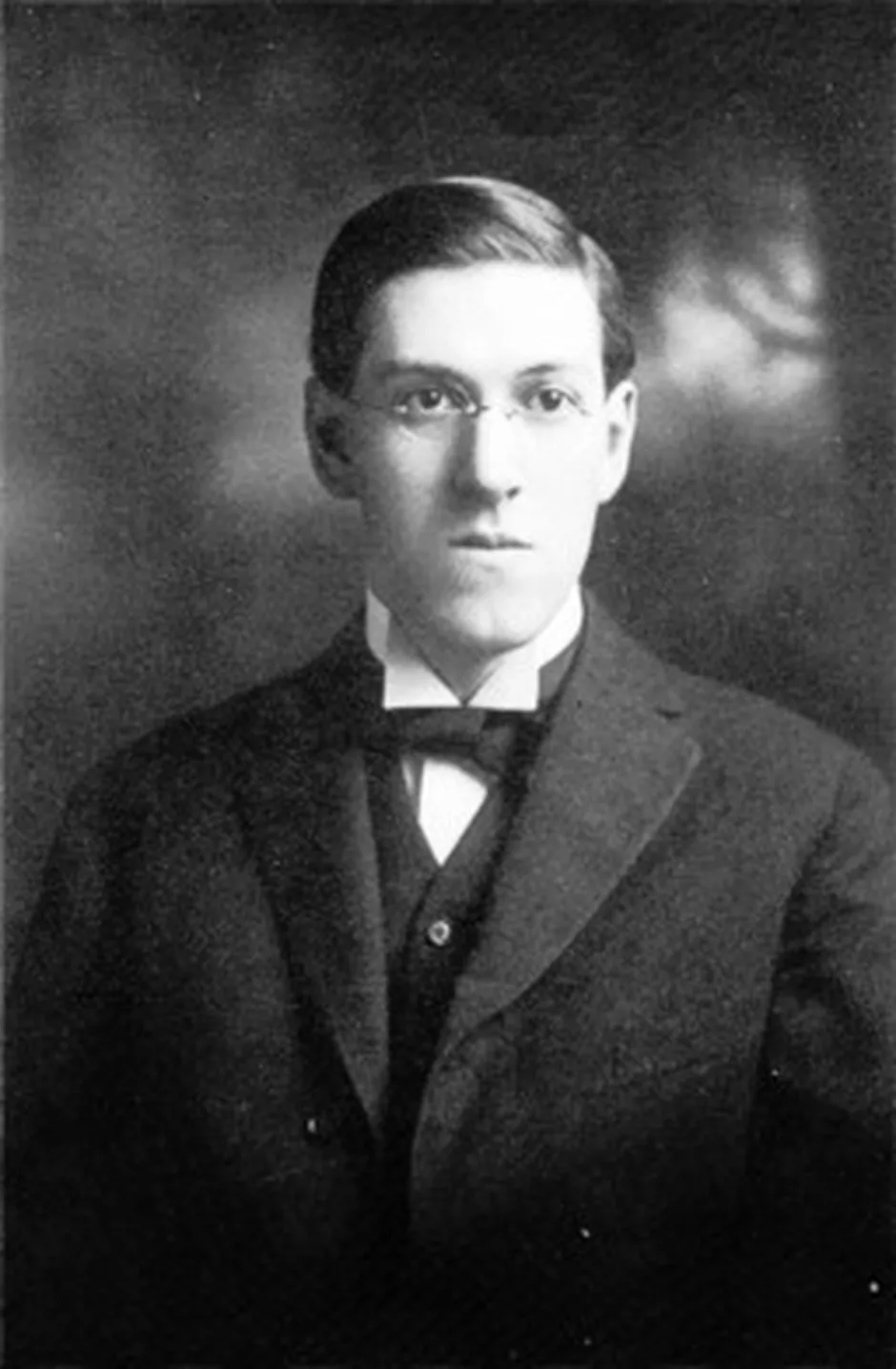 H.P. Lovecraft in 1915 By 1913, he had begun writing essays for the popular "pulp magazines" of the time — cheap publications filled with science-fiction stories. They were popular in the first half of the 20th century, and their name came from "pulp paper", the inexpensive paper on which they were printed, as opposed to more expensive glossy magazines.
It was a fascinating literary scene, one in which many previously unknown writers emerged. The stories were more modern, stranger, more imaginative. Still, the subject matter was not necessarily dark; it was often more adventurous and entertaining. Characters such as Flash Gordon, in a sense, grew out of that pulp tradition.
Lovecraft came of age in that world, but even there, among the unusual, his style was different.
He was anything but famous during his lifetime. On the contrary, he barely made ends meet. Still, he managed to move to New York, where in 1924 he married Sonia Greene. There he also met a group of writers who would become known as the "Lovecraft Circle", and they introduced him to Weird Tales, the magazine that would become essential to the next stage of his career. But life in New York drained him, both mentally and financially, and in 1926 he returned to his native Providence, where he would write his most important works, including "The Call of Cthulhu", "At the Mountains of Madness", "The Shadow over Innsmouth", and "The Shadow Out of Time". Sadly, his career would not last long. He died of cancer at the age of 46.
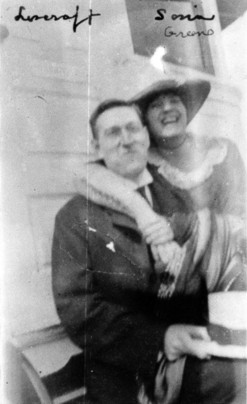 H.P. Lovecraft and Sonia Greene in 1921 Yet what he left behind was extraordinary in its scope, depth, and power to inspire, helping to create and shape modern horror — modern fear itself.
Why was Lovecraft so unique, and why do his stories still provoke such powerful emotions? Above all, because they run counter to so much of what came before him. Of course, Lovecraft also builds on myth; his stories often begin with old legends. But they become something new, moving far beyond what had once been imaginable.
His horror is no longer centered only on human beings and their distortions. Lovecraft’s horror is deeply existential and cosmic. Running through his stories is the idea that all of humanity is a rather accidental and negligible phenomenon in the context of cosmic immensity. Not merely negligible, but in some sense even absurd in its belief that it enjoys any special status at all.
The Strongest Fear Is the Fear of the Unknown
The essence of fear in Lovecraft’s world has little to do with our small, everyday tragedies. It has little to do even with what human beings do to one another, even at their cruelest, because all of that is insignificant compared with the fear inspired by the universe’s total indifference toward us and our tiny existence.
In his stories, there are no protagonists — at least not in the classical sense of someone who might overcome a misfortune or defeat a threat. How could anyone overcome something so much greater, something so far beyond the limits of our understanding? Lovecraft reaches toward a form of fear so vast that the human brain simply cannot truly conceive it. And if, by some strange accident, the mind does encounter it, its fate is predictable: it will lose its reason under the shock of revelation — or, more precisely, under the weight of even the smallest fragment of an immeasurably vast knowledge that exists in the depths of the cosmos.
Although Lovecraft can be considered the "father of cosmic horror", that phrase does not quite mean what may first come to mind. Yes, as already mentioned, Lovecraft certainly inspired films such as the "Alien" series, but his stories are very different. There are no villains who can ultimately be defeated by human ingenuity or some powerful weapon. Instead, the battle is already over before it begins. Humanity is doomed to defeat, and in the meantime it is saved only by sheer luck — by the fact that someone or something from the cosmic depths has not yet turned its attention toward our complete destruction.
Faced with vast and mysterious forces, Lovecraft places the human being in a position similar to that of an ant before a human being: utterly helpless.
In one of his best-known quotes, H.P. Lovecraft explains this atmosphere:
"The oldest and strongest emotion of mankind is fear, and the oldest and strongest kind of fear is fear of the unknown."
During his lifetime, he wrote around a hundred short stories and novellas, as well as a large number of poems, scientific writings, philosophical works, and more. The central theme of his body of work is certainly cosmicism: the literary and philosophical view that humanity is entirely insignificant within the cosmos. But there are many other themes as well, often rooted in myth, although almost all of them are bound together by a similar atmosphere.
Cosmicism and the Insignificance of Humanity
One reason Lovecraft is so difficult to translate into film — many have tried to adapt his stories, rarely with great success — is that he builds atmosphere through words, and through a great many of them. His sentences are long, and he often uses archaic English. Many readers find Lovecraft exhausting, and not without reason; but his distinctive style can also be understood as a kind of portal into his world. For example, Lovecraft will not simply say that a character reached the edge of some town and saw a "black church". That would be enough for us to form an image in our minds, but he moves broadly, slowly, expansively. We are often given the inner monologue of a main character describing in detail where he is, what he feels, what he sees, what he senses. Empty stone streets, the setting sun, a feeling of dread, of something forgotten and forbidden... All those sensations must merge into one whole before we truly experience the moment.
As for cosmicism itself, the brilliant aspect of Lovecraft’s approach is that he very rarely presents cosmic threats as antagonists. That would actually clash with his broader idea. These powerful beings from the depths of space do not reveal themselves with the goal of destroying us because they wish us harm, which is the theme of nearly all sci-fi horror, especially in film. Even that would grant humanity importance, because it would mean we had become the target of cosmic gods. Instead, humanity is almost an accidental victim, while the great forces remain largely indifferent to our existence.
Lovecraft openly embraced this insignificance: the idea of a mechanical, cold universe and its relationship to the human species.
In the process, he created an entirely new mythology, much as Tolkien’s stories have their own mythology, though Lovecraft’s is far darker. His demons, gods, and cosmic phenomena are largely abstract beings, which is precisely why they are so hard to portray on film. When they do have physical features, they usually have many eyes, tentacles, some fusion of reptile and octopus, together with something undefined and unknown to us. This mythology contains many fascinating beings. Take Azathoth, for example, also called the "blind idiot god", who is described in one story like this:
"Outside the ordered universe is that amorphous blight of nethermost confusion which blasphemes and bubbles at the centre of all infinity — the boundless daemon-sultan Azathoth, whose name no lips dare speak aloud, and who gnaws hungrily in inconceivable, unlighted chambers beyond time and space amid the muffled, maddening beating of vile drums and the thin monotonous whine of accursed flutes."
To say that Lovecraft was an absolute master of descriptive adjectives would be an understatement.
By far Lovecraft’s most famous creation is Cthulhu — so much so that his stories are often referred to as the "Cthulhu Mythos". What, or who, is Cthulhu? Cthulhu is one of the "Great Old Ones", a being resembling an anthropomorphic octopus, sleeping in a state closer to death than sleep in the sunken city of R'lyeh, here on Earth, at the bottom of the Pacific Ocean. Cthulhu has been sleeping for an eternity, and if he ever wakes, it will mean our certain end.
Another famous element in his stories is the mysterious book known as the Necronomicon. It is an ancient book of forbidden knowledge and rituals, and reading it brings inevitable madness and death. In the stories, it appears as a record of forgotten formulas that allow contact with entities of supernatural power. The most famous quotation associated with the Necronomicon, and with Cthulhu as well, is surely this:
"That is not dead which can eternal lie, and with strange aeons even death may die."
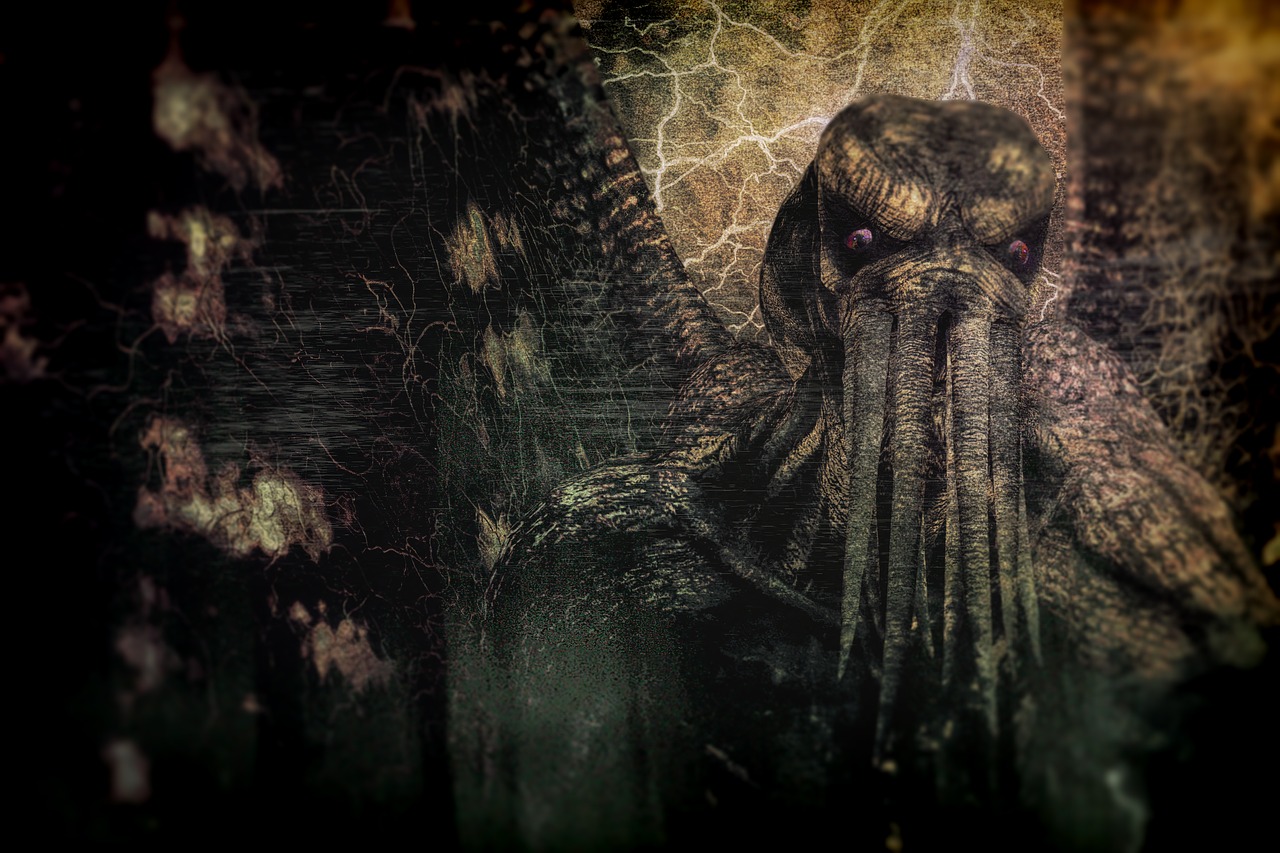 Cthulhu - illustration (lovecraft.fandom.com)
What does that even mean? Perhaps each reader will find their own interpretation. But Lovecraft is certainly suggesting that something can be older than both life and death, that it can exist beyond the reach of our understanding. The "strange aeons" lie both behind us and ahead of us, stretching into an infinity we will never see or comprehend. Yet for brief moments we may become aware of it, and in the very next moment understand how inadequate the human mind is when confronted with such magnitudes.
Lovecraft in a Wider Context and His Controversial Views
Of course, in his stories we can also find many warnings, even intimations of human catastrophe. Science was clearly extremely important in shaping his voice, while old myths served merely as a springboard from which he moved from humanity toward the cosmos. But these stories also contain a fear of new scientific discoveries, and the idea of human beings "stumbling upon something greater than themselves" can be interpreted in many ways.
Lovecraft died two years before the outbreak of the Second World War. He did not see the most terrible slaughter in human history, nor did he see the atomic bomb and its terrifying destructive power, and yet it almost feels as if he somehow foresaw all of it.
Fear can also be the unimaginative kind induced by so many films, where a scene is arranged simply so that something suddenly startles you. There is none of that in Lovecraft’s stories. This is not the same kind of fear. It is much closer to constant dread, to a feeling of helplessness before forces infinitely greater than us. His warning is that there are dangerous forms of knowledge, forbidden forms of knowledge, as well as non-human influences upon humanity.
In political and social terms, H.P. Lovecraft was many things. He considered himself a conservative and an Anglophile. He supported the British monarchy. He was an atheist, and openly declared himself as such. Later, during the Great Depression, he embraced socialism, but opposed the Marxist idea of revolution. In his earlier period, he also expressed words of support for Hitler, believing he would "preserve German culture", though later, as the situation in Germany radicalized, he became critical. The most controversial aspect of his politics, however, was certainly his racism, although it can also be tied to his belief in class divisions and elitism. Although he revised some of his views during his lifetime, this is still held strongly against him today, and perhaps represents one reason why his literature, despite deserving greater attention, is not more widely celebrated.
Yes, he held some controversial views. Among other things, he married a Jewish woman and wrote in one letter that she had "assimilated well". His perception of culture, especially Western culture, was certainly exclusionary, and his paranoia that outside influences would "corrupt" it is obvious. This is no excuse, but it is worth remembering that H.P. Lovecraft was also a product of his time.
How to Truly Experience H.P. Lovecraft and Enter His World
As for his literature, Lovecraft is a unique phenomenon: famous today, certainly, but perhaps still not famous enough. Entering the world of H.P. Lovecraft for the first time — his world, not the later works that cite him as inspiration — is not necessarily easy. You need to arm yourself with patience, because his long passages can sometimes exhaust the reader, especially if you are not used to that style. Let yourself sink into his peculiar construction of atmosphere. Do not rush.
Then there is the question of which language to read Lovecraft in. Many may find it easier to read him in their native language, but much of the charm of the original is lost, even though the original itself is often difficult because of its archaic English. For those who would like to reach this atmosphere beyond the book, the challenge of recommendation becomes even greater.
I would find it difficult to recommend a film that perfectly captures that atmosphere, though that is, of course, a personal view. Many like to cite "The Thing" from 1982, "In the Mouth of Madness" from 1994, or "Color Out of Space" from 2019. Honestly, I am not a great admirer of those films. "The Thing" does present isolation and the discovery of a hidden threat very well, but it quickly turns into action with interesting special effects, and not much more than that. "Color Out of Space", in my view, confirms that Lovecraft cannot be adapted well to the screen.
I would be more inclined to recommend the original "Alien" from 1979, because its sense of isolation in a "mechanical" universe is exceptionally well done.
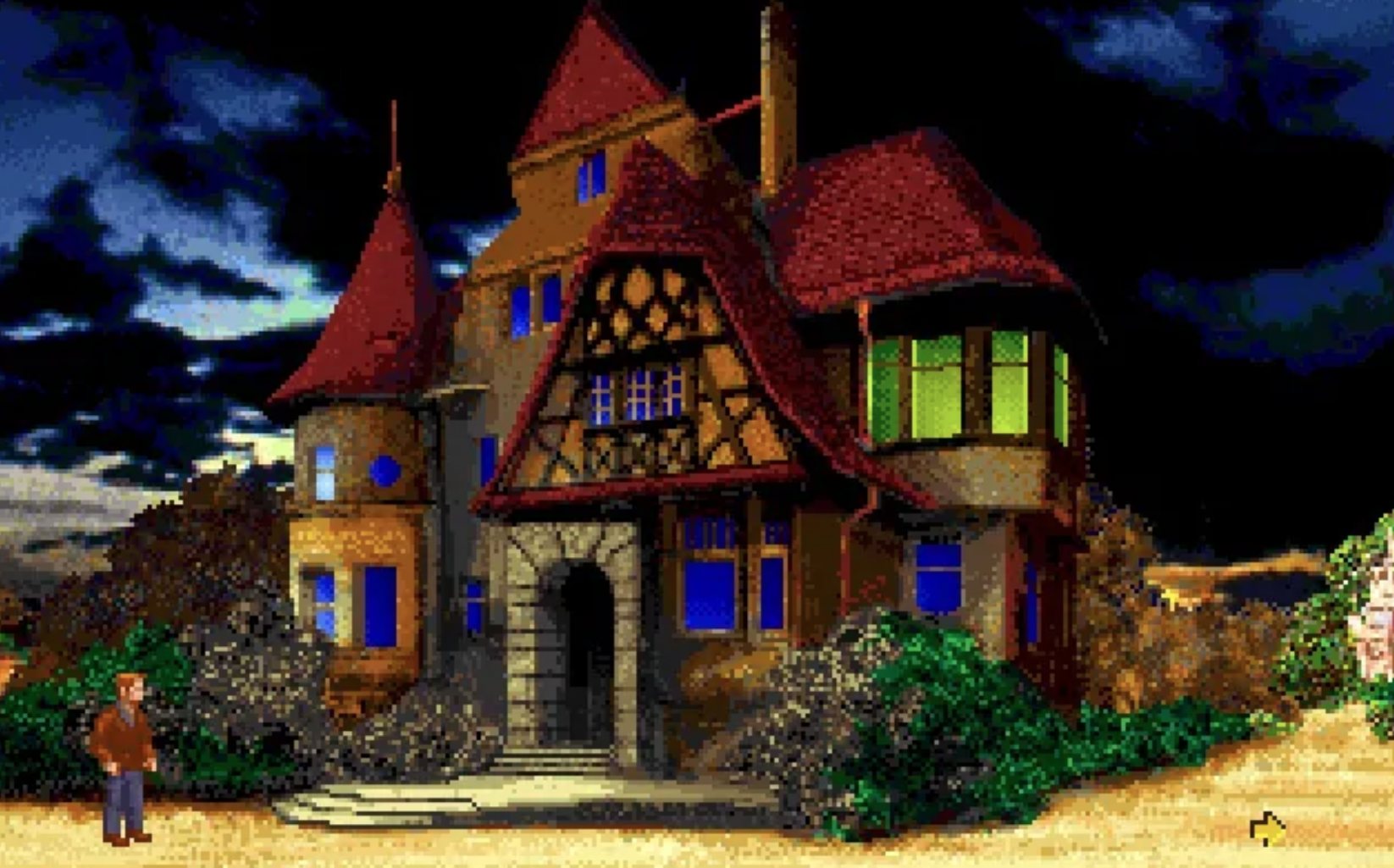
Countless video games have been inspired by Lovecraft, but I will single out only two. The first is "Shadow of the Comet" from 1993. Yes, it is old, the controls are a little clumsy, and the graphics are... well, they were excellent for their time, and lovers of pixel art will have no objection. The atmosphere, however, is very good. The second is "Call of Cthulhu: Dark Corners of the Earth" from 2005, a very good story inspired by several of the best-known works from Lovecraft’s cosmicist body of writing.
If you do not feel like reading, perhaps you prefer listening. You can find quite a few audiobooks on YouTube, and although the readers are often amateurs, the final result is frequently excellent. I recommend, for example, The Haunter of the Dark, or the BBC production of The Shadow over Innsmouth.
If you want to intensify the atmosphere even further, try this: get up early, while it is still dark outside, and wander through a sleeping city with an audio version of one of his stories playing through your headphones. If there is fog, snow, and only a few barely visible faces moving through the night, the atmosphere will be complete. With the necessary occasional glance upward, straight into the cosmic abyss, of course.
If you enjoy the stories of Edgar Allan Poe, you will almost certainly enjoy Lovecraft as well. He was undoubtedly inspired by the great American writer and poet of the first half of the 19th century, who, like Lovecraft, died very young, at the age of 40.
Confronting Lovecraft
You will inevitably encounter Lovecraft, and in many ways you already have, through numerous modern adaptations and works inspired by him. But in this case, I believe it is worth returning to the source itself, to those long stories where the threads between reality and fiction begin to loosen. Many of Lovecraft’s stories follow an intriguing curve: they begin not only in reality, but in a reality firmly grounded in facts, scientific knowledge, reason, and rationality. Quite often, the protagonist is a champion of all of that. He is not someone who believes in superstition. He stands above it, a modern man shaped by the scientific method, a lover of the tangible, physical world and its phenomena. And it is precisely such a man that Lovecraft likes to push over the edge, putting all his practical and materialist knowledge on a collision course with the infinite possibilities of dread and fear. He places him in a position of inevitable deconstruction, where he must eventually accept that his reason and knowledge do not answer every question, and that some questions are so terrible the mind cannot endure them for long.
Lovecraft is a challenge, but these are not stories that "evaporate" quickly. The feeling of a cold and indifferent universe surrounding us will stay with us for a long time, perhaps forever. Lovecraft is such a source of creativity and originality that it is worth surrendering to him, or at least trying, because in return he offers something of exceptional value: new sensations.
Comments