
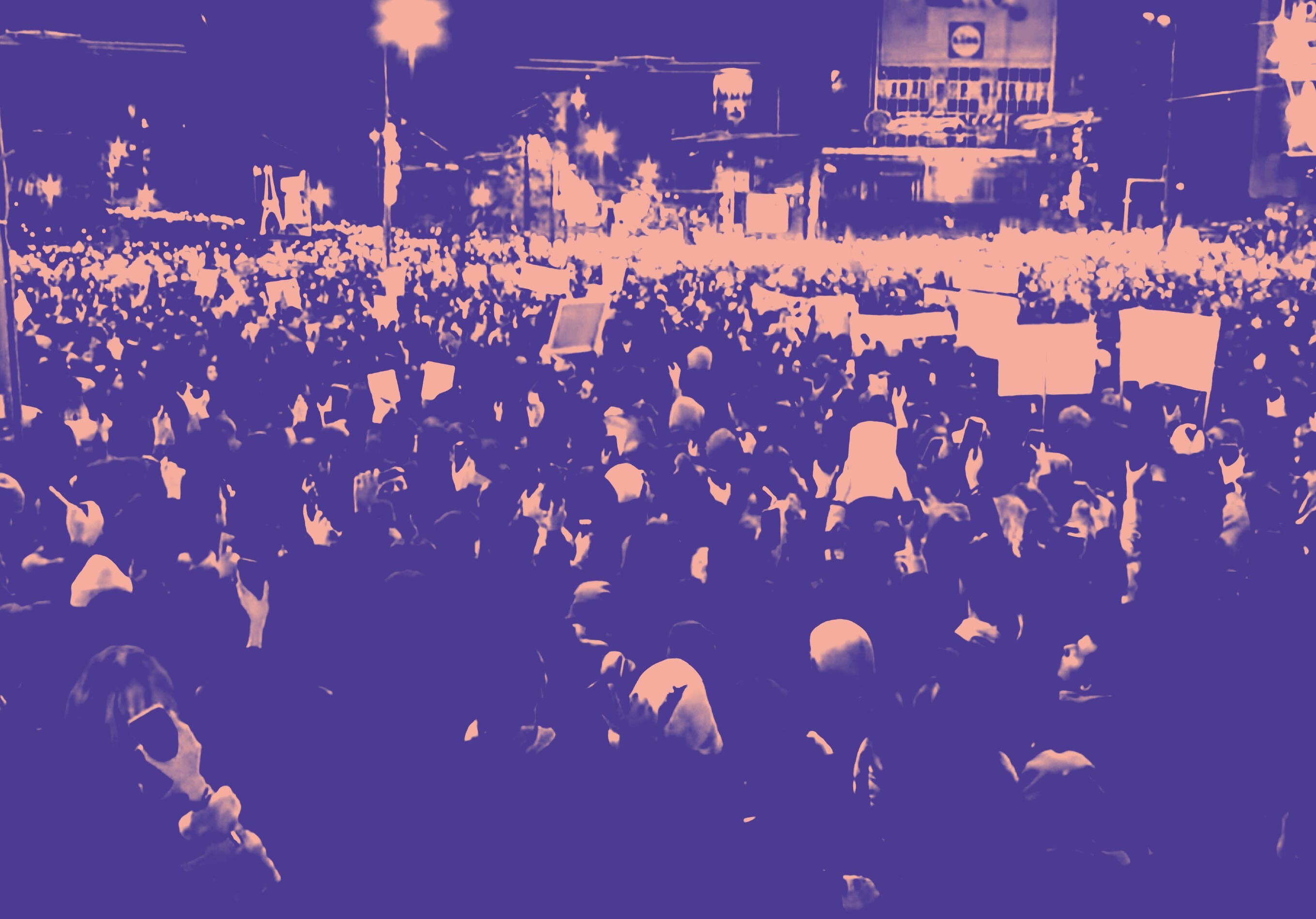
To be anyone’s periphery, Western or Eastern, is just another name for exploitation — but every upheaval still forces a choice.
Serbia is always a loaded subject, weighed down by assumptions formed before the conversation even begins. It is also a difficult subject because proximity often demands allegiance rather than analysis. Writing from within the region about major geopolitical issues can sometimes be strangely easy: local influence over the great global currents is mostly limited. Precisely because of that, however, every regional debate quickly becomes emotional, historical, and politically overburdened.
Still, even when the space for simply asking “what is actually happening here?” is squeezed so tightly that it can hardly breathe, it is worth trying. Before we begin, it may help to perform a kind of self-hypnosis — a temporary amnesia — and imagine that we are not watching the burning streets of Belgrade from just next door, but from somewhere like Costa Rica, Kenya, or Laos. Sometimes, one really does have to move far away from everything one knows in order to discover what one does not know after all. Let us try. We may find something interesting.
What did we see last night, and what have we been watching since November 2024? Something quite specific. Because this is not primarily a pro-EU uprising. It is not a socialist revolution either, nor some pure expression of “student idealism.” If we have to classify it, it is a rebellion against a captured state — against a model of power built as a network of party structures, money, media, police, construction deals, and impunity. Is it not?
And suddenly it becomes difficult to keep one’s mind in Kenya or Laos, because all of this sounds so painfully familiar.
The struggle in Serbia is certainly not merely a struggle against corruption. The key issue is also a regime of impunity. The collapse of the canopy at the Novi Sad railway station on November 1, 2024, which killed 16 people, was only the spark at the end of a fuse already laid. The catalyst was not only that money had been siphoned off through a construction project, nor even that 16 innocent people had lost their lives, but that the system’s first instinct was to protect itself. That was the revelation. The confirmation that the state can become little more than a stage set for an interest-based elite that has spread into every available pore.
But is this still the same protest? Or have other agendas already taken it over?
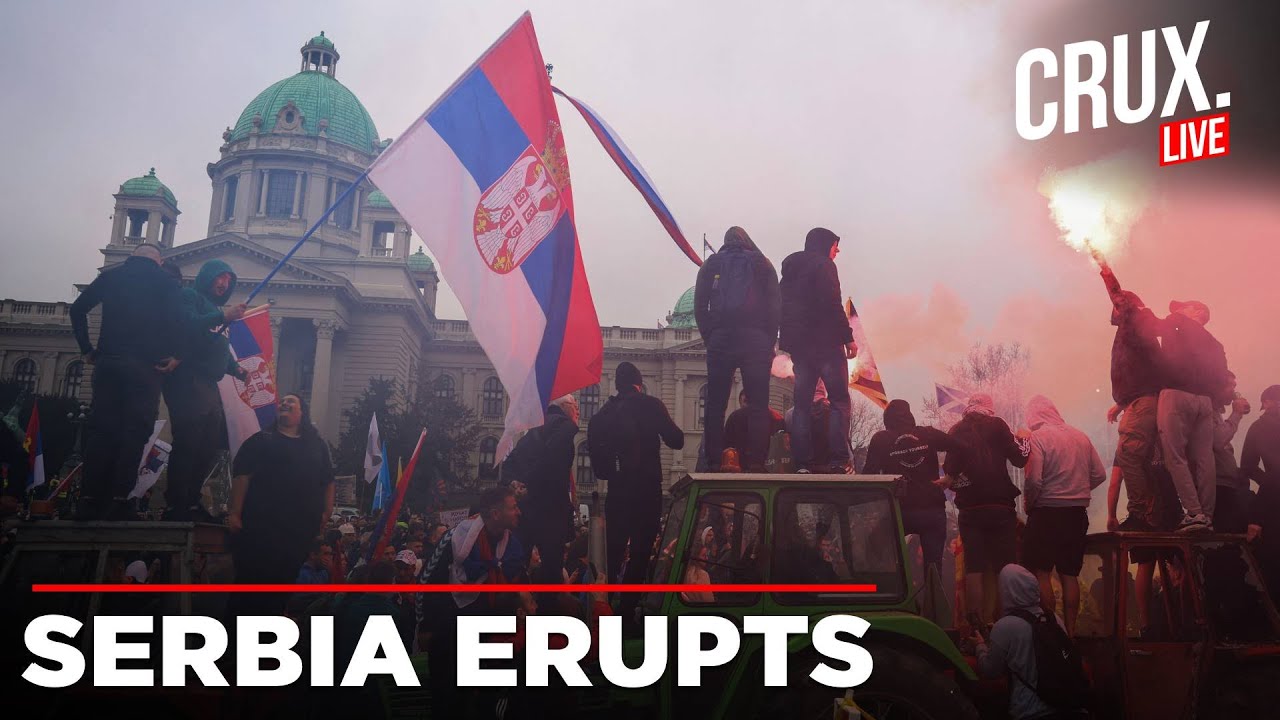
Although Serbia is “on the road to the EU,” the students’ program is not necessarily written as a manifesto of European integration. It speaks of media freedom, fair elections, an independent judiciary, a state without corruption, public enterprises, workers’ rights, environmental protection, agriculture, education, healthcare, and local democracy.
At its core, this is all good and desirable. But let us not fool ourselves: these are also precisely the kinds of demands that sound like the entrance requirements for a “Welcome to the EU” brochure. And so what, someone might ask, if the EU at least declares that it stands for such things — should one run away from them? Of course not. But we will come to that too. From Laos, we are now mentally making our way back toward the European periphery. We will arrive in a few paragraphs.
The goals? Excellent. More than that — let us put it this way: if Serbia succeeds in building a state whose institutions actually function, the lesson will not simply be that Serbia should come “to Europe,” but that Europe should take a careful look at Serbia.Do Serbian citizens want to join the EU? Older people tend to be more skeptical, younger people are noticeably more supportive, but even among the protesters there is no perfect political cohesion. Much of the cohesion that does exist is an illusion produced by the figure of Aleksandar Vučić. The protesters are united against a symbol and a system, but internally they are not all on the same side. Some are pro-EU liberals, some are nationally minded, some are primarily anti-corruption, some are socially conscious, and some are simply exhausted by humiliation.
The economic platform put forward by the protesters is closer to a civic-republican, anti-corruption, welfare-state program. It says that key infrastructure companies should remain in state ownership, that commercial contracts between the state and investors should be made public, that projects should be halted if they threaten long-term interests, that labor law should be strengthened, and that the minimum wage should be raised.
These are good goals. Excellent goals, in fact. More than that — let us put it this way: if Serbia manages to achieve even part of this, then the next question should not only be “how close is Serbia to the EU?” but also how close today’s Europe is to its own promises.
But however wisely and carefully the assemblies tried to avoid opening the Pandora’s box of foreign policy, in moments like this it opens by itself, quietly and treacherously, in the world’s crosswinds.
And then comes the question that will no longer leave anyone in peace. Are you for the EU, or are you for Russia and China?
And all of Serbia, it must be admitted, keeps trying to wave that poisonous question away, but it always comes back, like a fly that will not be chased off.
Ironically, the opposition as a whole would rather avoid declaring itself — and so, for that matter, would its antagonist. Vučić can appear in Beijing today, speak to Brussels tomorrow, send a message to Moscow the day after, and then return to the familiar rhetoric of his own special path. Taken together, his statements over the years make it almost impossible to say what he has really chosen. A bit of the West, a bit of the East.
So what? Is that not a political position we still remember as powerful and influential? Yes. But it would be a serious mistake to compare today’s Serbia with the old policy of non-alignment.
A Serbia balancing between great powers may, at first glance, look like a country preserving room to maneuver. The problem begins when it becomes clear that this room to maneuver does not protect society, but power over that society. At that point, “both East and West” is no longer a strategy of sovereignty, but a technique of regime survival.
But let us not be fatalists. Let us take the basic premise and carry it through properly. Let us stop the story, cut the film, and edit in at least a more honest ending.
Fortunately for Belgrade, Europe has two faces. The first is formal: the Europe of statements, protocol photographs, and grand declarations. The second is real: the Europe in which, even at the EU level — and especially along its edges — we can recognize corruption, clientelism, opaque deals, political influence over institutions, obedient media, and public money used as a currency of loyalty.
In some countries, the canopy may not yet have collapsed, but the warning signs are already there. Serbia is in a zone of possibility, perhaps already on the edge of a particular future, but with at least some of that future still undefined. Once it passes through the blue-and-yellow door, many of these problems will not disappear; they will change shape. What exists now — power as a network of political parties, construction interests, and suffocating impunity — will remain, only in a far more sophisticated arrangement. A ruling class that is crude, improvisational, and visible today may tomorrow be insulated beneath layers of funds, procedures, Brussels offices, and security budgets, whether NATO’s or those of some future European military structure. Then the illusion of rebellion truly does become an illusion.
Russia and China as an alternative? That would be the same thing, perhaps even worse. Replace Brussels with Moscow or Beijing and you end up in the same club, with the same ambition: to declare the “end of history,” always with less public oversight and less room for resistance. Once again, an interest-based elite would hold power, only under stronger external protection. To be someone’s periphery is simply another name for exploitation.
That is the essential warning. The road to Brussels is not automatic salvation. The road to Moscow or Beijing is not a sovereign alternative. Neither answers the question that made the protests possible in the first place: who controls the state, who is accountable for its failures, who owns public money, and who owns the institutions?
If anyone in the small countries caught between great powers should have learned that independence is never granted from outside, then we in this region should have learned it by now.
Comments